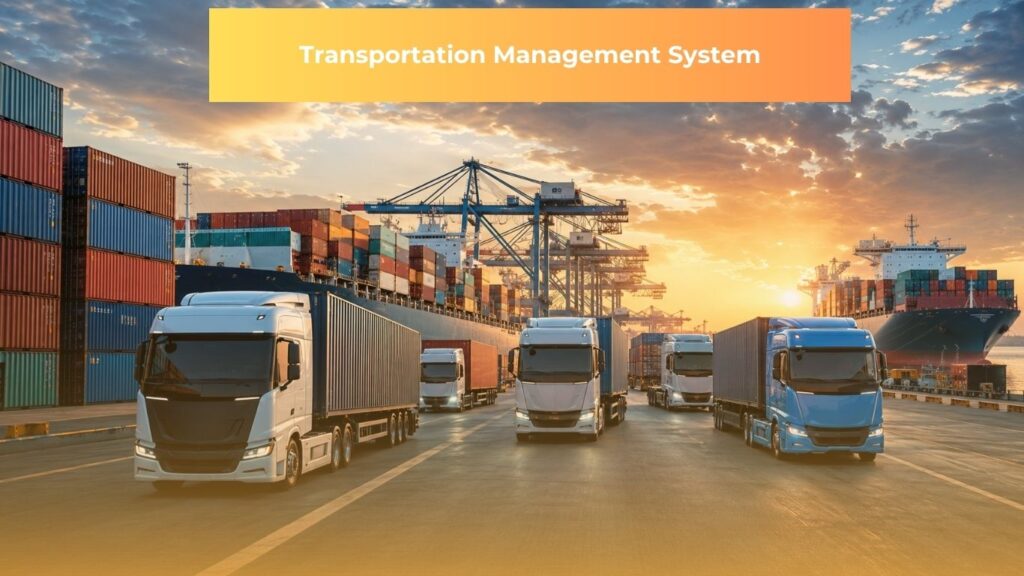

A Transportation Management System helps companies control freight operations, improve shipment visibility, reduce manual work, and make better transportation decisions.
Transportation is no longer only about moving goods from one place to another. It affects freight cost, delivery speed, inventory planning, customer experience, and the ability of a supply chain to respond when demand, capacity, or routes change.
Cost pressure is one reason companies are paying closer attention to transportation operations. U.S. business logistics costs reached about $2.6 trillion in 2024, equal to around 8.7% of GDP. When freight spending becomes this visible, companies need better ways to plan shipments, control carrier costs, track delivery status, and reduce manual work.
What Is a Transportation Management System?
A Transportation Management System is logistics software that helps businesses plan, execute, track, and optimize freight transportation.
A TMS supports both inbound transportation and outbound transportation. It helps logistics teams decide how shipments should move, which carrier should be used, when transportation should be booked, where the shipment is now, and how much the movement actually costs.
In practical terms, a Transportation Management System connects shipment planning, transportation execution, freight visibility, carrier communication, freight audit, and transportation analytics in one operating flow.
| Business question | TMS role |
|---|---|
| What should we ship? | Shipment planning |
| Which carrier should we use? | Carrier selection |
| Where is the shipment now? | Tracking and visibility |
| How much did transportation cost? | Freight audit and payment |
Why Companies Use a TMS
Companies use a TMS because transportation work often becomes difficult to manage when shipment volume, carrier networks, customer expectations, and cost pressure increase at the same time. Without a central system, teams may depend on spreadsheets, emails, phone calls, and separate carrier portals, which makes transportation harder to control.
Rising Freight Costs
Transportation cost is often one of the most visible logistics expenses because it appears across routes, carriers, service levels, fuel charges, accessorial charges, and urgent shipments. A TMS helps teams compare rates, consolidate loads, reduce inefficient movements, and select carriers based on cost, service, and contract terms.
Poor Shipment Visibility
Many companies still check shipment status through emails, phone calls, spreadsheets, and carrier portals. This slows response when a pickup is missed, a delivery is delayed, or a customer asks for an update. A TMS centralizes shipment information so logistics teams can see transportation status in one system.
Manual Transportation Work
Shipment booking, document handling, carrier communication, invoice checking, and reporting can take significant time when handled manually. A TMS reduces repetitive work by standardizing workflows and automating parts of transportation planning, execution, tracking, and settlement.
Complex Supply Chain Networks
Manufacturers, retailers, distributors, third party logistics providers, and global shippers often manage many carriers, routes, modes, warehouses, suppliers, and delivery requirements at the same time. A TMS gives teams a structured way to manage this complexity without relying only on individual experience or manual coordination.
How Does a Transportation Management System Work?
A TMS works by collecting shipment data, planning routes and loads, selecting carriers, executing shipments, tracking delivery status, checking freight invoices, and reporting transportation performance.

Step 1: Order and Shipment Data Collection
The process starts when the TMS receives order and shipment data from connected business systems. This data may come from an ERP system, WMS, order management system, eCommerce platform, customer portal, or internal shipment request.
The information can include a shipment order, delivery order, transportation requirement, customer location, product details, delivery date, quantity, weight, dimensions, and master data such as carriers, lanes, facilities, and service rules.
Step 2: Transportation Planning
After shipment data enters the system, the TMS helps plan routes, modes, loads, and schedules. The planning logic can consider cost, delivery time, available capacity, carrier service level, vehicle use, warehouse readiness, and customer requirements.
This is where route optimization, load consolidation, mode selection, capacity planning, and service level rules become important. A good plan helps reduce unnecessary freight spend while protecting delivery reliability.
Step 3: Carrier Selection and Tendering
Once the transportation plan is prepared, the TMS helps select the carrier. Carrier selection can be based on contracted rates, spot rates, carrier availability, service history, lane coverage, delivery requirements, and performance data.
Carrier tendering then sends the shipment request to the chosen carrier. If the carrier accepts, the shipment moves forward. If the carrier rejects, the system can help identify another suitable option based on freight rate management, carrier contract rules, and service needs.
Step 4: Transportation Execution
After the plan is approved and the carrier is confirmed, the TMS supports transportation execution. This can include booking, dispatch, shipment execution, document generation, and communication with carriers.
Electronic Data Interchange, or EDI, and API integration often support this stage by allowing systems to exchange shipment instructions, booking confirmations, status updates, and related documents.
Step 5: Tracking and Visibility
During transportation, the TMS monitors shipment status and delivery progress. Logistics teams can use track and trace information, real time visibility, Estimated Time of Arrival, or ETA, and delivery status updates to understand where shipments are and whether they are moving as planned.
Exception management is also important. A TMS can alert teams about delays, missed pickups, route deviations, failed deliveries, or other delivery issues so they can respond faster.
Step 6: Freight Audit and Settlement
After shipment execution, the TMS supports freight audit and settlement. The system checks freight invoices against shipment records, agreed rates, carrier contracts, and accessorial charges before payment.
Invoice reconciliation helps identify mismatches such as incorrect rates, duplicate charges, unexpected fees, or charges that do not match the shipment record. This gives finance and logistics teams better control over freight payment.
Step 7: Reporting and Optimization
The final stage is reporting and optimization. A TMS collects transportation data that can be used to measure cost, service quality, carrier performance, delivery reliability, and operational bottlenecks.
Transportation analytics, KPI dashboards, on time delivery reporting, cost per shipment analysis, and carrier performance tracking help managers find where transportation operations can improve.
Core Features of a TMS
A TMS should support the core activities needed to plan, execute, monitor, and improve transportation. The exact feature set depends on the company size, shipment volume, transportation modes, carrier network, and integration needs.
| Feature | Simple explanation |
|---|---|
| Shipment planning | Plans how goods should move from origin to destination. |
| Route optimization | Finds efficient routes based on cost, distance, time, and constraints. |
| Load consolidation | Combines shipments to improve vehicle or container use. |
| Carrier management | Manages carrier contracts, rates, performance, and communication. |
| Freight rate management | Compares shipping rates across carriers and modes. |
| Tendering and booking | Sends shipment requests to carriers and confirms capacity. |
| Real time tracking | Tracks shipment location and status. |
| Exception management | Alerts teams when delays or disruptions happen. |
| Freight audit and payment | Checks invoices and supports payment accuracy. |
| Reporting and analytics | Measures transportation cost, service level, and carrier performance. |
Benefits of a Transportation Management System
The value of a TMS comes from improving how transportation decisions are made and executed. It gives logistics teams better control over cost, carrier performance, shipment visibility, and operational work.
Lower Transportation Costs
A TMS can reduce transportation cost through better carrier selection, route optimization, load consolidation, and invoice control. It helps teams compare available options and avoid decisions based only on habit, manual checking, or limited carrier visibility.
Better Delivery Performance
Planning, tracking, and exception alerts help teams respond faster when shipments are delayed or delivery conditions change. This supports better on time delivery because teams can act before small transportation issues become customer service problems.
Higher Shipment Visibility
A TMS gives logistics teams, customer service teams, and business managers a shared view of shipment status. Instead of searching through separate emails, carrier portals, and spreadsheets, users can check shipment progress through one system.
Less Manual Work
Transportation teams often spend time comparing rates, booking shipments, creating documents, checking carrier updates, and reviewing invoices. A TMS reduces repetitive work by automating routine tasks and standardizing transportation workflows.
Stronger Carrier Performance Management
Carrier performance becomes easier to manage when cost, delivery performance, service quality, and reliability are measured in a consistent way. A TMS helps companies compare carriers based on data rather than scattered feedback or incomplete records.
Better Decision Making
Transportation data helps managers identify high cost routes, underperforming carriers, frequent delay points, invoice issues, and network improvement opportunities. These insights support better planning because they show where transportation problems actually occur.
Types of Transportation Management Systems
Different TMS types are designed for different operating models. A company should choose based on who manages transportation, how complex the network is, and which systems need to connect with transportation workflows.

Shipper TMS
A shipper TMS is used by manufacturers, retailers, distributors, and companies that ship their own goods. It usually focuses on planning shipments, selecting carriers, managing freight cost, tracking deliveries, and improving transportation performance.
3PL TMS
A 3PL TMS is designed for third party logistics providers that manage transportation for multiple customers. It often needs customer level reporting, multi account workflows, carrier coordination, billing support, and flexible operational rules.
Carrier or Fleet TMS
A carrier or fleet TMS is used by transportation companies that manage vehicles, drivers, dispatching, fleet operations, and delivery execution. It may focus more on driver assignment, vehicle use, dispatch planning, and fleet performance.
Cloud Based TMS
A cloud based TMS is delivered through cloud infrastructure. It can support faster deployment, remote access, easier updates, and lower infrastructure maintenance compared with systems that require more internal hosting and maintenance.
Enterprise TMS
An enterprise TMS is built for large companies with complex transportation networks, global shipments, multimodal transportation, advanced rules, and deep integration requirements. It is often used when transportation operations span many business units, regions, and external partners.
TMS Integration with ERP, WMS, and Carrier Systems
A TMS should operate as part of the wider business and logistics system landscape. When it works in isolation, teams may still need to copy data manually, check multiple systems, and reconcile shipment information after the fact.
ERP Integration
ERP integration connects the TMS with business data such as orders, customers, products, suppliers, purchase orders, sales orders, and financial information. This helps transportation planning reflect real business requirements instead of disconnected shipment records.
WMS Integration
A Warehouse Management System provides warehouse execution data such as picking, packing, loading, dock schedules, and inventory status. When WMS and TMS data are connected, transportation plans can better match warehouse readiness and loading operations.
Carrier Integration
Carrier integration supports rate requests, tendering, booking confirmation, tracking updates, proof of delivery, and freight documentation. It reduces manual communication and helps logistics teams work with carriers through structured data exchange.
Visibility Platform Integration
Some companies connect TMS with real time transportation visibility platforms to track shipment location, status, ETA, and delivery exceptions across carriers and routes. This can improve monitoring when shipments move through complex networks or multiple transportation partners.
API and EDI Integration
API and EDI integration allow the TMS to exchange data with other systems. Both methods are used in transportation, but they serve different technical and operational needs. The primary difference is how and when the data is sent: EDI works in scheduled batches (like a daily mail delivery), while API works in real-time (like an instant message).
API (Application Programming Interface): a modern way for systems to exchange data in real time.
EDI (Electronic Data Interchange): A standard method for exchanging business documents between companies.
Key Technology Trends Shaping Transportation Management Systems
Transportation Management Systems are evolving because companies need stronger control over planning, visibility, automation, cost, and service performance. The global Transportation Management System market was estimated at USD 21.30 billion in 2026 and is projected to reach USD 44.84 billion by 2034 (Source: Fortune Business Insights), which reflects rising demand for more digital transportation management.
AI Powered Transportation Planning
AI can support transportation planning by helping teams analyze route options, forecast demand, predict delays, recommend carriers, and prioritize exceptions. It helps logistics teams make faster and better transportation decisions when shipment volume, route complexity, and service requirements increase.
Real Time Transportation Visibility
Real time transportation visibility helps companies track shipment location, delivery status, ETA prediction, exception alerts, and shipment status updates across carriers and routes. This is especially useful when customers expect faster updates and logistics teams need to react quickly to disruptions.
IoT and Telematics
IoT sensors and telematics provide data from vehicles, containers, pallets, or goods in transit. Common use cases include vehicle tracking, temperature monitoring, fuel monitoring, driver behavior data, and condition monitoring for sensitive goods.
Cloud Based TMS
Cloud based TMS supports faster deployment, remote access, easier updates, and scalable integration with external systems. It can help companies expand transportation management capabilities without managing heavy internal infrastructure.
Digital Twin for Logistics Networks
A digital twin can simulate routes, transportation capacity, disruption scenarios, and network changes before decisions are made. This helps logistics and supply chain teams test planning assumptions before applying them to real operations.
Automation in Freight Audit and Settlement
Automation in freight audit and settlement helps check invoices, detect mismatches, reduce manual review, and improve financial control. This is valuable when companies work with many carriers, rate structures, accessorial charges, and shipment records.
Sustainability and Carbon Visibility
More companies need to measure transportation emissions by route, carrier, mode, and shipment. A TMS can support greener mode selection and carbon reporting by giving teams better data on how transportation decisions relate to environmental performance.
How to Choose the Right TMS
Choosing the right TMS starts with understanding transportation operations, not software features alone. A company should evaluate the system based on the shipments it manages, the processes it needs to improve, and the integrations required for daily operations.
Define Your Transportation Scope
Start by clarifying whether the company manages domestic shipping, international shipping, parcel, truckload, less than truckload, ocean, air, rail, or multimodal transportation. The required TMS capabilities will change depending on shipment type, route complexity, and delivery expectations.
Check Integration Requirements
The company should identify which systems must connect with the TMS. This may include ERP, WMS, carrier systems, eCommerce platforms, visibility platforms, finance systems, and customer portals.
Review Core Functional Coverage
A TMS should be evaluated against core needs such as planning, carrier management, execution, visibility, freight audit, settlement, and analytics. Missing core functions can create manual work even after the system is deployed.
Evaluate Scalability
The TMS should support more shipments, carriers, locations, warehouses, transportation modes, and business units as the company grows. Scalability matters because transportation complexity often increases faster than expected.
Assess User Experience
Logistics teams need a system that is easy to use, not only technically powerful. If the interface is difficult, workflows are unclear, or daily tasks take too many steps, users may return to spreadsheets and manual communication.
Check Reporting and KPI Capabilities
A TMS should help track cost per shipment, on time delivery, carrier performance, detention, delay reasons, freight spend, and service level. These reports help managers see whether transportation performance is improving after implementation.
Common Challenges When Using a TMS
A TMS can improve transportation control, but the system depends on accurate data, connected workflows, and active management. Companies should prepare for common challenges before implementation.
Poor Data Quality
Incorrect rates, addresses, carrier data, product dimensions, or route information can reduce system accuracy. When data is unreliable, the TMS may produce plans, cost calculations, or reports that users do not trust.
Weak Integration
If ERP, WMS, carrier systems, and the TMS do not exchange data properly, teams may still rely on manual entry and separate spreadsheets. Weak integration can limit the value of automation and visibility.
Low User Adoption
Users may resist the system if workflows are too complex, training is weak, or daily tasks become harder than before. Adoption improves when the TMS supports the way teams actually work while reducing unnecessary manual steps.
Over Customization
Too much customization can increase implementation cost and make future upgrades harder. Companies should separate essential business rules from custom changes that only reproduce old manual habits.
Lack of KPI Ownership
A TMS needs clear performance ownership after deployment. Without owners for cost, service level, carrier performance, visibility, and data quality, the system may become a record keeping tool rather than a transportation improvement platform.
FAQ
1. What is the difference between TMS and WMS?
A TMS manages transportation activities such as shipment planning, carrier selection, tracking, freight audit, and delivery performance. A WMS manages warehouse activities such as receiving, putaway, picking, packing, inventory control, and loading. The two systems often work together because warehouse execution and transportation execution are closely connected.
2. What is the difference between TMS and ERP?
An ERP system manages core business data and processes such as orders, products, customers, suppliers, finance, and procurement. A TMS focuses on transportation planning, shipment execution, carrier management, tracking, and freight cost control. ERP provides business context, while TMS manages the transportation workflow.
3. Who needs a TMS?
Companies that manage frequent shipments, multiple carriers, rising freight costs, delivery issues, or complex transportation networks may need a TMS. This includes manufacturers, retailers, distributors, third party logistics providers, global shippers, and companies with growing transportation workloads.
4. Is TMS only for large companies?
TMS is used by large enterprises, but it is not limited to them. Smaller and mid sized companies may also need a TMS when shipment volume grows, freight costs become harder to control, or manual transportation work starts delaying operations.
Read more:
– Transport Technology and the Future: How 2026 is Reshaping Global Mobility
– Automatic Technology: Definition, History, Jobs Impact, and Top Platforms
– AI in Supply Chain (2026): Unleashing a New Era of Smart Logistics