
Core banking modernization is the process of improving, replacing, or gradually separating the systems that manage a bank’s most critical records and transactions. It matters because banks cannot compete through a better mobile app alone if the core system behind it is slow to change, hard to integrate, and difficult to use for data.
For scale, Juniper Research projected that digital banking would reach 4.2 billion users by 2026, equal to 53% of the global population.
That growth changes the pressure on banking technology. Customers expect faster onboarding, instant payments, self-service access, real time notifications, and consistent service across mobile, web, branch, and contact center channels. Business teams also need to launch products faster, adjust fees or interest rules with less friction, and connect with fintechs, eKYC providers, wallets, payment networks, CRM systems, and data platforms.
The challenge is that many banks still depend on core systems designed for stability, accuracy, and controlled processing rather than fast change. These systems still run important daily operations, but they often struggle with real time services, API integration, analytics, and rapid product configuration.
Modernization should therefore be treated as a controlled business and technology program. The goal is to improve flexibility without weakening transaction accuracy, security, compliance, or operational resilience.
What Is Core Banking Modernization?
What is a core banking system?
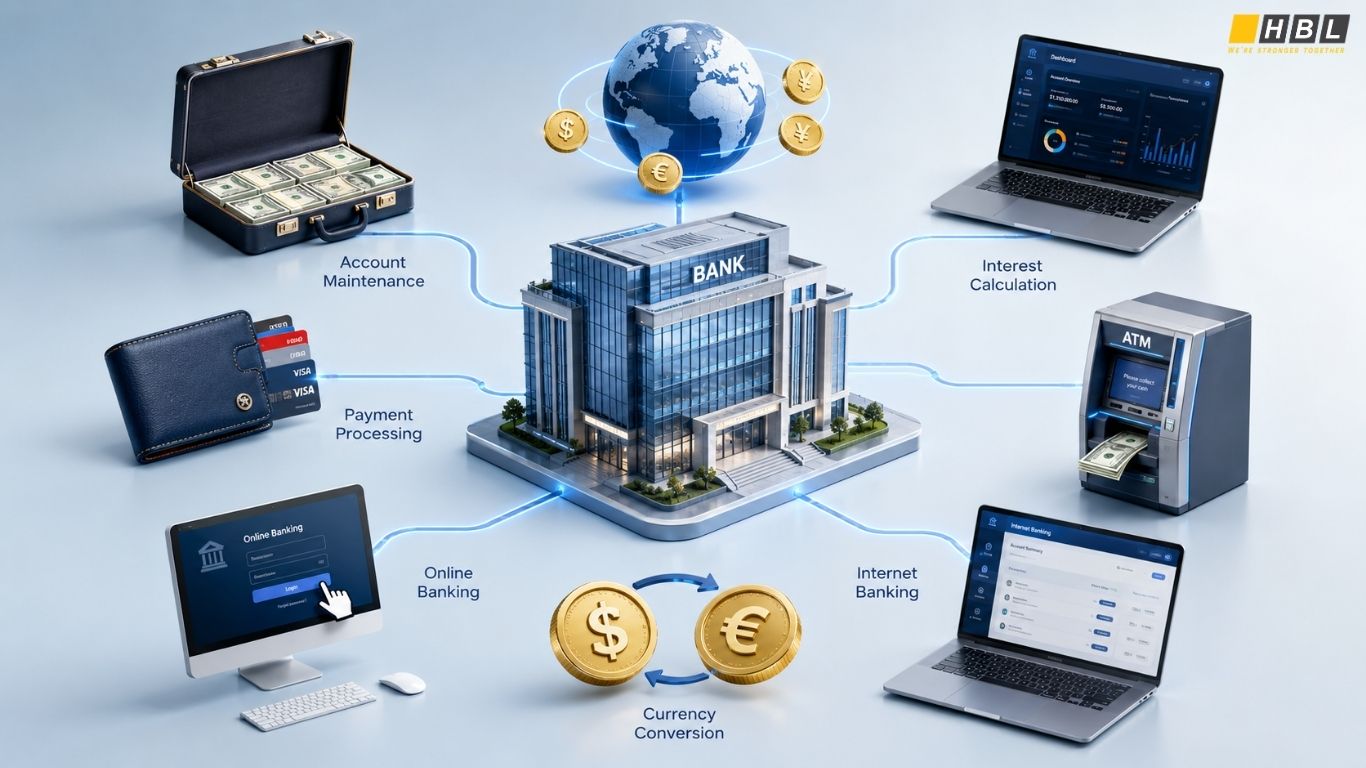
A core banking system is the central platform that manages accounts, balances, deposits, loans, transactions, interest, fees, customer records, and related product rules.
It is the bank’s system of record. Mobile banking, internet banking, CRM, branch applications, contact center systems, reporting tools, fraud systems, and chatbots often depend on the core to retrieve data or execute transactions.
A core system may handle many functions, including:
- Account opening and maintenance
- Deposits and withdrawals
- Loan servicing
- Balance updates
- Interest calculation
- Fee processing
- Transaction posting
- Customer and account records
- Product rules
- General ledger integration
- Regulatory and operational reporting feeds
Because these functions affect customer money and financial reporting, core banking systems are changed carefully.
What does modernization mean?
Core banking modernization goes beyond software replacement. It can include architecture upgrades, API separation, data modernization, reduction of custom code, cloud or hybrid cloud adoption, automation, testing improvement, and phased replacement of selected core functions.
A bank may modernize the full core platform, build a parallel digital core, expose core functions through APIs, move selected workloads to cloud, improve data quality around the core, or replace specific modules step by step.
Banks need systems that can change faster while keeping accuracy, security, compliance, and operational stability under control.
How Traditional Core Banking Systems Work
Built for stability and transaction accuracy
Traditional core systems were built to keep banking operations accurate and stable. A processing error can affect balances, loan schedules, interest, fees, statements, accounting, regulatory reports, and customer trust.
For that reason, banking technology teams usually prefer controlled change over fast, untested change. A core system that has worked for years may be difficult to change, but it may also be trusted because it has passed repeated audits, month-end cycles, year-end cycles, and operational stress.
Often monolithic and tightly connected
Many legacy core banking systems are large, centralized platforms. Over time, surrounding systems become tightly connected to the core: payments, reporting, loan origination, branch systems, mobile apps, customer service, fraud tools, reconciliation, and finance systems.
This tight connection creates change risk. A small change in a product rule, account field, batch job, or interface can affect other systems. Teams may need to test many downstream processes before releasing even a limited update.
McKinsey has noted that cloud-based, microservice-oriented core banking systems have become potential alternatives to traditional core systems, but banks must still manage the transition from older architectures carefully. (McKinsey, 2020)
Still dependent on batch processing
Some legacy core processes still run in batches, often at end of day or during scheduled windows. Batch processing can work for settlement, reporting, reconciliation, interest calculation, statement generation, or operational controls.
The limitation appears when banks need real time balance updates, instant risk checks, immediate customer notifications, real time fraud detection, or always-on partner integration. Batch-heavy systems can delay data availability and make digital banking experiences feel inconsistent.
Heavily customized over many years
Core banking systems often contain many years of custom code, product exceptions, manual workarounds, batch scripts, interface changes, and undocumented business logic.
Some business rules may live inside old code. Some may be handled by operations teams. Some may exist in spreadsheets, reporting logic, or manual approval steps. This is why modernization should start with assessment rather than migration.
Before a bank chooses a new platform or tool, it needs to know what the current system does, which dependencies exist, which processes are still used, and which parts create the highest cost or risk.
Why Banks Still Use Legacy Core Banking Systems
The system still works for critical operations
Banks do not keep legacy core systems only because they are slow to change. Many legacy systems still process important daily operations reliably.
They have been tested through years of production use, audits, regulatory checks, financial cycles, and operational incidents. A stable old system can feel safer than a major replacement program that has not yet proven itself in production.
Compliance and audit requirements are strict
Core system change affects customer data, transaction history, account records, loan information, financial reporting, access control, and audit trails. Banks need evidence that the new or changed system works correctly.
A core modernization program may require documentation, test evidence, data reconciliation, security review, vendor risk review, operational resilience assessment, and approval from multiple internal stakeholders.
Migration risk is high
Core migration involves sensitive and complex data: account records, customer information, balances, transaction history, deposits, loans, fees, interest, collateral, product rules, and reporting links.
Bad mapping, weak testing, incomplete reconciliation, or a poor cutover plan can create serious operational issues. A migration error may affect customers, regulators, finance teams, branch staff, and digital channels at the same time.
For many banks, phased modernization is more practical than replacing everything at once.
Why Core Banking Modernization Is Needed
Customers expect faster digital banking
Customers expect fast account opening, instant transactions, real time notifications, 24/7 access, and consistent service across channels. They also expect the bank to remember their information across mobile apps, branches, call centers, and web portals.
If core data is fragmented, slow, or difficult to expose, the front end experience becomes limited. A well-designed mobile app cannot fully solve delays in account data, transaction posting, product configuration, or service workflows.
Payments are moving toward real time
Global real time payment transactions are forecast to reach 575.1 billion by 2028. (ACI Worldwide)
Real time payments do not fit well with systems that depend too heavily on scheduled processing. Banks need to check risk, confirm available balance, post transactions, update customer records, trigger notifications, and reconcile activity in very short time windows.
The core does not always need to be replaced immediately to handle this pressure. Banks can also modernize the architecture around the core through payment hubs, API layers, event streaming, data synchronization, and better monitoring. Still, the legacy core cannot remain an uncontrolled bottleneck.
Data is becoming more important for banking
AI, fraud detection, credit risk analytics, AML support, personalization, collections, customer service, and product recommendations all depend on clean and accessible data.
Many banks have useful data, but it is split across the core system, CRM, data warehouse, data lake, digital banking platform, loan system, payment system, and manual reports. If definitions are inconsistent, analytics teams may not be able to trust the output.
Core modernization often needs to run together with data modernization. Banks need clearer data ownership, lineage, quality rules, synchronization, and access control before they can use AI or advanced analytics with confidence.
Banks need better integration with partners
Open banking, embedded finance, fintech partnerships, eKYC, digital wallets, payment providers, and third-party data services require controlled integration.
If every integration connects directly to the core, cost and risk increase. Each change may require core team involvement, custom interface work, additional testing, and more operational monitoring.
An API layer helps banks expose selected functions in a controlled way. It can route requests, apply access controls, monitor usage, reduce direct dependency on the core, and make integration easier to govern.
How HBLAB Can Support Core Banking Modernization
HBLAB supports banks and financial institutions through legacy modernization, AI development, system integration, data migration, and phased software delivery. With 700+ IT professionals, strong engineering capabilities, and 10+ years of experience in custom digital solutions, HBLAB can help banking teams extend internal capacity without losing control over workflows, tools, or delivery priorities.

For core banking modernization projects, HBLAB’s support can cover:
- Legacy system assessment: reviewing existing systems, interfaces, data flows, batch jobs, custom logic, and dependencies before migration begins.
- API and integration development: building controlled integration layers between core banking systems, digital banking platforms, CRM, payment systems, data platforms, and third-party services.
- AI-assisted modernization: using AI expertise built since 2017, supported by strategic partnerships, to assist code analysis, documentation review, dependency mapping, testing, and migration planning.
- Data migration and testing support: helping with data profiling, cleansing, reconciliation, test automation, parallel run preparation, and post-migration validation.
- Phased delivery: supporting PoC, pilot, rollout, and production migration through flexible engagement models such as offshore teams, dedicated teams, onsite support, and BOT.
With CMMI Level 3 certified processes, enterprise-grade safeguards, and flexible delivery models, HBLAB helps banks modernize core systems step by step while protecting stability, quality, and long-term maintainability.
CONTACT US FOR A FREE CONSULTATION
Benefits of Core Banking Modernization
Faster product launch
Modernized core architecture can help banks configure and launch products faster.
Changes in fees, interest rates, account packages, transaction limits, eligibility rules, and campaign offers can become less dependent on custom code. Product teams gain more room to test propositions, respond to market changes, and serve specific customer segments.
This benefit depends on governance. Faster configuration still needs approval workflows, test rules, audit trails, and monitoring.
Better customer experience
Modernization can improve customer experience by making account and transaction data more consistent across channels.
Customers may receive faster balance updates, clearer notifications, smoother onboarding, and more consistent service from branch and contact center teams. Staff can also access more reliable customer and account information, reducing manual checks and repeated requests.
Easier system integration
APIs, middleware, event streaming, and integration layers can connect the core with mobile banking, web banking, CRM, payment systems, fraud tools, data platforms, and partner services.
This reduces complex point-to-point integration. It also gives banks a clearer place to enforce authentication, authorization, throttling, logging, monitoring, and version control.
IBM’s banking API case materials describe API-led, event-driven, and messaging patterns as ways to connect applications across on-premises, cloud, and containerized environments. (IBM, Karnataka Bank case study)
Better data for analytics and AI
Core modernization can help banks build a stronger data foundation. When customer, account, transaction, and product data are cleaner and better governed, use cases such as fraud detection, AML support, credit risk analytics, customer segmentation, and personalized offers become more practical.
How to modernize a legacy core banking system using AI? Well, this should start with assessment. AI can help analyze legacy code, review documentation, summarize dependencies, extract business rules, generate test cases, flag anomalies, and support migration planning.
Generative AI for application modernization is as useful for code insights, functional mapping, and visibility into legacy applications and dependencies.
AI should not make unsupervised changes to core banking systems. Human review, banking domain expertise, testing, risk control, and audit evidence remain necessary.
Lower long term complexity
Modernization can reduce unnecessary custom code, manual work, duplicate data, duplicate reports, and fragile integrations.
The gains are not automatic. Banks need correct sequencing, disciplined scope control, and clear ownership. A poorly governed modernization program can create another layer of complexity rather than reducing the old one.
Risks of Core Banking Modernization
Data migration risk
Core data is sensitive and complex. Migration needs data mapping, cleansing, reconciliation, validation, security review, and repeated testing.
Small errors can affect balances, transaction history, statements, reports, interest, fees, tax reporting, or customer service. Migration teams need clear rules for source-to-target mapping, duplicate handling, incomplete records, historical data, and exception management.
Downtime and service disruption
Banks need continuous service across digital channels, branches, ATMs, payment systems, and internal operations. A core migration can affect many of these services at once.
Cutover plans, rollback plans, monitoring, incident response, and communication flows need to be prepared before migration. A successful migration is not a data transfer alone. It must keep operations stable before, during, and after go live.
Project scope can become too large
Modernization scope can grow quickly because core systems have hidden dependencies. Interfaces, reports, batch jobs, product rules, operational workarounds, and regulatory outputs may appear late if the assessment is weak.
Scope growth increases cost, extends timelines, and reduces confidence. Banks should define the modernization boundary early, confirm dependencies, and separate must-have migration scope from improvement items that can wait.
Cloud and vendor dependency
Only about 10% of core workloads have moved to cloud. Core systems arre one of the hardest banking areas to modernize because they are complex, costly, sensitive, and operationally risky.
Cloud can improve scalability, deployment speed, resilience options, and access to managed services. It should not be treated as the only modernization answer.
Banks need to evaluate compliance, data residency, security controls, exit planning, vendor lock in, third-party risk, performance, and operational resilience. Hybrid cloud is often more realistic in early stages, especially when critical core workloads still depend on on-premises systems or mainframes.
Regulators also pay close attention to third-party technology risk. The U.S. banking agencies’ interagency guidance on third-party relationships requires banks to manage risks tied to external providers across the relationship life cycle. (Federal Register, 2023)
Main Ways to Modernize Core Banking
Replace the core system
A bank replaces the legacy core with a new core platform.
This path fits when the old system is too limited, unsupported, expensive to maintain, or unable to meet business requirements. It can also fit when the bank needs a common platform after mergers, product expansion, or market restructuring.
The risk is high. Full replacement requires strong data migration, product mapping, testing, operational planning, vendor management, and staff readiness.
Build a new digital core
A bank builds a new core for a digital bank, product line, market, or customer segment.
This approach can reduce risk compared with replacing all legacy operations at once. The bank can test new architecture, onboarding flows, product configuration, and data models in a defined scope.
The risk is fragmentation. If the new digital core is poorly integrated, the bank may create another silo. A clear integration, data, and operating model is required from the start.
Modernize step by step
For many banks, the practical answer to how to modernize core banking systems is phased modernization.
The bank keeps the current core running, then separates functions that need faster change. Examples include customer data, reporting, payment integration, product configuration, statement generation, loan origination, onboarding, or partner integration.
This path lowers cutover risk because modernization is divided into controlled workstreams. It also helps the bank learn from each phase before moving deeper into the core.
Add an API layer
An API layer lets mobile apps, web apps, partner systems, and internal platforms connect to the core through controlled services.
It can reduce direct dependency on the core and limit uncontrolled point-to-point integrations. It also gives the bank a better place to apply security, monitoring, throttling, logging, and versioning.
This is often useful when the bank cannot replace the core immediately but still needs better digital and partner integration.
Modernize data around the core
Banks can move reporting, analytics, customer 360, fraud monitoring, and AI use cases away from direct core workload.
The aim is to standardize, govern, and synchronize data so that downstream systems do not rely on fragile extracts or manual reports. This is an important foundation for AI, analytics, automation, and regulatory reporting.
FAQ
1. What is the safest way to modernize core banking systems?
The safest approach is usually to start with assessment, dependency mapping, business goal definition, and risk prioritization before choosing a platform or tool. Many banks reduce risk through phased modernization rather than full replacement from the start.
2. Does core banking modernization require full replacement?
Core banking modernization does not always require full replacement. Banks can modernize through API layers, data modernization, module replacement, digital cores, cloud migration of selected workloads, or phased separation of functions around the existing core.
3. How can AI help modernize a legacy core banking system?
AI can help modernize a legacy core banking system by assisting with code analysis, documentation review, dependency mapping, business rule extraction, test generation, anomaly detection, and migration planning. AI output should be reviewed by engineers, banking domain experts, and risk teams before it affects production systems.
4. What tools are helpful in core banking modernization?
Helpful tools include assessment tools, dependency mapping tools, code analysis tools, API management platforms, integration middleware, ETL or ELT tools, data quality tools, reconciliation tools, automated testing tools, observability platforms, cloud platforms, security tools, and AI-assisted modernization tools.
Read more:
– Legacy Application Modernization: A Complete Guide
– Unlock Business Growth with Application Modernization Solutions
– Logistic Software Development Services for Modern Supply Chains