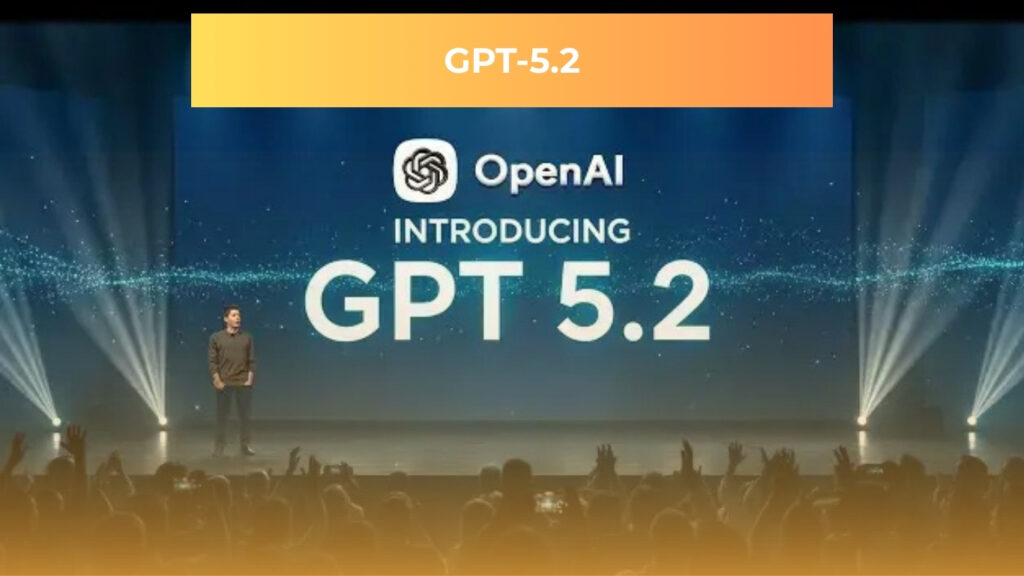
OpenAI released GPT-5.2 this week, a new AI model designed to help people work faster and smarter. The model outperforms humans on 71% of professional tasks like writing reports, building spreadsheets, and coding.
What You Need to Know Right Now

OpenAI launched GPT-5.2 on December 11, 2025. It is the company’s newest and most powerful AI model.
The model comes in three versions that work for different needs.
GPT-5.2 Thinking performs better than human professionals on professional tasks across 44 different job types. OpenAI says this is the first AI model to reach expert level performance for real workplace knowledge work.
The Three Versions
GPT-5.2 comes in three flavors. Each one is built for a different type of task.
GPT-5.2 Instant works fast and is great for everyday questions. It answers general queries, helps with writing, and provides quick explanations. If you need a fast answer, this is your choice.
GPT-5.2 Thinking is for harder problems. It works well for coding, complex writing, solving math problems, and reviewing long documents. It takes longer to respond but gives better answers for tricky work.
GPT-5.2 Pro is the most powerful version. It is built for the hardest questions where accuracy matters most. This version is best for important decisions where mistakes would be costly.
Why This Matters
GPT-5.2 makes three big improvements that change how you can use AI at work.
First, it understands longer documents better. You can feed it entire reports, contracts, or whole code files. The model remembers everything and answers questions accurately, even across hundreds of thousands of words.
Second, it makes fewer mistakes. In testing, GPT-5.2 produced errors 30% less often than the previous version. It also hallucinates less, which means it makes up fewer false facts.
Third, it works with tools and images better. You can show it screenshots, charts, and diagrams. It understands what it sees and can take action on that information. You can also tell it to use other apps and tools while it works on your task.
What GPT-5.2 Can Do
The model performs well on real professional work. Here are some concrete examples of what it handles well.
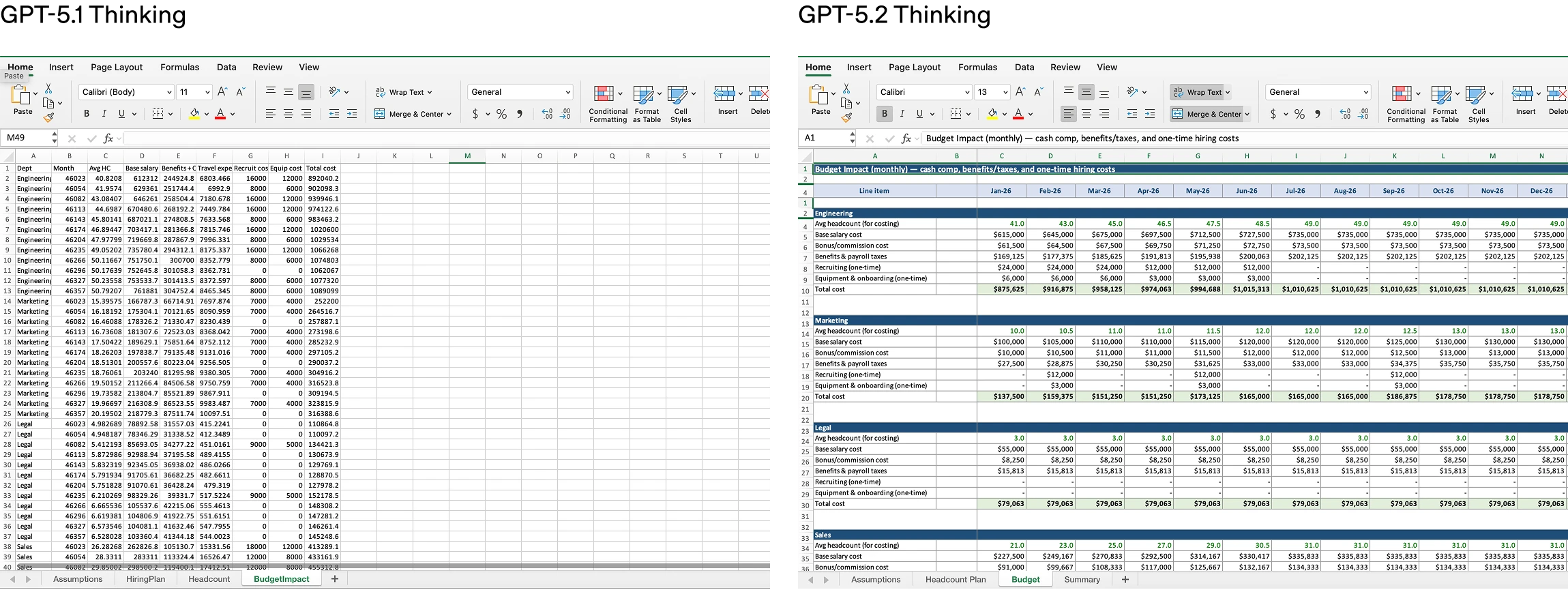
You can ask it to create spreadsheets and presentations from raw data. If you have a pile of numbers, GPT-5.2 can organize them into a formatted table or slide deck.
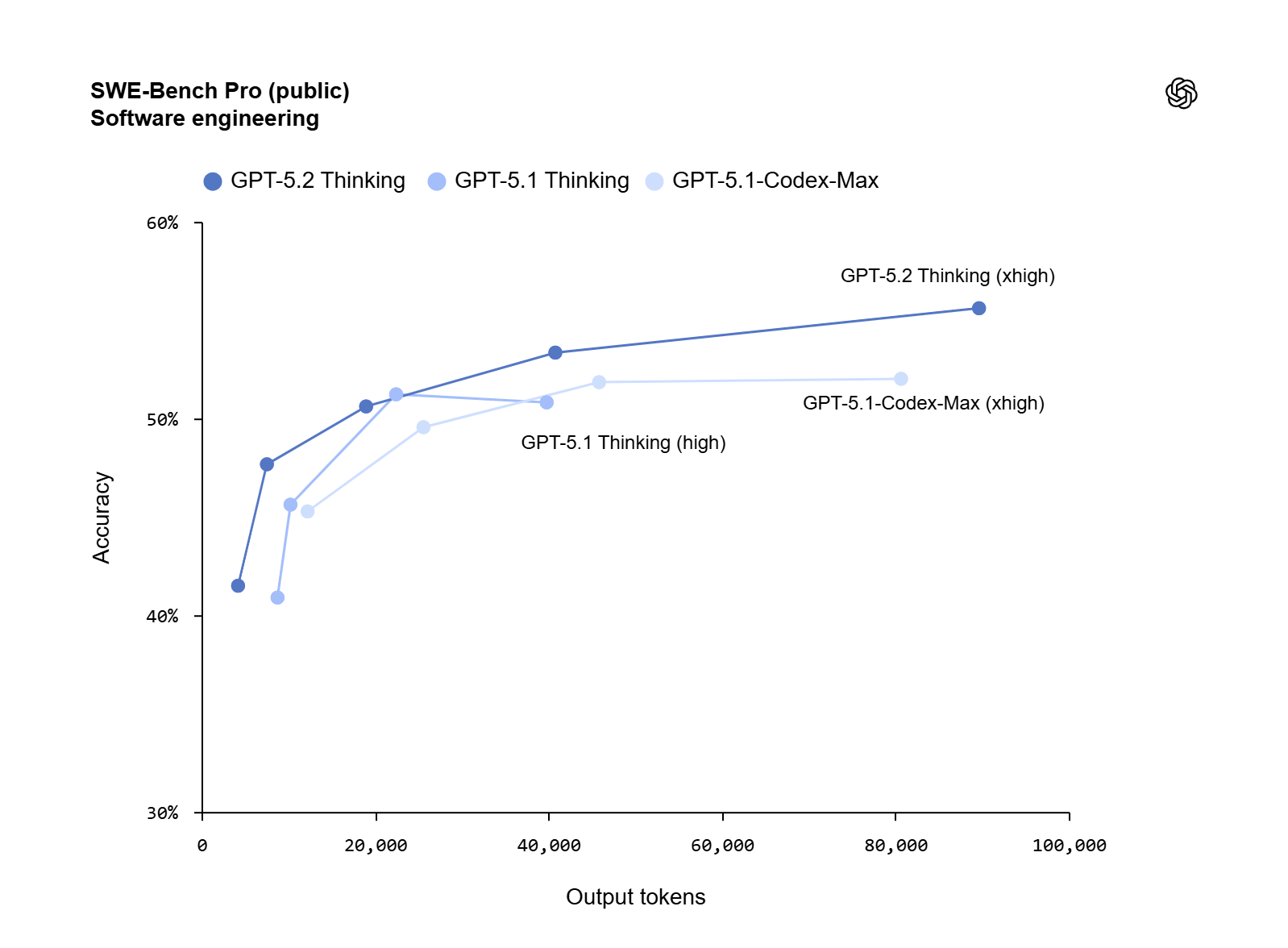
You can ask it to write and fix code. Developers report that GPT-5.2 writes cleaner code and catches errors better than earlier versions.
You can ask it to review documents. If you have a contract, research paper, or legal agreement, GPT-5.2 can read through it, summarize the key points, and flag important sections.
You can ask it to handle multi-step projects. If a task requires multiple actions in sequence, the model can break it down, execute each part, and deliver final results without constant supervision.
How GPT-5.2 Performs Against Other AI Models
When choosing an AI model for your work, it helps to understand how GPT-5.2 compares to other leading options. Three models compete at the frontier of AI capability in December 2025: GPT-5.2, Gemini 3 Pro, and Claude Opus 4.5.
Each has different strengths depending on what you need to do.
The Big Picture: Where Each Model Excels
Think of AI models like different sports athletes. One athlete might be the best at sprinting, another at jumping, and another at endurance. No single model is the best at everything. GPT-5.2 wins in some areas. Gemini 3 Pro leads in others. Claude Opus 4.5 dominates in specific tasks. The right choice depends on your particular needs.
GPT-5.2 is strongest at professional work tasks, math, and abstract thinking. These are skills that matter for knowledge workers, engineers, and researchers.
Gemini 3 Pro excels at understanding multiple types of information at once, especially images and videos.
Claude Opus 4.5 is the most reliable and careful when accuracy is critical, and it performs best on pure coding tasks.
Professional Knowledge Work: GPT-5.2’s Strongest Domain
GPT-5.2 was specifically built for professional tasks that people do at work. OpenAI tested it on 44 different job types like accounting, software development, sales, nursing, and legal work.
On these real workplace tasks, GPT-5.2 Thinking achieved a 71% success rate. This means that out of 100 professional tasks, GPT-5.2 completed 71 of them at expert level.
Gemini 3 Pro achieves 53% on the same test. Claude Opus 4.5 does not publish numbers for this benchmark.
This 18 point lead shows that GPT-5.2 is specifically built for office and professional work. If your team does accounting, legal review, financial modeling, or customer service, GPT-5.2 has a clear advantage.
Math and Science: Both Models Are Excellent
GPT-5.2 and Gemini 3 Pro both perform at world class level on science and math problems.
On competition mathematics, called AIME 2025, GPT-5.2 achieves a perfect 100% score without using external tools or calculators. Gemini 3 Pro also reaches 100% but needs to use a code calculator to get there. This is a small distinction, but it shows GPT-5.2 can solve math problems with pure reasoning.
On graduate level science questions, called GPQA Diamond, both models score in the 92 to 93 percent range. These are questions that would challenge someone with a PhD degree. The difference between them is less than 1 percentage point. On frontier math problems that researchers work on, GPT-5.2 solves 40% of challenging problems. This is a significant jump from its predecessor GPT-5.1, which solved only 31% of the same problems.

Claude Opus 4.5 performs well on math, scoring around 93% on AIME with tools, but does not separate itself from the other two models. All three are excellent at math and science.
Coding: The Race Is Very Close
This is where the models converge. Coding ability matters greatly to software developers. On the SWE-Bench test, which measures real world code fixing ability, Claude Opus 4.5 leads at 80.9%. GPT-5.2 scores 80.0%, just 0.9 percentage points behind. This difference is so small that it does not meaningfully matter in practice. Both models can fix approximately four out of five real code problems. Both are excellent for developers.
GPT-5.2 does handle multi-step engineering projects slightly better. If your project requires the model to analyze an entire codebase, plan changes, and apply them across multiple files, GPT-5.2 shows a small advantage. Claude Opus 4.5 excels at command line work and terminal tasks, where it scores 59% on Terminal-Bench 2.0.
For pure coding, choose based on other factors like cost, speed, and your preferred workflow. Both models are production ready.
Vision and Images: Gemini 3 Pulls Ahead
When you need an AI model to understand images, videos, and visual information, Gemini 3 Pro becomes the clear leader. On comprehensive image understanding tests, Gemini 3 Pro scores 81%, beating GPT-5.2’s 76%. The difference is larger for video understanding. Gemini 3 Pro scores 87.6% on video analysis. GPT-5.2 does not publish video scores, suggesting it is weaker in this area.

However, for specific professional visual tasks like reading business charts or technical diagrams in engineering documents, GPT-5.2 shows impressive performance. It scores 86.3% on UI understanding, a 22 point improvement over its previous version. So if your work is primarily with business documents, charts, and screenshots, GPT-5.2 is very capable. If you need to analyze video content or process multimodal data broadly, Gemini 3 Pro is the better choice.
Speed and Latency: GPT-5.2 Instant Is Fast, Thinking Is Slow
GPT-5.2 comes in different speed modes. The Instant version responds in 2 to 3 seconds, making it fast for real time conversation. The Thinking version takes 15 to 30 seconds because it internally reasons through the problem before answering. Claude Opus 4.5 typically responds faster than GPT-5.2 Thinking but slower than GPT-5.2 Instant.
For customer service chatbots, real time assistance, or interactive applications, GPT-5.2 Instant wins on speed. For complex analysis where taking 20 seconds to think results in a much better answer, the extra wait time is worth it.
Context Window: How Much Information Can They Remember
A context window is how much text a model can read at once. GPT-5.2 has a context window of 400,000 tokens, which is roughly 300,000 words. This is equivalent to 6 college textbooks at once. Gemini 3 Pro has 1 million tokens, which is 2.5 times larger. Claude Opus 4.5 has 200,000 tokens, the smallest of the three.

For most professional work, 400,000 tokens is plenty. You can fit entire databases, full codebases, or weeks of conversation history. But if you need to analyze a massive document set, Gemini 3 Pro’s larger window is an advantage. A key insight: GPT-5.2 does not lose track of information in its context like some models do. It maintains clarity across long documents even if they are near the limit.
Cost: GPT-5.2 Instant Is Cheapest
GPT-5.2 Instant is the most cost effective option. For heavy volume uses like customer support or routine queries, Instant’s low price adds up. GPT-5.2 Thinking costs about 40% more due to the reasoning process. GPT-5.2 Pro is the most expensive.
Claude Opus 4.5 sits in the middle on cost. Gemini 3 Pro is generally slightly cheaper than Claude on output tokens but the difference is marginal. For most organizations, the choice between models should be based on which one solves your problem best. The cost difference is usually small compared to the value of getting the right answer.
Reliability and Safety: Claude Opus 4.5 Is Most Cautious
Claude Opus 4.5 has earned a reputation as the safest model. It is harder to trick, it resists prompt injection attacks, and it is more conservative in handling ambiguous requests. If safety and robustness are your top priorities, Claude Opus 4.5 is the safest choice.
GPT-5.2 is reliable but not quite at Claude’s level in terms of adversarial resilience. Both models are safe to use in production. The difference matters mainly if you are concerned about someone trying to manipulate the model or if you need bulletproof safety for sensitive applications.
Short Comparisons
OpenAI tested GPT-5.2 against other leading AI models.
On science questions, GPT-5.2 scores 92.4% compared to Gemini 3 Pro at 91.9%. Both models are very good at science.
On abstract reasoning problems, GPT-5.2 wins clearly. It scores 52.9% compared to Gemini 3 at 31.1%. This shows GPT-5.2 is better at solving novel puzzles it has not seen before.
On professional workplace tasks, GPT-5.2 outperforms humans more than twice as well as the previous version. The old version GPT-5.1 scored 38.8% on professional tasks. GPT-5.2 scores 70.9%. That is nearly a doubling of performance on real work.
Speed and Reliability
GPT-5.2 Instant responds faster than before. The model has been optimized to answer questions more quickly without sacrificing quality.
GPT-5.2 Thinking takes longer to think through hard problems. This slower speed is intentional. The model is taking time to reason through the problem carefully before it answers. The trade off is accuracy, not a bug.
Users report that GPT-5.2 responses feel more structured and reliable. The answers are more organized. They follow logical flow. They stay on topic better throughout long conversations.
Real World Results
Two major companies have shared early results using this type of model.
Notion, a popular workspace and note taking app, rebuilt their entire AI system around GPT-5 level models. They report users are more satisfied with AI results. The company saw 100% improvement on multi-step tasks like updating information across multiple connected pages.
Box, an enterprise file storage company, integrated this model type to help users search and find documents faster. Customers report that the system finds documents 60% faster than before.
How to Access It
GPT-5.2 is available right now.
You can access it through ChatGPT at chatgpt.com if you have a paid subscription. It works on the web, phone, and desktop apps. All three versions (Instant, Thinking, Pro) are available to Plus, Pro, and Business plan members.
Developers can use GPT-5.2 through the OpenAI API. You can write code that calls the model and builds applications on top of it.
If you work at an enterprise, you can use GPT-5.2 through Microsoft Azure. This gives you more control over where your data lives and how your organization manages the tool.
What Changed From Previous Versions
GPT-5.2 improves in specific ways that matter for professional work.
The model better understands context when documents are very long. It does not lose track of details or forget earlier information.
The model produces fewer errors. The previous version sometimes generated code with bugs or gave incorrect information. GPT-5.2 cuts these issues by about 30%.
The model interprets images and diagrams with better accuracy. Screenshots of spreadsheets, technical diagrams, and charts are understood more precisely.
The model stays focused on your original question longer. In long conversations, the model does not drift away from what you originally asked.
The model works better with external tools and apps. It can connect to spreadsheets, databases, APIs, and other systems to complete tasks end to end.
When to Use Each Version
Understanding which version to use for which task helps you work efficiently.
Use Instant for real time chats with customers, quick questions, brainstorming sessions, or any work that cannot wait. Use it for interactive features on websites where slow responses hurt the experience.
Use Thinking for important work that deserves a good answer. Use it when you are writing code for production, building financial models, analyzing research papers, or handling complex customer situations where accuracy matters.
Use Pro for critical decisions where mistakes would be very expensive. Use it for legal analysis, medical research, financial decisions, or pioneering research where you truly need the best answer available.
The Reasoning Advantage
What makes GPT-5.2 different is how it approaches complex problems.
The model does internal thinking before giving you an answer. It works through the problem step by step, considering different approaches and checking its work. This hidden reasoning process takes more time but produces better answers.
Think of it like asking a professional for help. A quick answer takes 30 seconds but might be surface level. A thoughtful answer takes 5 minutes because the person is really thinking through the problem. That is the difference between Instant and Thinking.
The thinking process also reduces hallucinations. Because the model reasons through its answer, it catches its own mistakes more often. It double-checks itself before responding.
Cost Considerations

GPT-5.2 Instant is the least expensive option. If you have simple questions or need fast responses, this is the most cost efficient choice.
GPT-5.2 Thinking costs more because of the internal reasoning process. However, if Thinking gives you a correct answer in one attempt, it is cheaper overall than using Instant five times and still getting it wrong. One good answer beats five wrong answers.
GPT-5.2 Pro is the most expensive option. You only pay extra if you truly need the best answer for a critical decision.
Discuss how GPT-5.2 can help your business.
Common Questions
What does GPT stand for?
GPT stands for Generative Pre-trained Transformer. It means the model was trained on vast amounts of text data before being made available for use.
How is GPT-5.2 different from Gemini 3?
Both models are very capable. GPT-5.2 is better for practical business work and coding. Gemini 3 is better for understanding video content and has a larger memory for very long documents. For most professional work, GPT-5.2 excels.
Does GPT-5.2 work in my language?
GPT-5.2 works in many languages. English is strongest, but the model handles French, Spanish, German, Chinese, Japanese, and many others.
Is my data private when I use GPT-5.2?
OpenAI does not use your conversations to train the model. Your data is not shared. If you use it through Azure, your data stays in your region.
Why did OpenAI release this now?
OpenAI released GPT-5.2 to stay ahead of competition from Google’s Gemini and Anthropic’s Claude. The company had been planning this release for months, but the competitive pressure accelerated the timeline.
Can I use GPT-5.2 offline?
No. GPT-5.2 requires an internet connection because the model runs on OpenAI’s servers. You cannot download it to your computer.
What is the difference between Instant and Thinking modes?
Instant answers immediately. It is good for quick questions. Thinking takes longer but gives better answers for complex problems. You choose which one to use based on your task.
Can businesses trust GPT-5.2 for important work?
Yes, but with caution. GPT-5.2 Thinking reaches expert level performance on professional tasks. However, humans should still review critical decisions, especially in areas like law, medicine, or finance. Use it as a helper, not a final authority.
The Bottom Line
GPT-5.2 is a meaningful upgrade for AI. It handles professional work better than earlier models. It makes fewer mistakes. It understands long documents and images well. It performs at expert level on more than 70% of professional workplace tasks.
If you use ChatGPT, you can try GPT-5.2 today. If you build AI applications, you can access it through the API. If you run an enterprise, you can deploy it securely through Azure.
The model works best when humans and AI work together. Use GPT-5.2 to create drafts, summaries, and recommendations. Have humans review results for accuracy and context. This combination of AI speed and human judgment produces the best outcomes.
OpenAI has positioned GPT-5.2 as a tool for professional knowledge work. Early feedback is positive. Organizations like Notion and Box are already using similar models in production. The model is available today for anyone to try.
About HBLAB
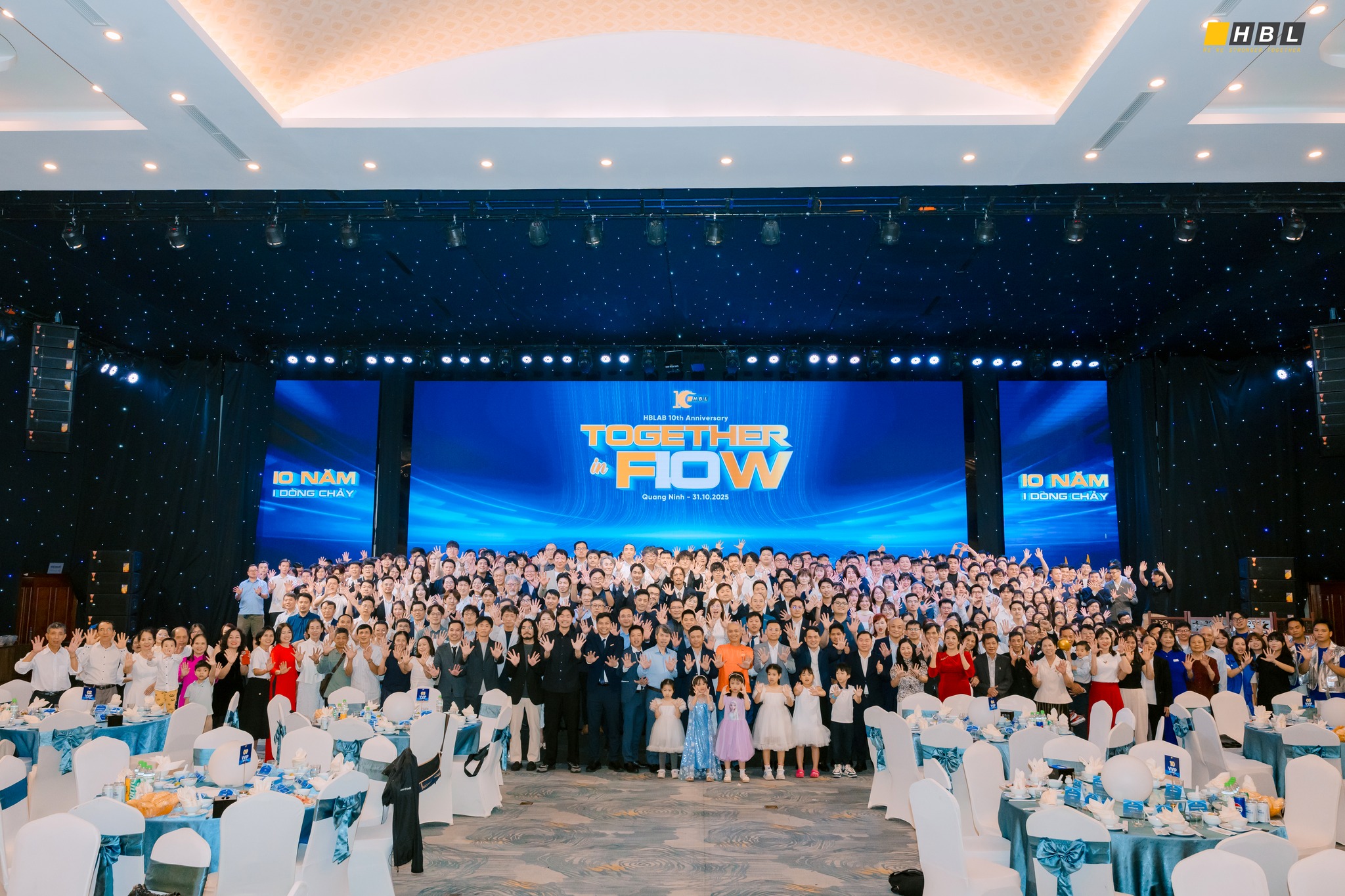
HBLAB is a software development and AI integration company with over 10 years of experience. The team includes 630 professionals who specialize in building AI systems for enterprises.
HBLAB helps organizations understand when and how to use models like GPT-5.2. The company designs workflows that combine AI capabilities with human expertise. The team builds applications that integrate GPT-5.2 for tasks like document processing, customer support, and data analysis.
If you work at an enterprise and want to use GPT-5.2, HBLAB can help design the right approach. The company offers consulting, custom development, and integration services.
HBLAB is CMMI Level 3 certified. This certification means the company follows high quality processes and delivers reliable software. The team has 40% senior engineers with more than 10 years of experience.
The team can assess your workflows, recommend the right AI approach, and help you implement it successfully.
You can learn more at HBLAB’s website or request a consultation directly.