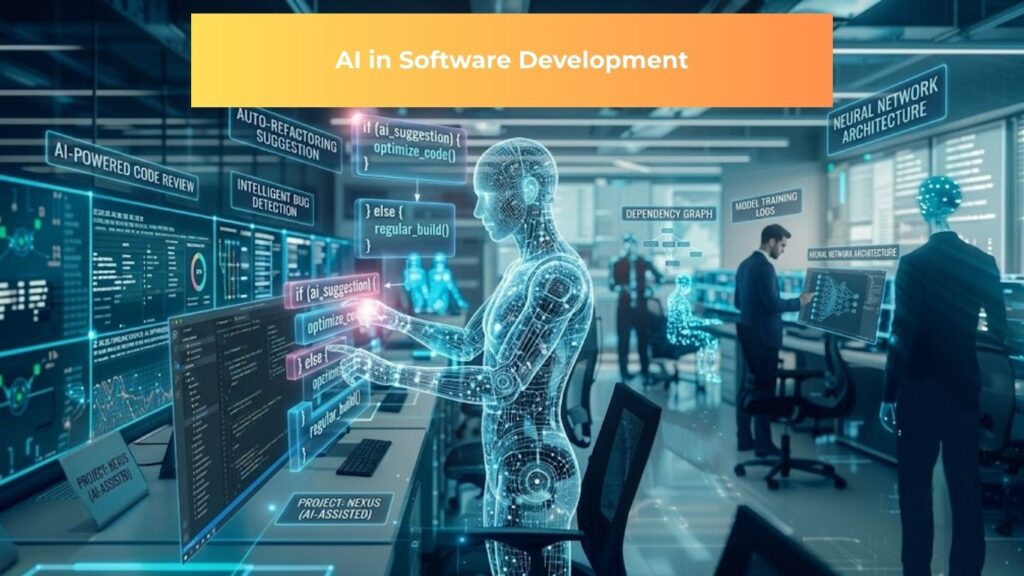
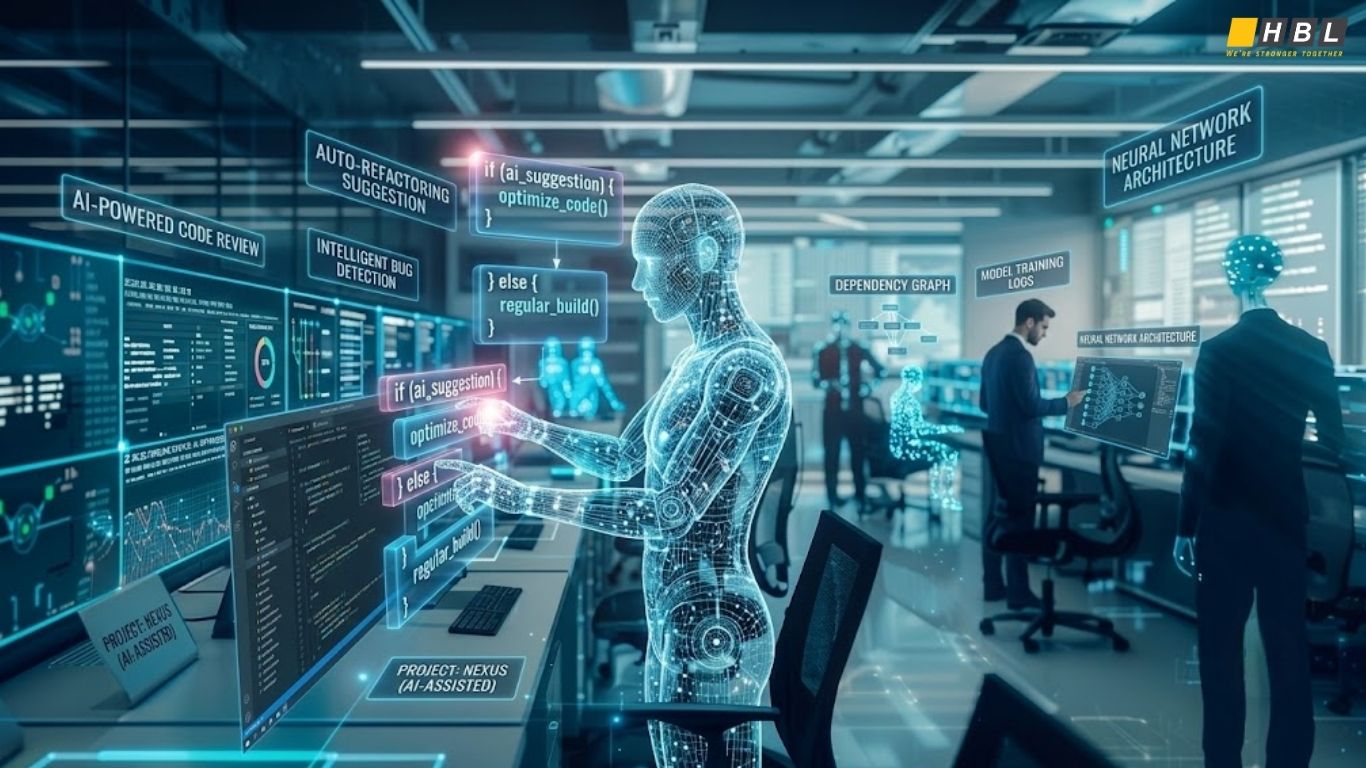
AI in software development now supports the full delivery process, from requirements definition and system design to testing, deployment, and maintenance. Its value depends on the operating model around it: Agile teams use AI to shorten feedback loops, while Waterfall teams use it to improve accuracy, traceability, and early risk control.
What AI in Software Development Means Across the SDLC
The Software Development Life Cycle, or SDLC, is the structured process used to move a software project from an initial business need to a working system that can be operated and maintained. The names of individual phases may vary by organization, but most projects still include six core activities: requirements definition, analysis, design, development, testing, and deployment and maintenance.
AI can support each phase by processing information, detecting patterns, generating working material, and identifying risks earlier. Its role also changes as the project moves forward. During requirements and analysis, AI helps teams understand information and reduce ambiguity. During development and testing, it accelerates repetitive work and expands review coverage. After release, it helps teams monitor the system and respond to abnormal behavior.
AI should therefore be designed around the delivery process. Adding isolated tools without clear inputs, review points, and ownership may save time for individual users while creating inconsistency across the project.
How to Use AI in Software Development Across Six Phases
Understanding how to use AI in software development starts with identifying the work, data, and decisions involved at each SDLC phase.
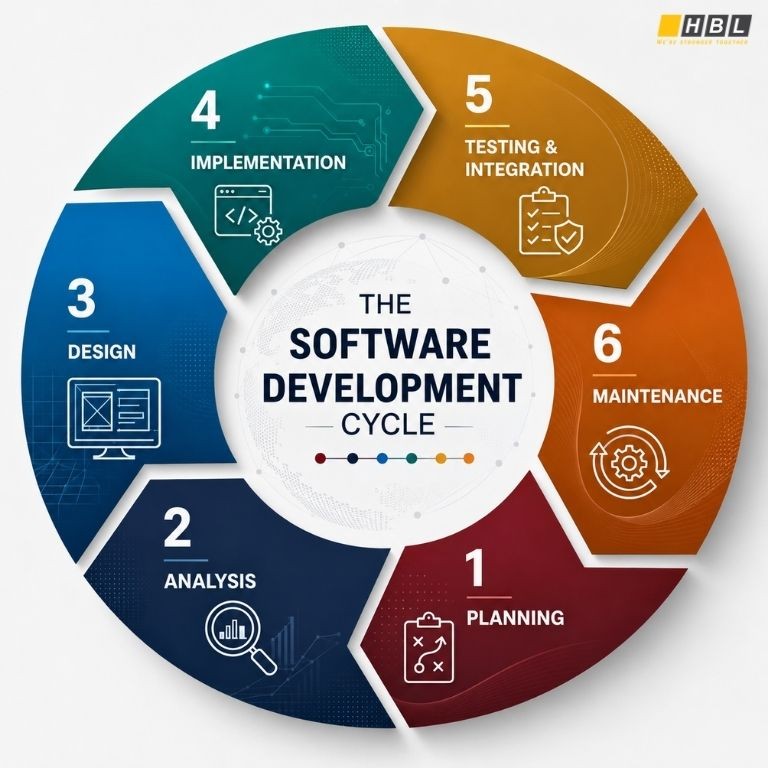
1. Requirements definition
Requirements usually begin as unstructured information spread across business documents, meeting notes, emails, tickets, and client feedback. Analysts need to turn this material into statements that developers and testers can interpret consistently.
AI can collect and summarize these inputs, group related requests, and flag wording that needs clarification. It may detect vague performance expectations, missing actors, conflicting rules, or information gaps across several documents. The analyst then reviews the findings, confirms the business meaning, and decides how the requirement should be written.
This use of AI reduces the risk of different team members building from different interpretations of the same request. The final requirement still needs approval from the people who understand the business process and accept the delivery scope.
2. Analysis and estimation
The analysis phase converts requirements into a practical view of scope, dependencies, effort, schedule, and resource needs. Estimates often become unreliable when teams overlook hidden dependencies or rely too heavily on the most optimistic scenario.
AI can compare a new project with data from previous work to identify patterns in scope expansion, late dependency discovery, delivery delays, and defect concentration. It can also help organize impact assessments across systems, teams, and milestones.
The output should support project planning rather than replace it. Project managers and technical leads still need to evaluate whether historical data is relevant, whether the current project has new constraints, and how much uncertainty should be included in the plan.
3. System and software design
During design, teams translate requirements into architecture, interfaces, data models, security controls, and detailed technical specifications. Design quality affects the cost and stability of every phase that follows.
AI can review design documents for internal consistency, compare proposed structures with established patterns, and highlight areas that may create security, performance, or reliability problems. It can also support documentation by turning diagrams, decisions, and review notes into more consistent technical artifacts.
Architects remain responsible for business fit and long-term trade-offs. A technically familiar pattern may still be unsuitable for the company’s operating environment, data policy, budget, or expected growth. AI gives the review team broader coverage, while architectural decisions remain with accountable experts.
4. Development
Development is the most visible application of AI across the SDLC. Coding assistants can suggest code, explain unfamiliar components, generate repetitive structures, draft unit tests, identify simple errors, and propose refactoring options.
These capabilities are most useful when the team has coding standards, repository context, review rules, and automated checks in place. A generated solution may be syntactically correct while still conflicting with the codebase, security requirements, or intended business logic.
Developers therefore need to review generated code with the same care applied to human-written code. Static analysis, testing, peer review, and version control remain part of the normal engineering process.
5. Testing
AI can generate test scenarios from requirements, user stories, acceptance criteria, and historical defects. It can also help prioritize testing by identifying areas with frequent code changes, repeated incidents, or high business impact.
This allows the test team to direct more attention toward the parts of the system that carry greater risk. It also improves traceability when test cases are linked back to the requirement or change that produced them.
Testing still requires clear expected outcomes and business validation. AI can expand test coverage and reduce preparation time, but product owners and quality teams must confirm that the tests represent real user behavior and critical operating conditions.
6. Deployment and maintenance
After release, AI can analyze logs, performance metrics, error rates, user behavior, and incident history. These signals help operations teams detect unusual patterns, group related alerts, investigate probable causes, and identify systems that may require attention.
AI can also support release notes, incident summaries, maintenance planning, and knowledge transfer between development and operations teams. The quality of these results depends on reliable observability data and a clear operating baseline.
For production systems, teams need defined escalation paths and human approval for actions that could affect availability, customer data, or business transactions. Monitoring becomes more useful when the organization knows who receives each alert, who can act, and how the action is recorded.
Generative AI in Software Development Lifecycle: Agile and Waterfall
The value of generative AI in software development lifecycle activities changes according to how the project is organized. Agile and Waterfall use the same underlying capabilities, including language processing, pattern recognition, generation, and prediction, but apply them to different constraints.
| Area | Agile | Waterfall |
|---|---|---|
| Delivery structure | Short, repeated iterations | Sequential phases with defined completion points |
| Requirements | Expected to evolve through feedback | Defined early and controlled through formal change |
| Client involvement | Frequent review and adjustment | Concentrated around requirements, approval, and acceptance |
| Documentation | Sufficient to support each iteration | Detailed records across each phase |
| Main value of AI | Faster feedback, prioritization, development, and testing | Better consistency, traceability, estimation, and early risk detection |
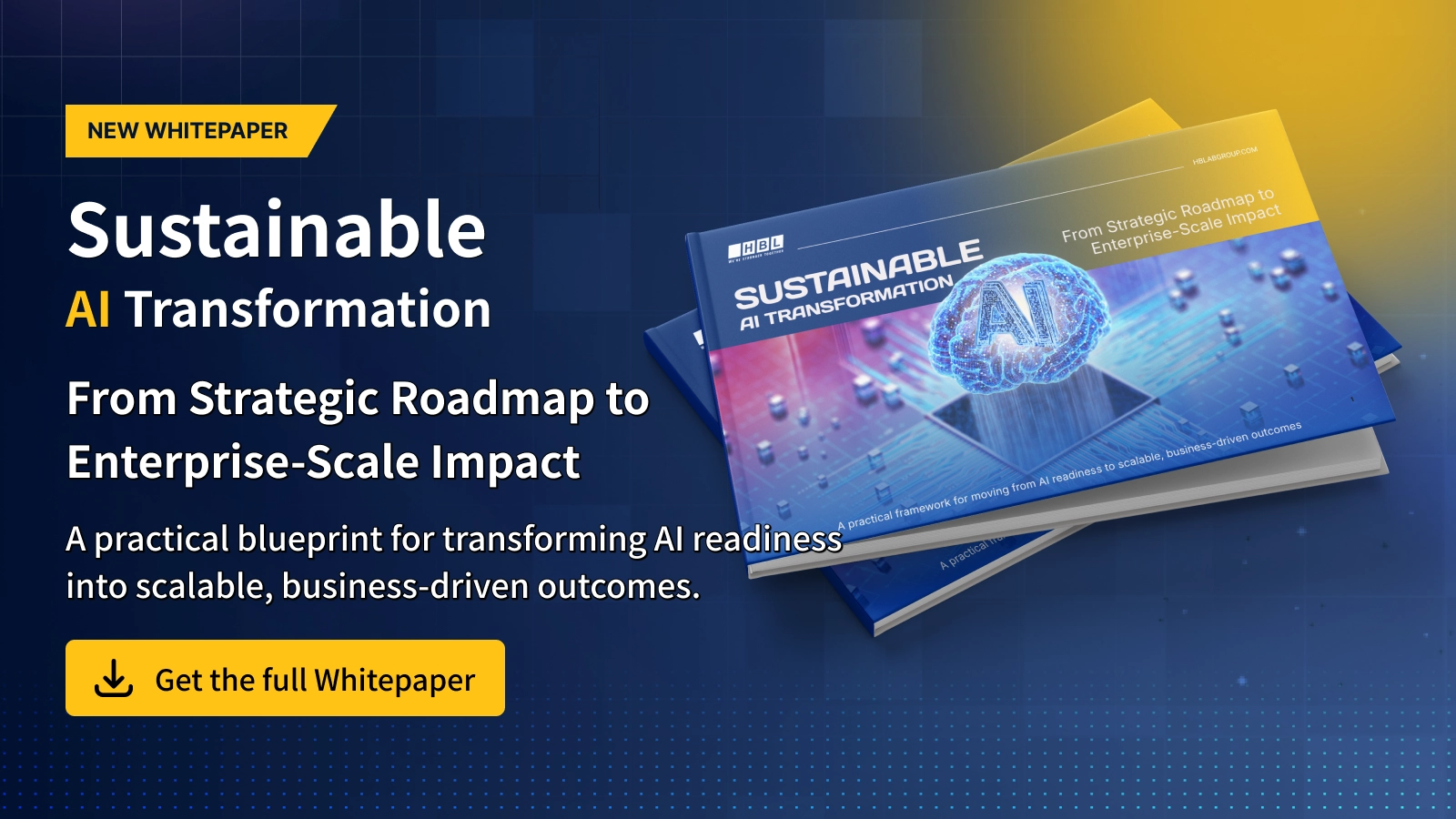
This comparison is only one piece of a larger decision. The AI Roadmap whitepaper lays out the complete path an engineering organization needs, from assessing its own readiness and AI maturity stage, through the phase-by-phase mechanics of applying AI across the SDLC, to the governance and risk framework required to scale it safely.
How AI supports Waterfall
Waterfall moves through requirements, analysis, design, development, testing, and maintenance in sequence. An issue that passes into the next phase may become expensive to correct because documents, approvals, and dependent work have already been completed.
AI is useful in Waterfall when it improves the quality of each phase before the project advances. It can find inconsistencies in requirements, support design review, check documentation, expand test coverage, and identify operational risks before deployment.
The main contribution is earlier control. Teams can reduce the number of errors passed downstream and maintain stronger traceability between requirements, design decisions, implementation, and acceptance results.
How AI supports Agile
Agile organizes work into short iterations that include planning, design, development, testing, review, and feedback. Requirements may change as users interact with the product and the team learns more about the operating environment.
AI helps Agile teams process new information quickly. It can summarize feedback, identify recurring requests, support backlog refinement, estimate effort, accelerate implementation, generate tests, and analyze post-release behavior before the next sprint begins.
The main contribution is a shorter cycle between evidence and action. AI gives the team more capacity to absorb feedback and prepare the next decision, while the product owner and delivery team continue to set priorities.
Choosing Between Agile and Waterfall for AI-Enabled Delivery
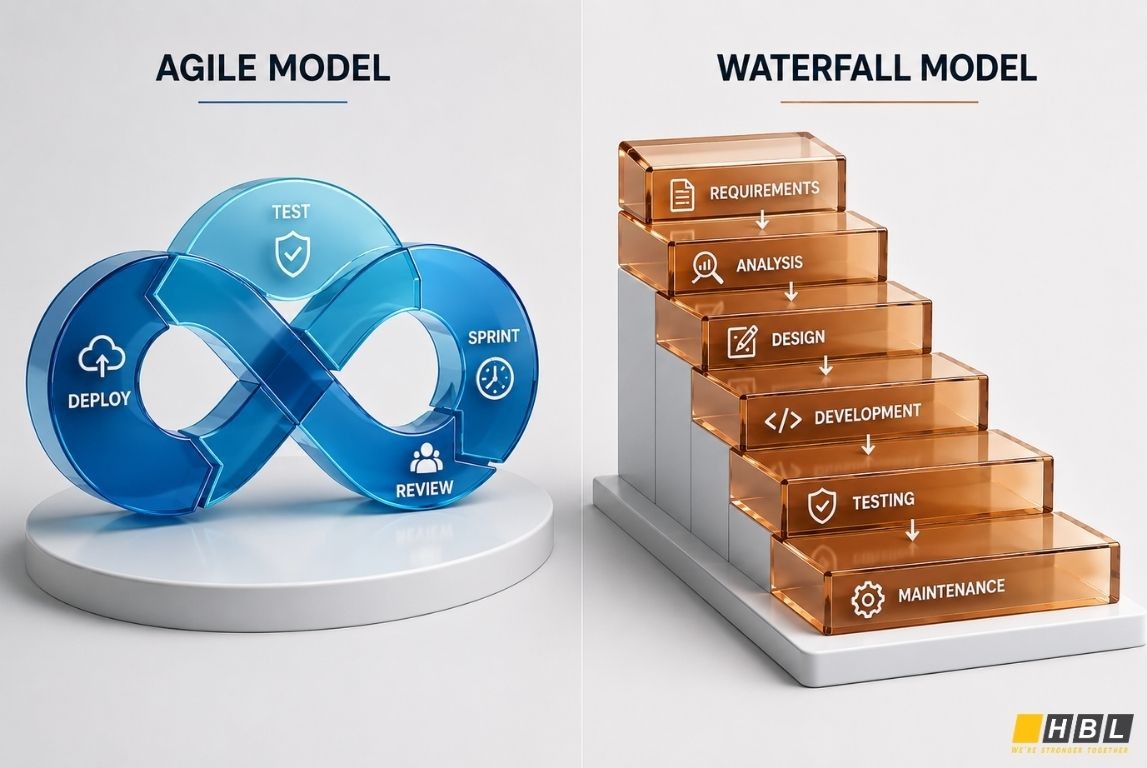
The choice between Agile and Waterfall still depends on the project. AI can improve either model, but it does not remove differences in requirements stability, approval structure, client participation, and risk tolerance.
Agile usually fits projects where the product is expected to evolve, early release is valuable, and users can provide regular feedback. Digital products, web applications, internal platforms, and customer-facing services often benefit from this structure because teams can release, measure, and adjust in smaller steps.
Waterfall is often appropriate when requirements are stable, documentation and approval gates are strict, or changes after design create substantial cost and risk. This may apply to regulated systems, fixed-scope migrations, infrastructure work, and projects with formal acceptance requirements.
Some projects use a hybrid structure. Requirements, architecture, security boundaries, and release controls may follow a defined sequence, while development and validation run in shorter iterations. AI can support this model when artifacts remain consistent across both parts of the process.
What AI in Software Development Looks Like Inside an Agile Sprint
Within an Agile sprint, AI can support several connected activities instead of operating as a separate tool outside the workflow.
During sprint planning, it can compare proposed work with previous tasks and highlight likely dependencies or estimation risks. While the team refines user stories, AI can identify missing acceptance criteria and inconsistent terminology. Developers may use coding assistants for repetitive implementation work, while testers generate initial scenarios from the same stories and requirements.
AI can also collect progress signals from project management tools, source repositories, test systems, and communication channels. These signals help the team prepare status reports and identify work that may need attention before the sprint review.
After release, usage data, support requests, incidents, and client feedback can be summarized for backlog refinement. The team then decides which findings should affect the next sprint. This keeps AI connected to the full iteration cycle instead of limiting it to code generation.
What Teams Need Before Scaling AI Across the SDLC
A pilot may show that one tool saves time for one role. Scaling AI in software development requires a stronger operating foundation because several roles, systems, and project artifacts need to work together.
First, the team needs consistent inputs. Requirements, user stories, design records, coding standards, test evidence, and operational logs must be available in forms that AI tools can process reliably. Weak or outdated project information will produce weak recommendations throughout the workflow.
Second, each AI-supported activity needs a review point and an accountable owner. Business owners approve requirements and priorities, architects approve technical direction, developers own code quality, testers confirm expected behavior, and operations teams control production actions.
Third, access must follow the project’s data and security rules. AI tools should receive only the source code, customer information, and production data required for the task. Logging and permission controls become more important as AI moves from generating suggestions to triggering workflow actions.
Finally, teams need to measure results at the process level. Useful measures may include requirement review time, change failure rate, defect escape rate, test preparation time, lead time for changes, incident resolution time, and release frequency. These measures show whether AI improves delivery performance instead of simply increasing tool usage.
HBLAB’s Approach to AI-Enabled Software Delivery
HBLAB selects the SDLC model according to the client’s requirements, scope stability, approval needs, and operating context. Projects that require frequent improvement may use Agile iterations, while projects with stable scope and formal controls may use Waterfall or a hybrid structure.
HBLAB applies AI in software development across activities such as requirements analysis, project coordination, coding support, testing, and post-release monitoring. M-Workspace supports this approach by centralizing project workflows and assigning role-specific AI agents to parts of the development life cycle.
The platform is intended to make AI support more consistent across the project, so its use does not depend entirely on individual working habits. Business direction, architecture, implementation choices, and release decisions remain with the teams responsible for the outcome.
This combination allows AI to reduce repetitive work and improve information flow while preserving human review at the points that carry delivery, security, or business risk.
CONTACT US FOR A FREE CONSULTATION
Conclusion
The value of AI in software development comes from applying it to a defined delivery process with reliable information, clear review points, and accountable decision-makers. Agile gains more speed in feedback and iteration, while Waterfall gains stronger consistency and risk control before work moves between phases.
Teams should begin with the bottleneck they need to improve, then choose the delivery model, AI capabilities, and controls that fit the project. This creates a more stable path from isolated tool use to AI-supported software delivery across the full SDLC.