
The Team Software Process is a comprehensive methodology designed by the Carnegie Mellon University Software Engineering Institute to guide engineering groups in developing software intensive products.
Leaders constantly seek reliable frameworks to build secure and scalable applications, making what is team software process a critical consideration for scaling development. It helps groups of various sizes create high quality and extremely reliable software while strictly meeting cost and schedule commitments.
This rigorously structured approach handles planning, tracking, and managing quality throughout the entire product lifecycle. Empowering self directed teams, integrating individual performance metrics, and following structured development phases form the core components of this methodology. A rigorous quality focus within this framework drastically reduces defects before testing even begins.
Organizations transform chaotic programming environments into predictable and highly productive business units by implementing this specific methodology.
To fully understand this ecosystem, you must also understand what is SPM and its importance. Software Project Management serves as the overarching discipline of planning, scheduling, resource allocation, and leading software projects to successful completion.
Its importance lies in mitigating risk, controlling budgets, and ensuring the final product meets customer requirements. The framework we are exploring today represents the absolute pinnacle of effective Software Project Management. If your organization struggles with missed deadlines or buggy releases, adopting this methodology is the most effective step you can take today.
What is the Team Software Process (TSP)
Created in the late twentieth century by Watts Humphrey, this framework rests on a simple but powerful philosophy. Engineering discipline creates professional freedom. Developers gain the autonomy to manage their own schedules when they have strict guidelines for measuring their work, estimating their time, and tracking their defects. They can make technical decisions without micromanagement from upper leadership.
In the realm of software engineering and organizational management, professionals generally recognize distinct categories of operation. Personal processes govern individual tasks and habits. Team processes dictate group collaboration and shared goals. Organizational processes standardize operations across multiple departments, while business processes align the entire enterprise toward profitability. This specific methodology sits perfectly at the intersection of personal and team processes.
A common question from new engineering managers is what is an example of a team process. An excellent example is the collaborative launch phase used to initiate a new software release. Developers gather during this event to define common goals, establish technical standards, assign administrative roles, and create a unified project schedule based on historical data.
These structured phases ensure that development moves sequentially and that quality is verified at every step:
-
Launch Phase: The group defines roles, sets project goals, analyzes risks, and builds a data driven plan.
-
Execution Phase: Developers follow their predefined plans, logging time and tracking defects daily.
-
Post Mortem Phase: After completion, the group analyzes performance metrics to identify root causes of defects and refine their processes.
Organizations that fully adopt this framework experience remarkable improvements in productivity, schedule accuracy, and a drastic reduction in post release critical bugs. Engineers find and fix errors the exact moment they are injected by emphasizing peer reviews, personal design verification, and strict coding standards. Fixing a bug early requires mere minutes rather than days, shifting the cost of quality to the earliest possible stages of development.
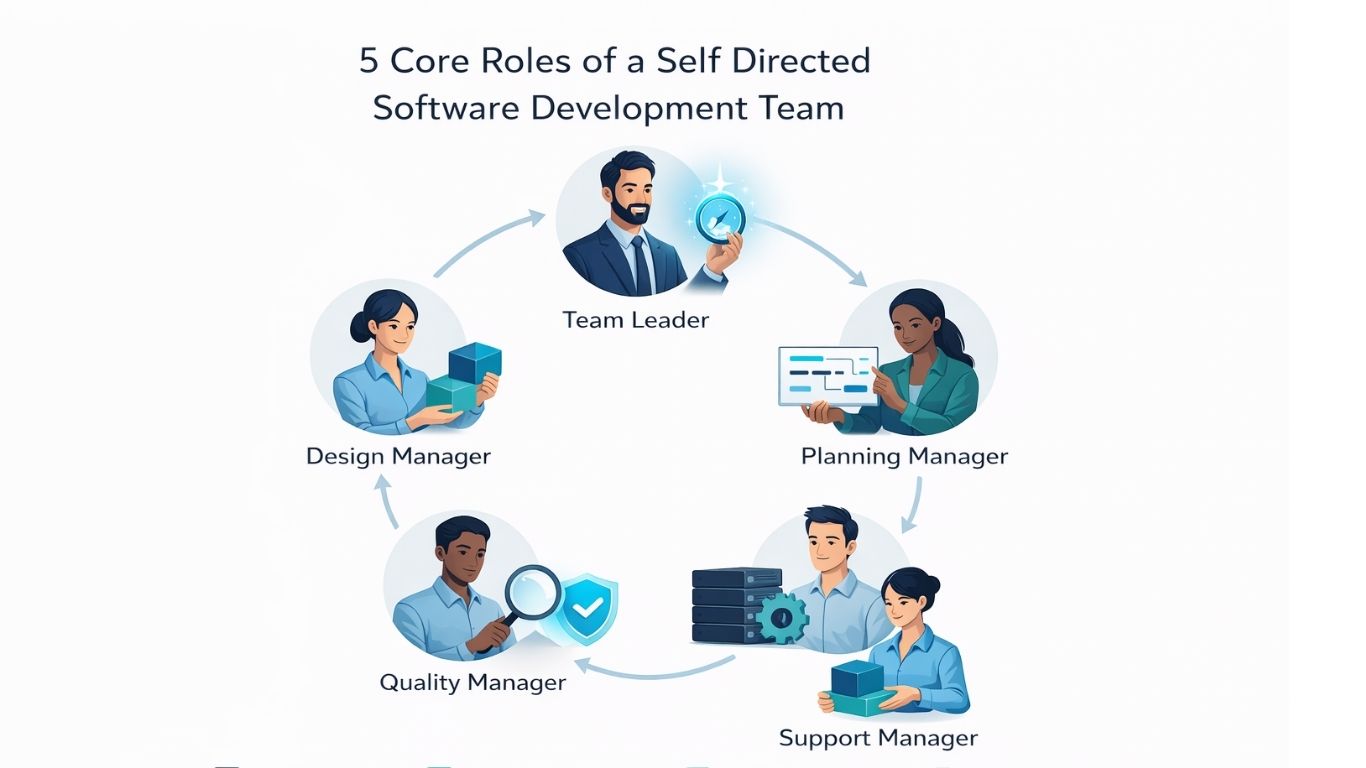
Each member assumes a specific role such as Team Leader, Planning Manager, Quality Manager, Support Manager, or Design Manager. Distributing these administrative and technical responsibilities ensures that the group remains entirely self directed.
What is a Personal Software Process (PSP)
A Personal Software Process establishes the foundation of individual engineering discipline. This formalized methodology helps individual software engineers organize, measure, and improve their daily programming tasks. Created entirely by Watts Humphrey prior to his work on team methodologies, this individual framework teaches developers how to accurately estimate the time required to complete coding assignments.
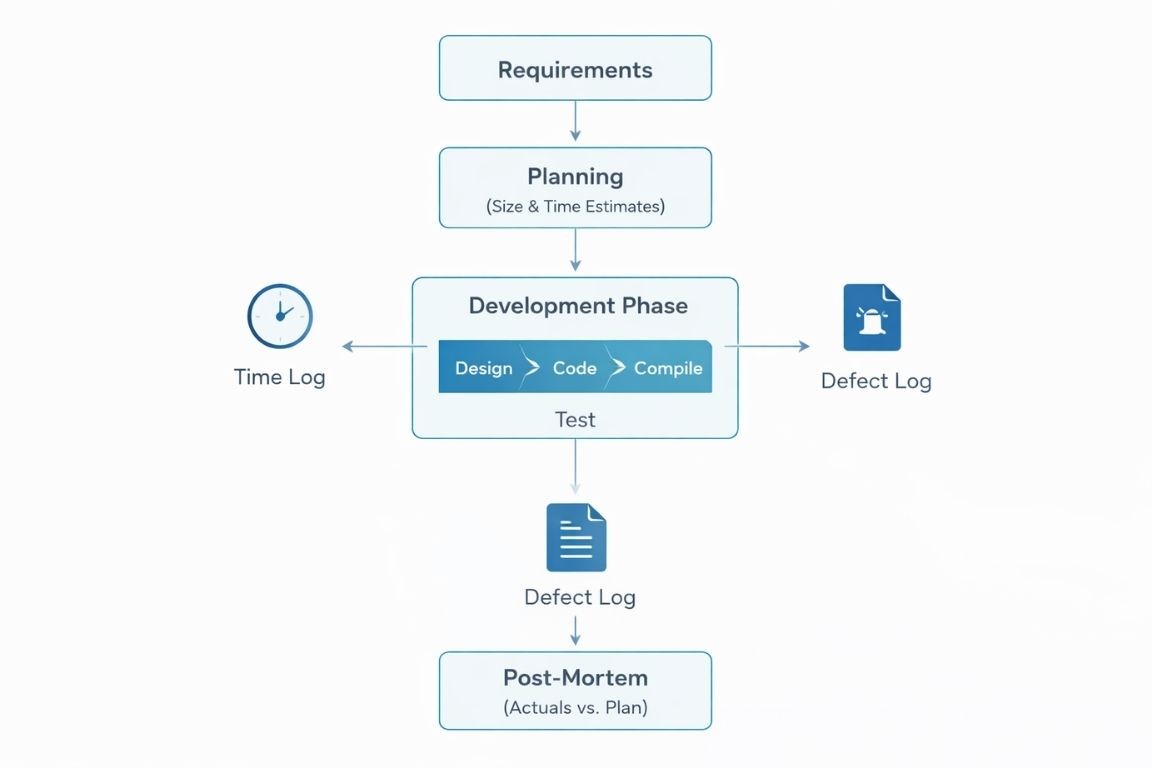
It trains them to track the specific types of errors they make while writing code. The core objective shifts the individual engineer from a chaotic trial and error coding style to a highly structured and predictable engineering discipline. Engineers trained in this methodology utilize specific logs and forms to record every minute spent on development phases such as planning, design, coding, compiling, and testing.
They maintain a strict defect recording log documenting every single syntax error or logical flaw. Recording the exact time it took to isolate and resolve that specific error builds a vital historical database. This data accumulation allows the engineer to calculate their personal defect injection rate and their defect removal efficiency.
A developer learns exactly which types of errors they are most prone to making by analyzing this historical data. They can then adjust their personal design and review checklists to catch those mistakes before compiling their code. This practice of finding and fixing errors early is known as personal yield, forming the absolute bedrock of high quality software development.
Engineers use a technique called proxy based estimation, comparing the size and complexity of a new feature to similar features they built in the past. Their estimates for new work become mathematically grounded because they have precise records of how long historical features took to build and test.
Difference Between PSP and TSP
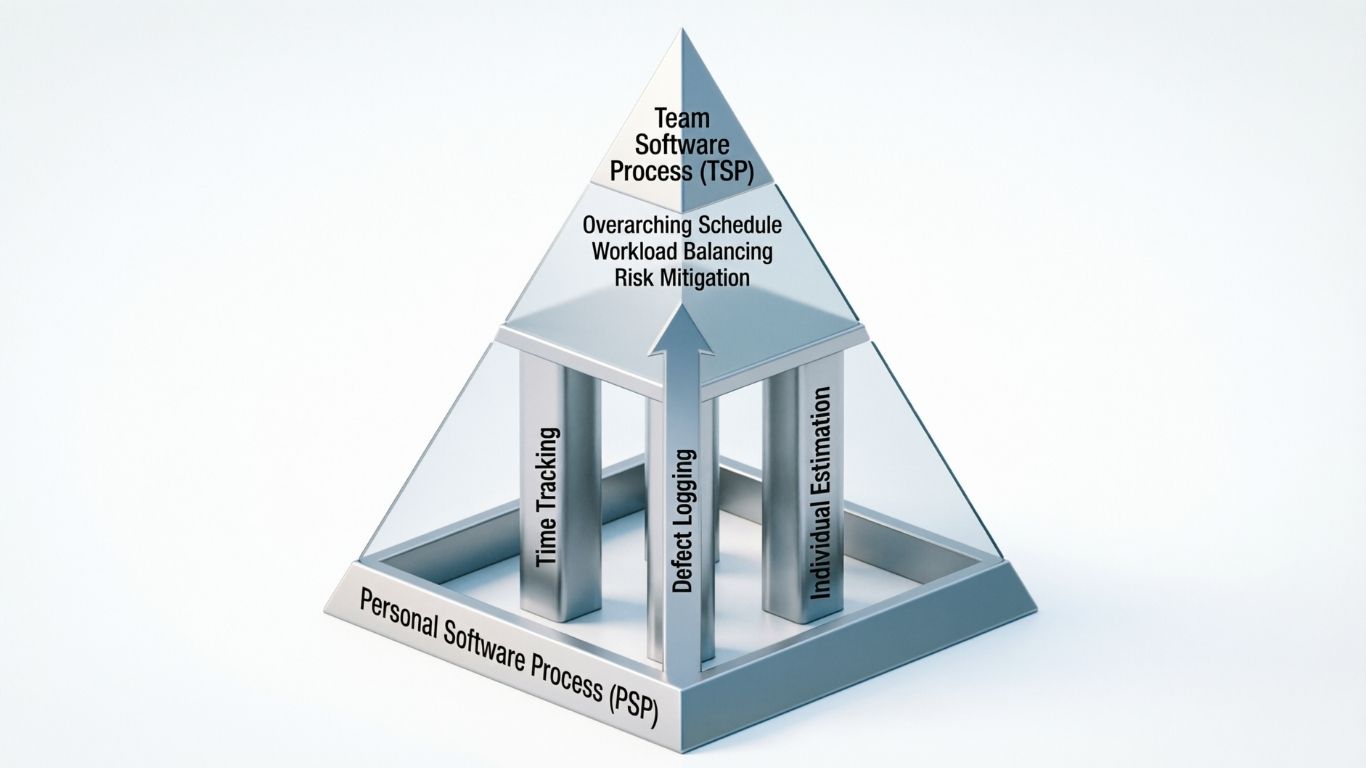
While both frameworks share an underlying philosophy of measurement, quality control, and continuous improvement, they operate at entirely different levels of scale. Grasping what is team software process requires recognizing how it builds upon individual disciplines to manage group dynamics and complex project integration. The individual methodology focuses inward on the single developer, whereas the collective methodology focuses outward on collaboration, shared goals, and resource balancing across multiple contributors.
The primary differences between these two methodologies revolve around scope, formality, and organizational impact:
-
Scope of Implementation: The personal methodology manages individual time and defect rates, while the collective methodology manages overarching project schedules and risk mitigation.
-
Structural Focus: The individual methodology emphasizes micro level technical activities like personal code compilation, whereas the collective methodology emphasizes macro level management activities like cross functional role assignments.
-
Data Utilization: Individual data is kept private for self improvement, but aggregated collective data is shared openly to calculate earned value and track project health.
-
Adoption Approach: The individual framework is a bottom up habit building approach, while the collective framework is a top down structural alignment.
The collective framework provides the necessary meeting structures and role definitions that allow individual engineers to merge their precise estimates into a single reliable project roadmap.
Team management software
The rigorous data collection required by these structural methodologies initially relied on physical binders and manual spreadsheets. Tracking every minute spent coding and logging every single defect manually creates an enormous administrative burden for developers. Modern team management software directly solves this problem by digitizing and automating the entire measurement framework. These digital platforms serve as the essential operational engine that makes executing disciplined engineering methodologies viable in contemporary environments.
Utilizing these digital tools eliminates the daily friction of manual time tracking and error logging. A centralized repository automatically calculates earned value and tracks overall project progress against the baseline plan. The platform instantly updates schedule variance metrics and defect density reports when a developer completes a task or discovers an error during a peer review. This immediate data visibility allows the Quality Manager to assess the true health of the codebase without interrupting the engineering workflow.
Selecting the proper digital infrastructure determines how successfully an organization can implement these structural methodologies. Engineering leaders must choose platforms that natively support granular time tracking, issue categorization, and complex capacity planning. The following platforms represent the top five digital tools capable of facilitating these rigorous engineering frameworks seamlessly:
-
Jira This industry standard platform excels at complex issue tracking and highly customizable workflows. Its distinctive feature includes native reporting modules that easily adapt to track defect removal efficiency and schedule variance.
-
Azure DevOps Designed specifically for enterprise software development, this platform integrates source control directly with project planning. It uniquely connects individual code commits to specific project tasks to automatically log development time and defect resolutions.
-
Linear This modern application focuses strictly on streamlining the software engineering workflow with remarkable speed. Its distinctive keyboard centric interface removes administrative friction so developers can update their task status rapidly without breaking their concentration.
-
ClickUp Known for extreme flexibility, this platform combines overarching project management with granular task tracking. Its distinctive strength lies in highly customizable dashboards that visually replicate the exact metric charts required by engineering leadership.
-
Asana This widely adopted tool provides exceptional visual timeline management and overarching capacity planning. Its distinctive workload balancing features perfectly support the Planning Manager in preventing individual engineer burnout during critical release cycles.
How to manage a software development team
Mastering how to manage a software development team requires shifting from taskmaster to facilitator. The fundamental rule of leading highly skilled technical professionals dictates that you cannot manage the technical work directly. You can only manage the environment, the processes, and the data.
Engineering managers empower their engineers to manage themselves by implementing a highly structured framework. Mastering the launch sequence serves as the crucial first step. A manager must never hand down a predetermined schedule to their engineers.
The manager presents the business requirements and allows the engineers to build their own detailed plan using historical data. The manager must respect mathematical estimates if the engineers determine that the required features cannot be delivered by the requested date. Objective data drives negotiations with stakeholders to reduce scope, extend deadlines, or add resources.
This data driven negotiation builds massive trust between the engineers and management. Maintaining a strict cadence of weekly meetings focused entirely on objective metrics keeps the project on track once in motion. The manager should review the earned value charts, the defect removal efficiency metrics, and current risk mitigation plans.
The group collaborates to redistribute tasks rather than reprimanding an individual falling behind their personal schedule. Managers must also enforce the post mortem analysis after every project phase. Leading a blameless review of what went wrong and what went right ensures continuous refinement of internal processes.
How staffing software maximizes team productivity
Projects lacking the necessary technical skills will fail regardless of their structural methodologies. Exploring how staffing software maximizes team productivity reveals its critical impact at the very beginning of the product lifecycle. The methodology requires the assignment of specific administrative and technical roles when a new initiative is launched.
Engineering directors use staffing software to analyze the skills matrix of their entire organization. These platforms ensure the right people are assigned to the right tasks by tracking historical performance, specific technical competencies, and domain expertise. Finding the exact combination of individuals required for a successful deployment becomes a streamlined, data driven process.
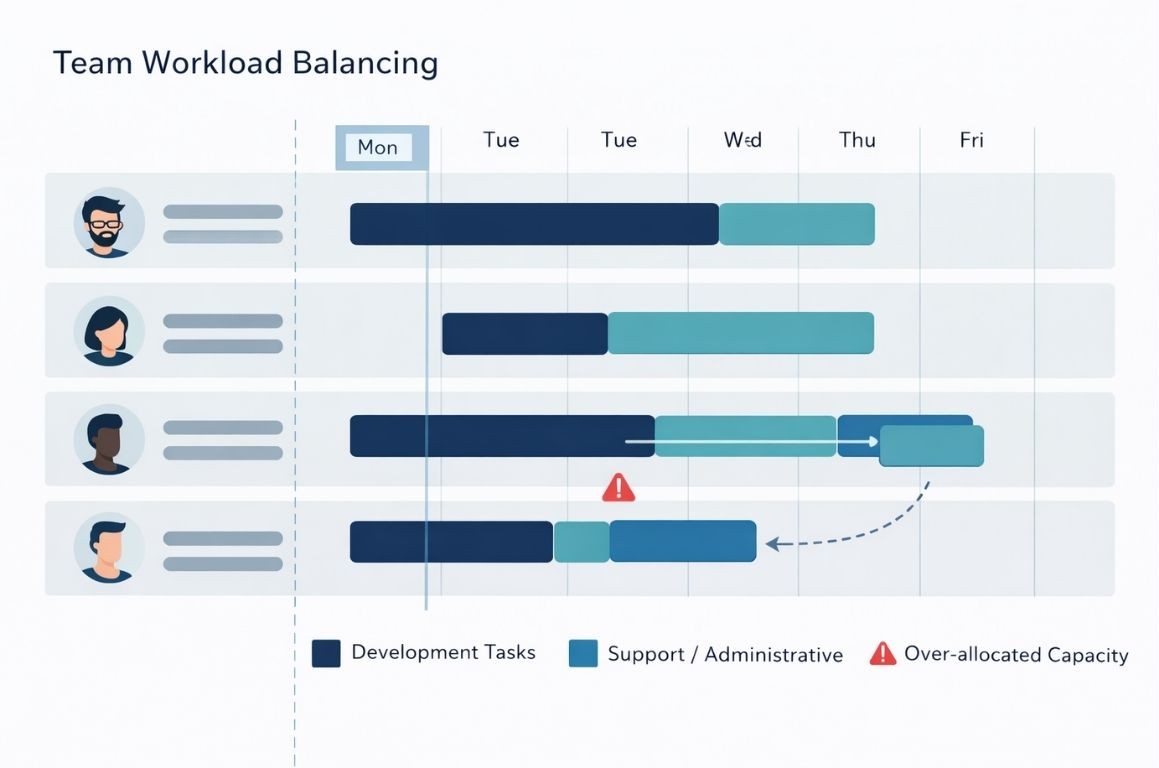
Unbalanced workloads pose a severe threat to project stability, often turning senior engineers into severe bottlenecks while junior engineers lack actionable tasks. Staffing applications provide deep visibility into individual capacity and availability. The Planning Manager consults these tools when planning a new phase to ensure no single individual is over allocated based on their historical velocity.
This precise capacity planning directly supports the core metrics of the chosen methodology. The staffing platform tracks allocation if an engineer splits their time between development and support. It ensures that the project schedule remains grounded in reality rather than optimistic assumptions about employee availability.
Specialized human resource platforms significantly reduce the ramp up time for new engineers joining an existing project. A new hire can be immediately matched to a group based on their familiarity with specific quality metrics and coding standards when an organization standardizes its operations. The platform triggers automated onboarding workflows that train the new engineer on the exact defect tracking tools utilized by their specific group. Integrate intelligent staffing solutions today to directly amplify the productivity gains generated by structured methodologies.
People Also Ask
1. What is the team software process?
The Team Software Process is a comprehensive framework created by the Carnegie Mellon University Software Engineering Institute to guide engineering groups. It helps groups of two or more developers plan, track, and manage their work to deliver high quality applications strictly on schedule.
2. What is an example of a team process?
A prime example is the collaborative project launch phase where all members gather to define shared goals. The group assigns administrative roles, establishes technical standards, and creates a unified delivery schedule based entirely on historical performance data during this critical event.
3. What is the difference between personal software process and team software process?
The personal framework focuses entirely on individual habits like tracking private coding time and logging specific syntax errors. The collective framework scales those individual metrics upward to manage overarching group schedules, distribute workloads equitably, and mitigate broader project risks.
4. What is SPM and its importance?
Software Project Management involves planning, scheduling, resource allocation, and leading technical initiatives to successful completion. Its paramount importance lies in controlling financial budgets, mitigating operational risks, and ensuring the final application strictly meets all customer requirements.
5. What are the 4 types of processes?
Professionals generally classify operational frameworks into personal processes governing individual tasks and team processes dictating group collaboration. They also recognize organizational processes standardizing departmental operations and business processes aligning the entire enterprise toward corporate profitability.
6. Which is better, CSE or SE?
Neither Computer Science Engineering nor Software Engineering is objectively better since they serve entirely different career objectives. Computer Science Engineering provides a broader foundation in computing hardware and theoretical algorithms, whereas Software Engineering focuses strictly on practical application development and rigorous project management methodologies.
7. Which is harder, CS or SE?
Computer Science often feels harder for individuals who struggle with advanced mathematics, theoretical computation, and complex algorithmic logic. Software Engineering presents its own unique difficulties by requiring mastery of group dynamics, rigorous quality management frameworks, and the practical challenges of delivering large scale applications on strict deadlines.
Read more:
– Selecting an AI Agent Development Outsourcing Company in Vietnam
– Top-Rated Software Outsourcing Companies in Vietnam
– Software Development Life Cycle vs Product Life Cycle: A Comprehensive Comparison for Global Markets