
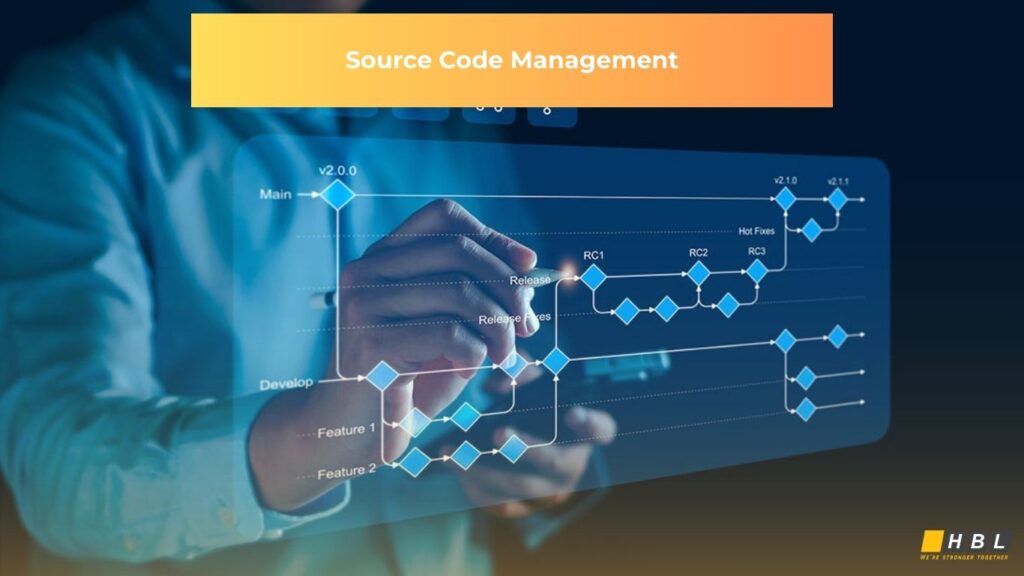
What Is Source Code Management?
Source code management (SCM) is the practice of systematically organizing, tracking, and controlling changes to source code throughout the software development lifecycle. It enables development teams to collaborate efficiently, maintain code quality, track revisions, and ensure that software can be built, tested, and deployed reliably at any point in time.
At its core, source code management answers critical questions for modern software teams:
- What changed in the codebase?
- Who made the change, and why?
- When did the change occur?
- How can we revert or branch safely without disrupting production?
As software systems grow more complex and distributed, effective source code management becomes foundational to scalability, security, and long-term maintainability.
Why Source Code Management Is Critical in Modern Software Development
In today’s digital economy, software is rarely built by a single developer. Global teams, agile methodologies, CI/CD pipelines, and cloud-native architectures have transformed how code is written and delivered. Without proper source code management, organizations face serious risks such as code conflicts, lost changes, security vulnerabilities, and deployment failures.
Effective source code management delivers measurable business value:
- Faster development cycles through parallel work
- Reduced production incidents via traceable changes
- Stronger security and compliance through controlled access
- Improved collaboration across distributed teams
- Higher software quality through consistent version control

For enterprises in regulated industries such as finance, healthcare, and manufacturing, SCM is not optional—it is a compliance and governance requirement.
How Do You Manage Source Code?
Managing source code effectively requires more than choosing a repository. It involves a combination of tools, workflows, policies, and cultural practices.
At a high level, source code management typically includes:
- A centralized or distributed repository to store code
- Version control mechanisms to track changes
- Branching and merging strategies
- Access control and audit logging
- Integration with testing, deployment, and monitoring systems
The most successful organizations treat source code management as a strategic capability, aligning it with DevOps, security, and business objectives.
Core Components of Source Code Management
Version Control Systems
Version control systems (VCS) are the foundation of source code management. They record every change to a file, enabling teams to review history, compare versions, and restore previous states when needed.
Two dominant models exist:
- Centralized version control (e.g., SVN)
- Distributed version control (e.g., Git)
Each has distinct strengths depending on team structure, legacy constraints, and governance needs.
Branching and Merging
Branching allows developers to work on features, bug fixes, or experiments independently. Merging integrates these changes back into a shared codebase.
A well-defined branching strategy reduces conflicts and accelerates delivery, especially in agile and DevOps environments.
Access Control and Security
Modern source code management tools enforce permissions, authentication, and audit trails. This ensures that only authorized users can view, modify, or deploy sensitive code, supporting compliance standards such as ISO 27001 and SOC 2.
Git Source Code Management Explained
Git source code management is the most widely adopted approach in the industry today. Git is a distributed version control system designed for speed, flexibility, and scalability.
Unlike centralized systems, Git allows every developer to have a complete copy of the repository, including its full history. This architecture enables offline work, faster operations, and resilient collaboration.
Key benefits of Git source code management include:
- High performance for large codebases
- Flexible branching and merging workflows
- Strong support for DevOps and CI/CD pipelines
- Broad ecosystem of tools and integrations
Popular Git-based platforms include GitHub, GitLab, and Bitbucket, all of which extend Git with collaboration, security, and automation features.
SVN Source Code Management: When and Why It Still Matters
SVN source code management (Subversion) represents a centralized version control approach. Although Git dominates new projects, SVN remains relevant in many enterprises with legacy systems or strict governance requirements.
SVN offers:
- Centralized control and simplified permission models
- Predictable workflows for regulated environments
- Strong support for large binary files
- Easier conceptual model for non-distributed teams

Organizations with long-running enterprise systems often continue to rely on SVN source code management while gradually modernizing their development practices.
Source Code Management Tools: A Comparative Overview
Selecting the right source code management tools depends on team size, project complexity, security requirements, and long-term strategy.
- Git-Based Tools
GitHub, GitLab, and Bitbucket dominate the modern SCM landscape. They support distributed development, automation, and collaboration at scale.
- Centralized Tools
Apache Subversion (SVN) and Perforce Helix Core are common in enterprises managing large repositories, binaries, or regulated workflows.
- Cloud vs On-Premise SCM
Cloud-based SCM tools offer rapid setup and scalability, while on-premise deployments provide maximum control for security-sensitive organizations.
A hybrid approach is increasingly common, combining cloud agility with enterprise governance.
How Source Code Management Supports DevOps and CI/CD
Source code management is the backbone of DevOps. Every automated pipeline begins with a code change stored in a repository.
Integrated SCM enables:
- Automated testing triggered by commits
- Continuous integration across branches
- Controlled releases through tagged versions
- Rollback and recovery through version history
Without robust source code management, CI/CD pipelines become fragile and error-prone.
Best Practices for Managing Source Code at Scale
Establish a Clear Branching Strategy
Whether using GitFlow, trunk-based development, or a hybrid approach, teams should standardize how branches are created, reviewed, and merged.
Enforce Code Reviews
Code reviews improve quality, security, and knowledge sharing. Modern SCM tools provide pull requests, inline comments, and approval workflows.
Automate Where Possible
Automation reduces human error. Integrate SCM with testing, security scanning, and deployment pipelines to enforce consistency.
Maintain Documentation and Standards
Clear contribution guidelines, commit message conventions, and repository structures reduce onboarding time and improve collaboration.
Security and Compliance in Source Code Management
As cyber threats increase, source code has become a high-value target. Secure source code management is essential for protecting intellectual property and customer data.
Key security considerations include:
- Role-based access control
- Multi-factor authentication
- Audit logs and traceability
- Secure backup and disaster recovery
- Compliance with standards such as CMMI, ISO 27001, and SOC 2
Enterprises should treat SCM as part of their broader security architecture, not just a developer tool.
Common Challenges in Source Code Management
Despite its importance, many organizations struggle with SCM due to:
- Legacy tools that do not scale
- Inconsistent workflows across teams
- Poor integration with DevOps pipelines
- Limited security controls
- Lack of governance and ownership
Addressing these challenges often requires both technical modernization and organizational change.
Future Trends in Source Code Management
Source code management continues to evolve alongside AI, cloud computing, and platform engineering.
Key trends include:
- AI-assisted code reviews and change analysis
- Policy-as-code for governance and compliance
- Deeper integration with low-code and no-code platforms
- Enhanced security scanning embedded in SCM workflows
- Unified developer platforms combining SCM, CI/CD, and observability
Organizations that modernize their SCM strategy today will be better positioned to adopt these innovations tomorrow.
How HBLAB Supports Enterprise-Grade Source Code Management
HBLAB is a global IT outsourcing and software engineering partner that helps organizations design, implement, and optimize source code management strategies tailored to their business needs.
With 630+ experienced engineers, HBLAB supports both modern Git-based environments and legacy SVN source code management systems, ensuring smooth collaboration across distributed teams.
Why Enterprises Choose HBLAB
HBLAB delivers tangible value in source code management through:
- Proven experience with Git and SVN across complex enterprise projects
- Strong English communication skills and multicultural delivery teams
- Flexible engagement models including Offshore, Onsite, Dedicated Team, and BOT
- Cost efficiency with up to 30% savings compared to local development teams
- Senior-level expertise, with over 30% of engineers having more than 5 years of experience
- Strict security and quality standards, including CMMI Level 3 certification
With headquarters in Vietnam and branch offices in Australia, Singapore, Japan, and South Korea, HBLAB supports global clients across time zones while maintaining high standards of delivery and governance.

Use Cases: How HBLAB Helps Clients Manage Source Code Effectively
HBLAB works with organizations at different stages of SCM maturity, from startups to large enterprises.
Typical engagements include:
- Migrating from SVN to Git source code management
- Designing scalable branching and release strategies
- Integrating SCM with CI/CD and DevOps pipelines
- Securing repositories for compliance-driven industries
- Supporting long-term maintenance and modernization programs
Each engagement is tailored to the client’s technology stack, regulatory environment, and business goals.
Choosing the Right Partner for Source Code Management
Selecting a technology partner is as important as selecting the right tools. Effective source code management requires deep technical expertise, process maturity, and an understanding of enterprise constraints.
HBLAB combines engineering excellence with cost-effective delivery, making it a trusted partner for organizations seeking to improve software quality, accelerate delivery, and reduce operational risk.
Conclusion: Building a Sustainable Source Code Management Strategy
Source code management is no longer just a developer concern—it is a strategic business capability. From Git source code management to SVN source code management, from startups to global enterprises, SCM underpins software reliability, security, and innovation.
By adopting modern tools, enforcing best practices, and working with experienced partners like HBLAB, organizations can transform source code management into a competitive advantage.
If your organization is looking to modernize or optimize its source code management approach, HBLAB is ready to support your journey with scalable, secure, and cost-effective solutions.
Read more:
– Top Ecommerce Website Development Company Full Guide
– Human Resource Management Software: Transforming Workforce Operations
– Product Development: The Complete Guide to Strategy, Methodologies, and Tools