What Outsourced IT Services Actually Mean for a Business
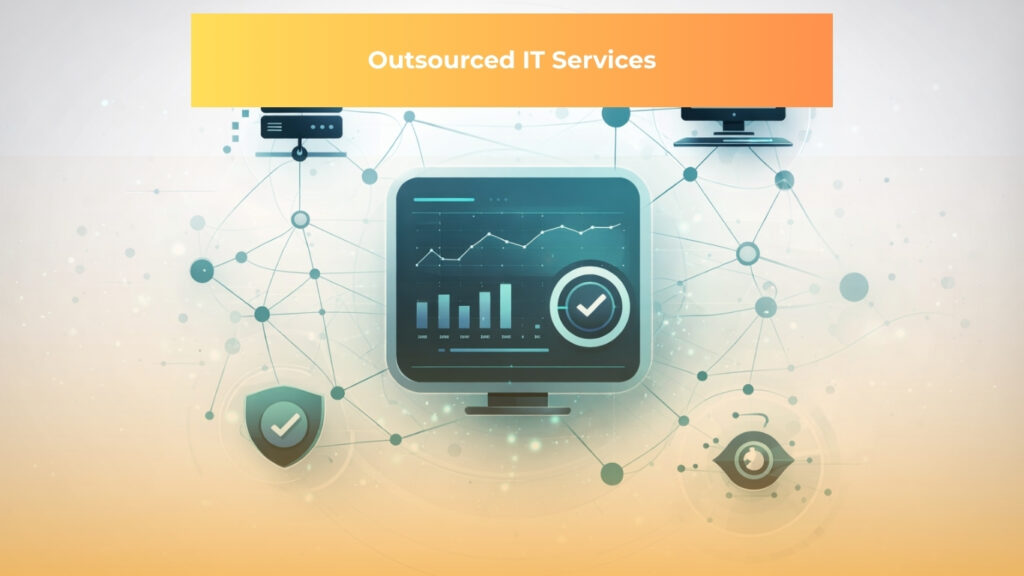
Outsourced IT services refer to the practice of contracting an external provider to manage some or all of a company’s information technology operations. This arrangement transfers responsibility for tasks such as network monitoring, cybersecurity, help desk support, software maintenance, and infrastructure management to a third party that specializes in these areas. The external provider, often called a Managed Service Provider or MSP, becomes responsible for keeping systems running, preventing problems before they occur, and responding quickly when issues arise.
The concept of outsourced IT services emerged as businesses recognized that maintaining an internal IT department was not always practical or cost effective. Large enterprises have the financial resources to hire specialized staff for every technical discipline, but small and medium sized businesses rarely have that option. For these organizations, outsourcing provides access to the same quality of technical expertise without the overhead of salaries, benefits, training, and equipment that come with full time employees.
Two primary models exist within outsourced IT services.
Fully managed outsourcing means the external provider assumes complete responsibility for an organization’s IT environment, handling everything from daily troubleshooting to long term strategic planning. This model works well for businesses that lack an internal IT team or prefer to focus entirely on their core operations.
Co-managed IT support represents a different approach. In this model, the business retains an internal IT staff but brings in an external provider to handle specific functions or provide additional capacity during peak periods. The internal team and external provider work together, each focusing on their areas of strength.
Understanding what a Managed Service Provider does helps clarify the value of outsourced IT services. An MSP is a company that delivers IT services to clients on a subscription basis, typically charging a fixed monthly fee rather than billing hourly for individual incidents. The MSP uses specialized software tools to monitor client systems continuously, identify potential problems, and resolve issues remotely whenever possible. Service Level Agreements, or SLAs, define the expected response times, resolution targets, and availability guarantees that the provider must meet.
The distinction between the older break-fix model and modern managed services matters considerably. Under the break-fix approach, a company calls a technician only after something stops working, resulting in unpredictable costs, extended downtime, and little incentive for the technician to prevent future issues.
Managed services operate on a proactive philosophy. The provider monitors systems constantly, applies updates before vulnerabilities are exploited, and works to prevent problems from occurring in the first place. This shift from reactive to proactive IT management represents a fundamental change in how businesses approach technology support.
The Seven Core Outsourced IT Services
Managed IT Services
Managed IT services represent the most comprehensive form of outsourced IT services available to businesses. This category encompasses the day to day monitoring, maintenance, and support of an organization’s entire technology infrastructure. A managed IT services provider takes responsibility for ensuring that servers, workstations, networks, and applications function reliably and securely.

Small and medium sized businesses without dedicated IT staff represent the primary audience for managed IT services. These organizations need reliable technology to operate but cannot justify the expense of hiring multiple specialists. Growing companies also benefit when their technology needs expand faster than their internal capacity can accommodate.
The specific problems that managed IT services solve include:
- Unpredictable IT costs and unplanned emergency expenses
- Frequent system failures and slow response times when problems occur
- Difficulty keeping pace with evolving security requirements
- Lack of strategic planning for long term technology needs
Implementation typically begins with a comprehensive assessment of the existing IT environment. The provider documents all systems, identifies vulnerabilities, and establishes baseline performance metrics. Remote Monitoring and Management software, called RMM, gets installed on servers and workstations to enable continuous oversight. A ticketing system tracks requests and issues, and the provider establishes communication protocols, defines escalation procedures, and creates documentation for common procedures.
Cybersecurity
Cybersecurity services protect an organization’s digital assets from theft, damage, and unauthorized access. This category of outsourced IT services has grown dramatically as threats have increased in frequency and sophistication. Providers deploy multiple layers of defense including firewalls, antivirus software, intrusion detection systems, and employee training programs.

Any business that handles sensitive data needs professional cybersecurity services. This includes companies that process credit card transactions, store customer personal information, or rely on proprietary intellectual property. Healthcare organizations subject to HIPAA (Health Insurance Portability and Accountability Act) regulations, financial services firms, and retailers maintaining payment card information face particularly stringent requirements.
Research indicates that 43% of cyber attacks target small businesses, yet only 14% consider themselves prepared to defend against such threats.
The problems cybersecurity services address extend beyond preventing attacks. Many organizations struggle to understand their actual risk exposure, implement appropriate controls, and maintain compliance with regulatory requirements. The average cost of a data breach has reached nearly five million dollars, making prevention far more economical than recovery. A Security Operations Center, known as a SOC, provides twenty four hour monitoring to detect and respond to threats in real time.

Implementation involves several structured phases. A risk assessment identifies vulnerabilities and prioritizes remediation efforts. Technical controls including firewalls, endpoint protection, and email filtering get deployed, followed by mandatory multi factor authentication for accessing sensitive systems. Employee training programs teach staff to recognize phishing attempts and follow security procedures. Regular penetration testing validates the effectiveness of defenses, and incident response plans ensure the organization can respond quickly if a breach occurs.
Cloud Services
Cloud services enable organizations to access computing resources, applications, and storage over the internet rather than maintaining physical infrastructure on their premises. This category of outsourced IT services includes infrastructure as a service, platform as a service, and software as a service offerings. Businesses use cloud services to reduce capital expenditure, improve scalability, and enable remote work capabilities.
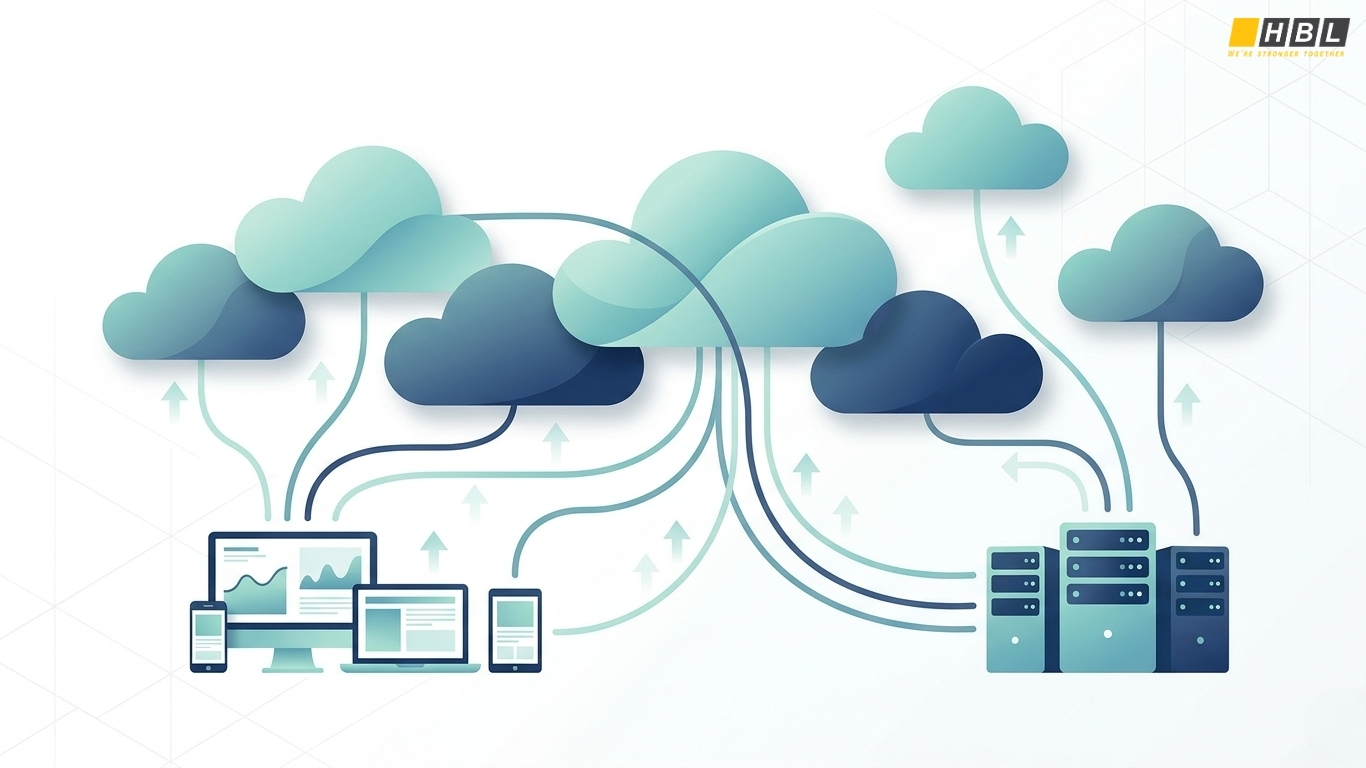
Companies experiencing rapid growth often turn to cloud services because the model allows them to add capacity quickly without purchasing and installing new hardware. Organizations with distributed workforces need cloud infrastructure to enable employees to access applications and data from multiple locations. The problems addressed include unpredictable infrastructure costs, difficulty scaling resources to match demand, limitations on remote access, and high maintenance requirements for on premises equipment.
Migration to cloud services requires careful planning. The provider evaluates existing applications and data to determine which workloads are suitable for cloud deployment. A migration strategy gets developed, addressing whether applications should be moved as-is, modified for cloud operation, or replaced with cloud native alternatives. Data transfer occurs during low usage periods to minimize disruption, followed by post migration optimization that ensures the environment performs efficiently.
Custom Software Development
Custom software development involves creating applications tailored to an organization’s specific needs rather than purchasing off the shelf solutions. This type of outsourced IT services addresses requirements that commercial software cannot meet effectively. Development teams design, build, test, and maintain software that integrates with existing systems and supports unique business processes.
Organizations with specialized workflows that cannot be accommodated by standard software packages need custom development. Companies seeking competitive differentiation through proprietary technology invest in custom applications. Businesses undergoing digital transformation initiatives often require custom solutions to modernize legacy systems that no longer receive vendor support.
The development process follows an established sequence. Requirements gathering documents what the software must accomplish. Design creates specifications for functionality, user interface, and technical architecture. Development builds the application, followed by quality assurance testing that validates the software works correctly under various conditions. Deployment moves the application into the production environment, and ongoing maintenance addresses bugs, adds features, and ensures compatibility with updated systems.
Data Analysis and Data Management
Data analysis and data management services help organizations extract value from the information they collect. These outsourced IT services encompass data collection, storage, processing, analysis, and visualization. Providers implement data pipelines, build analytics platforms, and create reporting systems that enable data driven decision making.
Businesses that accumulate large volumes of customer, operational, or financial data need professional data services to make sense of that information. Companies seeking to identify trends, predict customer behavior, or optimize operations based on quantitative analysis turn to data specialists. Organizations subject to data retention requirements or privacy regulations require proper data management practices to remain compliant.
The problems addressed include:
- Inability to access relevant data quickly when decisions need to be made
- Poor data quality that undermines the accuracy of analysis
- Lack of actionable insights to guide operational or strategic decisions
- Compliance risks from improper data handling and retention
Implementation begins with a data strategy that defines what information the organization needs, where it resides, and how it should be used. Data governance policies establish standards for quality, security, and retention. Integration with existing systems enables automated data collection, while reporting dashboards present insights to appropriate stakeholders.
>> See more: Data Security Solutions: Architecture and Framework Explained
Staff Augmentation
Staff augmentation provides organizations with temporary technical personnel who work alongside internal teams. This form of outsourced IT services differs from fully managed outsourcing because the external workers operate under the client’s direction rather than managing projects independently. Augmented staff fill skill gaps, provide additional capacity for projects, and bring specialized expertise that may not exist internally.
Organizations with existing IT departments that need additional resources for specific projects use staff augmentation. Companies facing technical skill shortages in their hiring markets turn to augmentation providers to access talent that would otherwise be unavailable. Businesses undergoing transitions due to mergers, technology migrations, or rapid growth need flexible staffing that can expand and contract as circumstances change.
The engagement typically begins with defining the skills and experience required. The augmentation provider screens candidates and presents options to the client, who then interviews and selects the professionals joining their team. The augmented staff member reports to the client’s management for day to day direction while the provider handles administrative matters such as payroll and benefits. Engagement duration ranges from short term assignments lasting a few weeks to long term placements spanning years.
AI and Machine Learning Solutions
AI and Machine Learning solutions represent an emerging category of outsourced IT services that applies artificial intelligence to business problems. These services include developing predictive models, implementing natural language processing systems, deploying computer vision applications, and integrating generative AI capabilities. Machine Learning Operations, commonly called MLOps, encompasses the practices for deploying and maintaining machine learning models in production.

Organizations seeking to automate decisions based on complex data patterns need AI and machine learning expertise. Companies wanting to extract insights from unstructured data such as images, text, or audio invest in these technologies. Businesses looking to create intelligent applications that can recognize patterns, make predictions, or generate content require specialized AI skills the internal team typically does not possess.
Implementation starts with identifying appropriate use cases where AI can deliver measurable value. Data preparation ensures the necessary information is available in suitable format for model training. Model development experiments with different algorithms and architectures, followed by validation that confirms the model performs accurately on new data. Monitoring tracks ongoing performance and triggers retraining when model accuracy degrades. Governance frameworks ensure responsible use of AI technologies throughout the process.
When to Outsource IT Services
Several signals indicate when a business has reached the point where outsourced IT services become necessary rather than optional. Recognizing these signs helps organizations make timely decisions before problems escalate.
Recurring IT issues that disrupt operations signal the need for professional support. When the same problems appear repeatedly, when systems fail regularly, or when employees cannot work because of technology failures, the situation requires intervention from specialists who can identify root causes and implement lasting solutions. Band-aid fixes applied by whoever happens to be available rarely address underlying problems.
Business growth that outpaces internal IT capabilities creates pressure to seek external support. As companies expand, their technology environments become more complex. More users, more devices, more applications, and more data generate demands that exceed what small internal teams can manage effectively.
A cybersecurity incident or unacceptably high risk exposure compels many organizations to seek outsourced IT services. Experiencing a breach, suffering data loss, or recognizing that defenses are inadequate motivates businesses to engage security specialists. The financial and reputational damage from security failures justifies investment in professional protection.
A new technology project requiring skills the internal team does not possess often triggers outsourcing. Implementing an enterprise resource planning system, migrating to cloud infrastructure, or developing a custom application may demand expertise that exists outside the organization. Rather than hiring permanent staff for what might be a one time need, businesses contract specialists for the duration of the project.
How to Outsource IT Services
The process of selecting outsourced IT services requires methodical evaluation. Rushing into an arrangement without proper due diligence frequently results in misaligned expectations and wasted resources.
Step 1: Assess current IT needs and identify gaps. Document what systems exist, what problems occur regularly, what skills are missing internally, and what strategic initiatives require technical support. This assessment provides the foundation for conversations with potential providers.
Step 2: Define the scope of services to outsource. Determine which functions will transfer to the external provider and which will remain internal. Specify what outcomes are expected, what metrics will measure success, and what budget constraints apply. Clear scope definition prevents misunderstandings later.
Step 3: Evaluate potential providers. Several factors require examination. Experience with similar organizations demonstrates relevant expertise. Industry certifications such as ISO 27001 for information security indicate commitment to professional standards. Knowledge of compliance requirements matters for healthcare, financial services, and government contractors. Service Level Agreement terms define response time commitments and remediation procedures, specifying what metrics the provider must meet and what remedies apply when standards are not achieved.
Step 4: Run a pilot program before full transition. A limited engagement reveals how the provider communicates, responds to issues, and delivers on promises. Problems discovered during a pilot can be addressed before they affect the entire organization.
Step 5: Establish communication protocols and assign an internal liaison. Regular meetings provide opportunities to review performance, address concerns, and plan future initiatives. A designated internal contact person coordinates between the provider and various departments, ensuring that information flows appropriately. This liaison role is critical to maintaining alignment between outsourced IT services and internal business objectives.
About HBLAB
Choosing the right partner for outsourced IT services means finding a provider with the technical depth, process discipline, and flexibility to support your business at every stage of growth.
HBLAB is a Vietnam-headquartered technology company with a global footprint, bringing over 10 years of experience delivering custom digital solutions across industries. With a team of 700+ IT professionals, including 30% senior-level engineers with five or more years of hands-on experience, HBLAB covers the full spectrum of outsourced IT services, from custom software development and data management to AI and machine learning integration.

HBLAB has built dedicated AI capabilities since 2017 through strategic partnerships with leading research institutions, positioning the company at the forefront of practical AI implementation for business. For organizations evaluating staff augmentation, HBLAB’s rigorous talent screening and seamless team integration process ensure that augmented professionals are ready to contribute from day one under your full direction.
HBLAB holds CMMI Level 3 certification, reflecting a commitment to process excellence and enterprise-grade quality standards. Flexible engagement models, including offshore, onsite, dedicated teams, and Build-Operate-Transfer arrangements, give clients complete control over workflows, tools, and delivery timelines, with cost efficiencies of up to 30% compared to local market rates.
CONTACT US FOR A FREE CONSULTATION
Frequently Asked Questions
1. What is the difference between outsourced IT services and in-house IT?
In-house IT refers to technology staff employed directly by the organization who work as company employees. Outsourced IT services involve contracting an external provider that delivers IT support as a service, employing its own staff, using its own tools and processes, and charging a recurring fee rather than salaries. In-house teams offer deep knowledge of the specific organization, while outsourced services provide access to a broader range of expertise and resources.
2. How much do outsourced IT services cost?
Costs vary based on the scope of services, number of users, complexity of the environment, and level of support required. Common pricing models include per user per month, per device per month, or tiered packages with different service levels. Small businesses might spend several hundred dollars per month for basic support, while larger organizations with comprehensive managed services may invest several thousand dollars monthly. The predictable nature of subscription pricing aids budget planning compared to variable break-fix expenses.
3. Are outsourced IT services safe for sensitive business data?
Reputable providers implement extensive security measures including encrypted communications, access controls that limit what staff can see, background checks on employees, and compliance certifications that demonstrate adherence to security standards. Contracts should address data handling requirements, confidentiality obligations, and breach notification procedures. Organizations should verify provider security practices before engaging services.
4. Can a small business afford managed IT services?
Small businesses can often afford managed IT services because the subscription model provides access to comprehensive support at a fraction of the cost of hiring equivalent internal staff. A single full time IT employee costs significantly more than salary alone when benefits, training, and equipment are included. Managed services provide an entire team of specialists for less than the total cost of one internal employee, and many providers offer packages specifically designed for small business budgets.
5. What is the difference between staff augmentation and fully outsourced IT services?
Staff augmentation provides individual technical professionals who work under the client’s direction to supplement existing teams, integrating into the client’s organization and following its processes. Fully outsourced IT services transfer management responsibility to an external provider that delivers complete IT support, manages its own staff, follows its own procedures, and takes accountability for outcomes. Staff augmentation suits organizations that want to maintain control while filling specific skill gaps, while full outsourcing appeals to those seeking to offload IT management entirely.
Read more:
– Software Development Life Cycle Phases: Step-by-Step Guide
– Choosing the right Labor Management System Software
– Technology Strategy for Non-Technical Executives: What It Is and How It Works