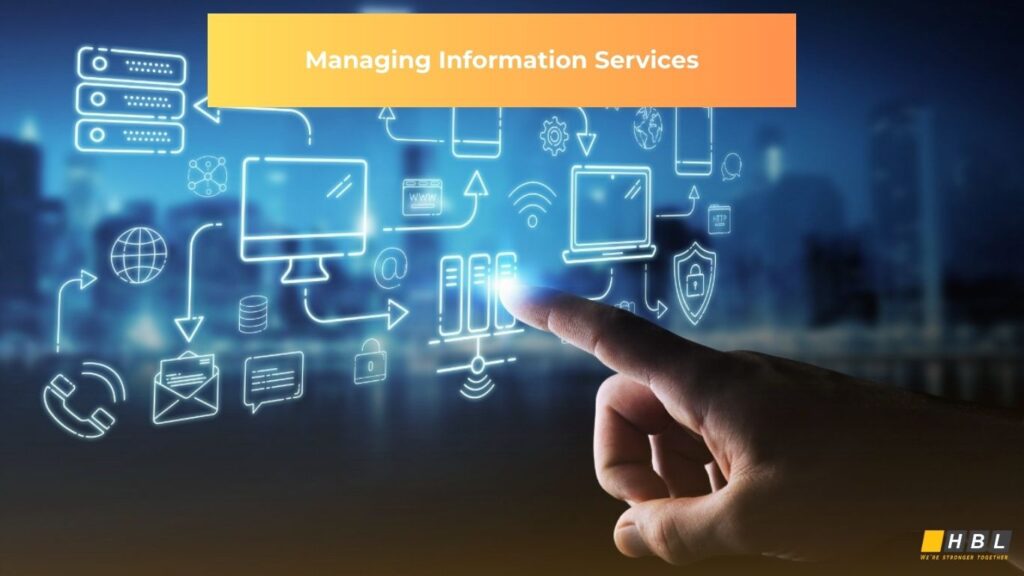
In an era where digital operations define business competitiveness, managing information services has become a critical capability rather than a supporting function. Organizations today rely on structured, secure, and scalable information services to ensure operational continuity, regulatory compliance, and long-term innovation.
This guide provides a comprehensive, up-to-date perspective on information technology service management (ITSM), information technology managed services, and how enterprises can build resilient, value-driven service models. It also explores how experienced global partners like HBLAB support organizations in transforming IT service management into a strategic advantage.
What Is Managing Information Services?
Managing information services refers to the systematic planning, delivery, operation, and continuous improvement of IT services that support business objectives. It goes beyond maintaining systems or resolving incidents—it focuses on aligning information technology with organizational strategy, performance, and growth.
At its core, managing information services aims to ensure that:
- The right services are delivered
- At the right quality and cost
- To the right users
- With measurable business outcomes
This discipline integrates people, processes, technology, and governance frameworks to manage the full lifecycle of IT services—from design and deployment to optimization and retirement.

What Is Information Technology Service Management (ITSM)?
Information technology service management (ITSM) is the structured approach used to design, deliver, manage, and improve IT services in alignment with business needs.
Unlike traditional IT operations that focus on infrastructure or tools, ITSM emphasizes:
- Service value
- Customer experience
- Process standardization
- Continuous improvement
Core Principles of ITSM
Modern ITSM frameworks share several core principles:
- Service orientation: IT is delivered as a service, not just a technical function
- Process-driven management: Standardized workflows ensure consistency and scalability
- Business alignment: IT outcomes are measured by business impact, not technical metrics alone
- Continual improvement: Services evolve based on feedback, data, and changing demands
Popular ITSM Frameworks and Standards
ITIL (Information Technology Infrastructure Library)
ITIL remains the most widely adopted framework for information technology service management. The latest version, ITIL 4, emphasizes:
- Value streams
- Co-creation of value
- Agile and DevOps integration
- Digital transformation readiness
ISO/IEC 20000
ISO/IEC 20000 is an international standard that certifies an organization’s ability to deliver managed IT services consistently and effectively.
COBIT
COBIT focuses on IT governance, ensuring that IT investments align with business goals, risk tolerance, and compliance requirements.
Why Managing Information Services Is Critical for Modern Enterprises
1. Business Continuity and Reliability
Well-managed information services reduce downtime, minimize operational risks, and ensure consistent service availability across global operations.
2. Cost Optimization
By standardizing processes and leveraging managed services, organizations can reduce IT overhead, eliminate inefficiencies, and better forecast costs.
3. Security and Compliance
Effective information service management enforces security controls, access policies, and audit readiness—essential in regulated industries.
4. Scalability and Agility
Modern ITSM enables businesses to scale services quickly, support remote work, and adapt to market changes without disrupting operations.
Information Technology Managed Services Explained
Information technology managed services involve outsourcing the responsibility for managing specific IT functions or entire IT environments to a specialized service provider.
Rather than reacting to issues, managed services adopt a proactive, preventive, and improvement-driven approach.
Common Managed IT Services
- Infrastructure monitoring and management
- Application support and maintenance
- Cloud operations and optimization
- Cybersecurity monitoring and response
- Help desk and service desk operations
- Data management and backup services
Managed Services vs Traditional IT Support
| Aspect | Traditional IT Support | Managed IT Services |
| Approach | Reactive | Proactive |
| Cost model | Variable, incident-based | Predictable, subscription-based |
| Responsibility | Shared or unclear | Clearly defined SLA |
| Improvement | Limited | Continuous optimization |
| Business alignment | Low | High |
Key Components of Effective Information Service Management
- Service Strategy
Defines what services are offered, to whom, and why. This ensures IT investments support long-term business goals.
- Service Design
Covers service architecture, security, availability, and capacity planning before deployment.
- Service Transition
Manages changes, releases, and knowledge transfer to ensure stable service introduction.

- Service Operation
Focuses on day-to-day activities such as incident management, request fulfillment, and monitoring.
- Continual Service Improvement (CSI)
Uses metrics, feedback, and analytics to enhance service quality and business value over time.
Metrics That Matter in Managing Information Services
High-performing organizations track service effectiveness using meaningful KPIs, including:
- Service availability and uptime
- Mean Time to Resolve (MTTR)
- Incident recurrence rate
- Customer satisfaction (CSAT)
- Cost per service unit
- SLA compliance rate
These metrics shift IT from a cost center to a value-driven business partner.
Challenges in Managing Information Services
Despite its importance, many organizations face challenges such as:
- Legacy systems and fragmented architectures
- Skill shortages in ITSM and service operations
- Poor visibility into service performance
- Resistance to process standardization
- Security and compliance complexity
This is where experienced managed service providers play a critical role.
How Global Enterprises Approach Information Service Management Today
Leading organizations increasingly adopt:
- Cloud-based ITSM platforms
- Automation and AI-driven monitoring
- Integrated DevOps and ITSM workflows
- Outcome-based managed services
- Hybrid offshore–onsite delivery models
These approaches reduce operational friction while improving speed and reliability.
Choosing the Right Partner for Managing Information Services
When selecting an ITSM or managed services partner, organizations should evaluate:
- Proven experience with complex, large-scale systems
- Security certifications and governance maturity
- Flexible engagement models
- Global delivery capability
- Transparent SLAs and KPIs
HBLAB – Your Trusted Partner in Managing Information Services
HBLAB is a global IT services provider specializing in managing information services, information technology service management, and information technology managed services for enterprises and fast-growing organizations worldwide.
Why Organizations Choose HBLAB
With 630+ skilled professionals, HBLAB delivers reliable, scalable, and secure information services tailored to diverse business needs.
Key strengths include:
- Global presence with headquarters in Vietnam and offices in Australia, Singapore, Japan, and South Korea
- 30% senior-level engineers with over 5 years of experience handling complex, mission-critical systems
- Strong English communication capability for seamless international collaboration
- Flexible engagement models: BOT, offshore, onsite, and dedicated teams
- Cost efficiency, offering up to 30% savings compared to local service providers
- Broad technical expertise across enterprise platforms, cloud, and modern application stacks
- Strong security governance with CMMI Level 3 certification, ensuring structured, secure service delivery

HBLAB’s approach to information technology managed services focuses on proactive monitoring, continuous improvement, and business-aligned outcomes, helping clients transform IT operations into a strategic asset.
Read more:
How HBLAB Delivers Value in Information Technology Service Management
HBLAB supports the full ITSM lifecycle:
- Service assessment and roadmap design
- Process standardization aligned with ITIL principles
- 24/7 monitoring and service desk operations
- SLA-driven managed services
- Continuous optimization and reporting
This enables organizations to focus on innovation while HBLAB ensures operational excellence.
Future Trends in Managing Information Services
Looking ahead, managing information services will increasingly incorporate:
- AI-driven service automation
- Predictive incident management
- Self-service portals and intelligent chatbots
- Integrated security and compliance frameworks
- Data-driven service optimization
Organizations that invest early in modern ITSM and managed services will gain resilience, agility, and competitive advantage.
Conclusion: Turning Information Services into Business Value
Managing information services is no longer optional—it is fundamental to digital success. By adopting structured information technology service management practices and partnering with experienced providers of information technology managed services, organizations can reduce risk, control costs, and unlock long-term value.
With its global delivery capability, senior-level expertise, flexible engagement models, and strong security governance, HBLAB stands ready to help enterprises modernize and optimize their information service management strategies.
Ready to elevate your IT services?
Partner with HBLAB to transform managing information services into a strategic advantage for your business.
CONTACT HBLAB FOR A FREE CONSULTATION!
Read more:
– Custom Application Development 2025: Definitive Guide, Fast‑Track Steps, Trusted Services
– Managed IT Services for Manufacturing: Supercharging Growth