Farm technology has fundamentally reshaped how modern farmers approach crop production, resource management, and sustainability. The convergence of sensors, artificial intelligence, robotics, and data analytics represents the most significant agricultural transformation in generations.
This comprehensive guide explores the critical innovations driving farming technologies worldwide and how they address the pressing challenges of food security, environmental sustainability, and labor shortages.
Understanding Farm Technology

Farm technology encompasses the complete spectrum of tools, systems, and methodologies designed to enhance agricultural productivity and efficiency. Unlike traditional approaches relying on experience and intuition, modern farming technologies leverage real time data, predictive algorithms, and automated machinery to make informed decisions about every aspect of crop management.
Today’s farm technology represents an integrated ecosystem where precision agriculture hardware communicates with cloud based software, autonomous vehicles coordinate with sensor networks, and artificial intelligence processes vast datasets to guide farming decisions.
This digital transformation allows farmers to monitor individual plants across thousands of hectares simultaneously, adjust inputs with centimeter level accuracy, and predict outcomes weeks before harvest.
AgTech, short for agricultural technology, represents the specialized subset of farm technology focused on technological innovation.
AgTech encompasses innovations in agriculture including advanced sensors, autonomous systems, biotechnology, and data management platforms.
The AgTech definition extends beyond equipment to include the software ecosystems, connectivity infrastructure, and knowledge systems that enable precision farming at scale.
How Does Technology Affect Farming
Technology fundamentally affects farming by shifting the paradigm from reactive management to proactive optimization. Where farmers once relied on seasonal experience and visual assessment, technology now provides continuous monitoring and predictive capabilities.
The impact of farming technologies operates across three critical dimensions: productivity, sustainability, and resilience.
Technology affects farming productivity through precision application of inputs. Rather than applying fertilizers, pesticides, and water uniformly across entire fields, farming technologies enable variable rate application based on site specific soil and crop conditions. This targeted approach reduces input waste while maximizing crop yield, often delivering 5 to 15 percent yield increases alongside 25 to 40 percent reductions in water consumption.
Modern farming technologies have changed agriculture from a labor intensive industry dependent on manual observation into a data driven enterprise. Farms now operate as digitally connected ecosystems where continuous monitoring generates actionable intelligence for every management decision.
Key Technologies Transforming Modern Agriculture
Global Navigation Satellite Systems and Precision Positioning
Global Navigation Satellite Systems (GNSS) including GPS and RTK (Real Time Kinematic) technologies form the foundational layer of precision agriculture.
These systems provide positioning accuracy down to the centimeter, enabling autonomous vehicle navigation and site specific input application across entire fields.

Modern farming uses GNSS technology for multiple critical functions. Autonomous tractors navigate fields with centimeter level precision, reducing seed overlap by up to 12 percent and preventing unnecessary passes that waste fuel and compact soil. Variable rate irrigation systems utilize GNSS to apply water according to specific soil moisture conditions in different field zones, achieving water savings of 25 to 30 percent while improving crop quality by 30 percent.
The precision agriculture technology achieves measurable results. A wheat farm implementing GPS enabled variable rate irrigation can achieve a 25 percent decrease in water usage alongside a 30 percent increase in crop quality.
Such outcomes demonstrate that farming technologies deliver concrete financial and environmental benefits beyond theoretical potential.
IoT Sensors and Real Time Field Monitoring

Internet of Things (IoT) sensor networks form the sensory apparatus of modern farms. Soil moisture sensors measure water content at multiple depths throughout the root zone, while soil nutrient sensors track nitrogen, phosphorus, and potassium levels with electrochemical precision. Weather stations on farms monitor temperature, humidity, rainfall, and solar radiation in real time.
These IoT devices transmit continuous data streams to cloud based platforms where machine learning algorithms identify patterns and alert farmers to emerging problems.
Satellite Imagery and Remote Sensing
High resolution satellite imagery provides comprehensive field monitoring without requiring boots on the ground. Modern platforms deliver daily updates with 3 meter resolution imagery that detects vegetation stress, monitors crop growth stages, and identifies pest or disease outbreaks at their earliest stages.
Vegetation indices derived from satellite data quantify crop health with remarkable precision. The Normalized Difference Vegetation Index (NDVI) assesses plant health and growth vigor. Multispectral indices identify specific nutrient deficiencies and moisture stress before symptoms become visible to the human eye.
Autonomous Machinery and Robotics
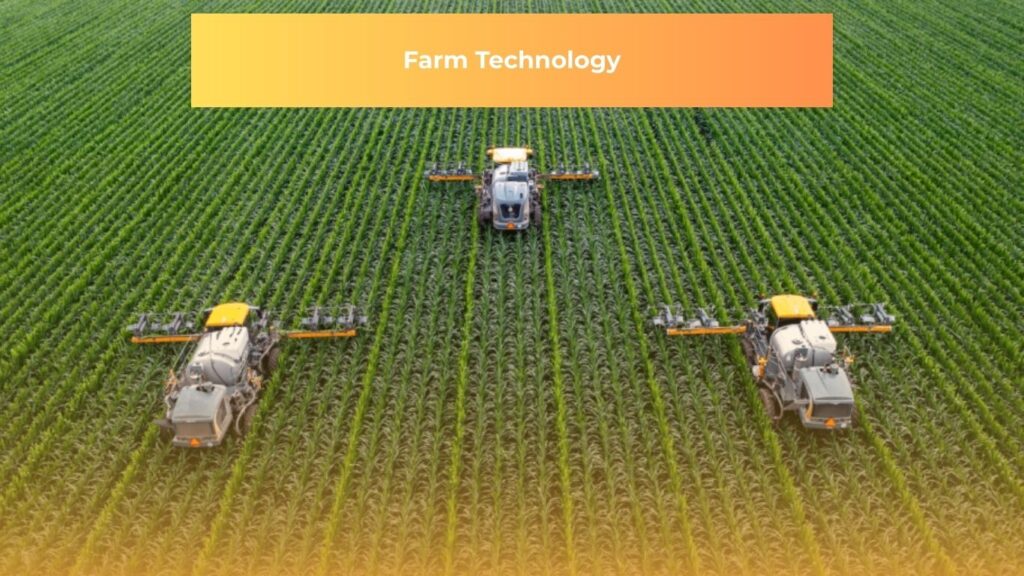
Autonomous tractors represent perhaps the most visible transformation in farming technologies. These self driving vehicles operate continuously without human operators, performing planting, spraying, tilling, and harvesting with programmable precision.

The advantages of autonomous machinery extend beyond convenience. These vehicles optimize travel routes to minimize fuel consumption by 10 to 20 percent while reducing operator fatigue. Autonomous systems execute field operations on optimal schedules regardless of weather or time of day, capturing narrow windows for critical field operations that would otherwise be missed.
Robotic harvesting systems have evolved to handle even delicate crops.
- Fieldwork Robotics successfully developed raspberry picking robots equipped with soft grippers and advanced sensors that identify ripe fruit and harvest gently without bruising.
- Floating Robotics developed tomato harvesting robots that process AI driven imaging to detect ripeness and harvest individual tomatoes precisely, completing harvests while maintaining plant health for continuous production.
Can robots pick crops represents a question increasingly answered affirmatively, with specialized systems now handling raspberries, strawberries, apples, cherries, and citrus fruits.
Drone Technology and Aerial Monitoring

Agricultural drones equipped with multispectral cameras and thermal sensors provide real time aerial views of crop conditions.
- Drones reduce pesticide use by up to 85 percent through precision spraying of affected areas rather than broad field coverage.
- Water consumption decreases by 40 percent when drones identify water stressed zones for targeted irrigation.
- Crop yields increase by 15 to 20 percent through early disease detection and timely intervention.
IoT based drones integrate with sensor networks to create comprehensive monitoring systems. When soil moisture sensors identify drought stressed areas, the drone management system automatically prioritizes those zones for investigation or treatment.
Data collected by drones flows into farm management platforms where it combines with soil sensor data, weather forecasts, and historical records to generate integrated decision support recommendations.
Variable Rate Application Technology
Variable rate technology represents the synthesis of precision guidance, sensor data, and input management. Instead of applying consistent rates of fertilizer, pesticide, or seed across entire fields, variable rate systems adjust application rates dynamically based on mapped field conditions or real time sensor data.

Map based variable rate application uses prescription maps generated from soil testing and historical yield data to guide equipment. Farmers upload these maps to tractors equipped with variable rate controllers, which automatically adjust application rates as the equipment moves across different field zones. Sensor based variable rate application relies on real time measurements to adjust rates continuously, with irrigation systems modifying flow rates based on instantaneous soil moisture readings.
Benefits of Smart Farming Technology
Dramatic Resource Efficiency Gains
Smart farming technology delivers measurable improvements in resource utilization across water, fertilizers, and pesticides.
- Precision irrigation systems reduce water consumption by 25 to 40 percent compared to conventional flood irrigation.
- Variable rate fertilization prevents excess application in adequate zones while concentrating nutrients where crop needs are highest.
- Targeted pest management reduces pesticide applications by 40 to 85 percent depending on crop and pest pressures.
These efficiency improvements emerge from the fundamental principle of precision agriculture: matching inputs to actual field conditions rather than applying uniform rates. Digital soil mapping identifies zones requiring more nutrients while flagging areas that would waste additional fertilizer. Satellite monitoring detects early disease symptoms in specific field areas, enabling targeted fungicide application rather than blanket treatments.
Increased Crop Yield and Quality
Farming technologies consistently deliver yield improvements of 5 to 15 percent while often improving crop quality simultaneously. These gains result from optimized timing of field operations, earlier problem detection, and precise input management.
Digital twins simulate crop growth under various management scenarios, enabling farmers to identify optimal planting dates, irrigation schedules, and nutrient programs before committing resources.
A Nebraska research team funded by the National Science Foundation built a digital cornfield twin that simulates drought impacts and nutrient deficiency scenarios to identify the most resilient varieties and planting arrangements.
Labor Optimization and Safety Improvements
Autonomous machinery and robotics address critical labor shortages affecting global agriculture. These systems handle repetitive and physically demanding tasks, freeing human workers for strategic management decisions. More importantly, automation removes workers from hazardous situations including pesticide exposure and operation of heavy machinery.
Autonomous equipment operates 24/7 without fatigue, capturing optimal windows for field operations regardless of time of day. Bluewhite Robotics retrofitted existing vineyard equipment with autonomous systems in Napa Valley, achieving complete return on investment within one year while improving grape quality uniformity and reducing operational costs by 85 percent.
Environmental Sustainability and Emission Reduction
Smart farming technology significantly reduces the environmental footprint of agricultural operations.
- Precision application prevents nutrient runoff that pollutes waterways and contributes to hypoxic dead zones.
- Reduced chemical usage protects beneficial soil organisms and aquatic ecosystems.
- Optimized machinery routing and fuel efficient autonomous vehicles decrease direct emissions by 10 to 25 percent.
- Australian farms implementing precision technology report water savings of 30 percent, chemical input reductions of 25 to 40 percent, and fuel savings of 20 to 25 percent.
READ MORE >> Transforming Farming: Smart Agriculture Solutions and Connectivity for the Next Generation of Agriculture
Primary Modern Farming Methods and Technologies
Vertical Farming and Controlled Environment Agriculture
Vertical farming represents perhaps the most radical departure from traditional agriculture. Rather than growing crops in soil across large land areas, vertical farms cultivate plants in stacked layers within climate controlled buildings.
This approach enables year round production in urban environments regardless of external weather conditions.
- Hydroponic systems grow plants in nutrient rich water instead of soil, eliminating the need for tilling and pesticides.
- Aeroponic systems suspend roots in air and deliver nutrients as mist, using 90 percent less water than hydroponic approaches.
- Aquaponic systems integrate fish production with vegetable growing, creating closed loop nutrient cycling where fish waste provides nitrogen for plants while plants filter water for fish.
Vertical farming achieves extraordinary resource efficiency.
- Water consumption decreases by 70 to 95 percent compared to traditional agriculture.
- Yields per unit area increase by 10 to 20 times due to continuous harvesting and optimized growing conditions.
A hydroponic farm in Singapore produces 300 tons per hectare of kale, far exceeding traditional field yields.
The Netherlands hosts advanced vertical farms achieving consistent year round production of high value crops like berries and vegetables.
- LED lighting technology optimized for photosynthesis allows crops to grow faster while using minimal energy.
- Automated climate control systems maintain ideal temperature and humidity, preventing disease and stress.
- Robotic systems handle seeding, transplanting, and harvesting tasks while maintaining perfect precision.
Precision Irrigation Management
Smart irrigation represents one of the highest return farm technology investments, particularly in water scarce regions. Rather than irrigation schedules based on the calendar or intuition, precision systems apply water according to actual crop demand quantified through soil moisture sensors and atmospheric evapotranspiration calculations.
Soil moisture sensors measure volumetric water content or matric potential at multiple depths throughout the root zone. When measurements indicate adequate moisture at the soil surface but depletion deeper in the root zone, irrigation can continue targeting lower depths.
Farmers previously applied water to entire fields based on estimates of average needs; today they optimize for field specific conditions and precise timing.
Variable rate irrigation applies different water amounts to different field zones based on mapped soil water holding capacity and crop water needs. A wheat field with both clay and sandy soil zones requires different irrigation strategies for each soil type. Variable rate systems recognize these differences and adjust accordingly, preventing both waterlogging in clay areas and drought stress in sandy zones.
Center pivot irrigation systems equipped with variable rate controllers adjust output along the irrigation line length, matching application rates to soil capacity and crop needs.
Genetic Innovation and Crop Improvement
CRISPR Cas9 gene editing technology represents a powerful tool for developing crops with enhanced traits. Unlike traditional breeding requiring years of crossing and selection, CRISPR enables rapid development of crops with disease resistance, drought tolerance, improved nutritional content, and reduced chemical input requirements.
Gene editing applications in agriculture include creating pathogen resistant varieties that reduce fungicide needs, engineering crops with greater drought tolerance to withstand climate variability, and enhancing nutrient density of staple crops to address malnutrition. Researchers successfully edited rice to accumulate increased micronutrient zinc, addressing global malnutrition while reducing dependence on costly fertilizers.
CRISPR research advances continue emerging. Scientists recently developed tomato plants with compact architecture optimized for vertical farming by editing gibberellin biosynthesis genes. Carrots were edited to potentially increase sucrose accumulation. These developments demonstrate how genetic improvement focuses on traits addressing real production challenges and sustainability goals.
Biologicals and Bio Based Fertilizers
Bio based fertilizers incorporating beneficial microorganisms represent an emerging trend in sustainable farming technologies. Rather than relying exclusively on synthetic chemical fertilizers, biofertilizers leverage plant growth promoting bacteria and fungi that enhance nutrient availability, improve soil structure, and increase crop resilience.
Nano biofertilizers combine nanoparticles with beneficial microorganisms, achieving significant improvements over conventional biofertilizers. These products enhance plant growth, stress tolerance, and nutrient uptake while building soil biological communities that support long term fertility.
Biofertilizers increase crop yield by 10 to 40 percent by improving nutrient availability, increasing beneficial microbial populations in soil, and enhancing plant stress tolerance.
Prime Examples of Farm Technology in Global Agriculture
Australian Precision Agriculture Leadership
The Davidson family
The Davidson family’s 5,000 hectare grain operation in Western Australia exemplifies comprehensive precision farming implementation.
After installing GPS guided tractors, variable rate technology, soil moisture sensors, and drone monitoring systems, the farm achieved remarkable improvements within three years: 20 percent reduction in fertilizer use, 15 percent decrease in water consumption, and 25 percent increase in overall yield.
The success extended beyond economic metrics. The precision system identified soil compaction issues previously undetected through visual assessment, enabling corrective interventions that improved soil health.
The Davidsons’ success inspired neighboring farms to adopt similar technologies, demonstrating how comprehensive farm technology implementation creates community wide benefits.
Sarah Matthews
Sarah Matthews, a third generation farmer in regional Victoria, recognized that equipment costs posed barriers for smaller operations. She partnered with neighboring farms to jointly invest in drone based crop monitoring systems shared across five properties. This collaborative approach reduced individual investment while providing valuable data to guide farming decisions. Mobile apps and cloud based platforms enabled cost effective adoption even for smaller operations.
Queensland cotton farming

Precision agriculture technology has reduced Queensland cotton farming pesticide use by 40 percent through targeted application to affected field zones. Victoria grain farmers reduced nitrogen fertilizer use by 25 percent while optimizing crop nutrition.
These region specific implementations demonstrate how farm technology adapts to local crop types, soil conditions, and climate challenges.
Netherlands Vertical Farming and Controlled Environment Horticulture
The Netherlands hosts the world’s most advanced controlled environment agriculture infrastructure. Westland, the nation’s largest horticultural cluster, encompasses hundreds of greenhouses utilizing automation technologies to manage climate, lighting, irrigation, and harvesting with unprecedented precision.
Modern Dutch greenhouses
Modern Dutch greenhouses employ integrated
- IoT sensor networks monitoring plant health, greenhouse microclimate, and environmental conditions throughout the facility.
- Wireless sensors track plant physiological status, canopy radiation, carbon dioxide levels, and relative humidity.
- Centralized control systems integrate all sensor data and equipment, enabling remote management through mobile apps and cloud platforms.
- Climate compartmentalization divides large greenhouses into zones with specific lighting and heating requirements.
- Software systems optimize resource allocation by compartment, balancing heating demands against costs while maintaining ideal growing conditions.
These integrated systems enable approximately 30 percent reduction in labor requirements while improving consistency and crop quality.
Vertical farming integration in Dutch facilities combines hydroponic systems with LED optimization and robotic automation.
The carbon footprint analysis of butterhead lettuce production in vertical farms demonstrates the environmental benefits of controlled environment agriculture when powered by renewable energy sources.
Singapore Urban Vertical Farming Innovation
Sky Green
Sky Greens, a Singapore vertical farm, demonstrates remarkable productivity through integrated hydroponic and LED technology.

The facility produces 200 tons per hectare of kale annually, far exceeding traditional field yields. The hydroponic system eliminates pesticide needs through controlled environment growing, eliminating chemical residue concerns and food safety risks.
The Singapore farm operates year round regardless of external weather, producing consistent fresh vegetables for local consumption. By bringing food production close to urban centers, the farm dramatically reduces transportation emissions and food miles.
This localized food production model addresses climate risk while supporting urban food security as climate change intensifies weather unpredictability.
LED technology tailored to plant growth requirements allows optimal photosynthesis efficiency while using minimal energy. When powered by renewable energy sources, vertical farms achieve near zero net carbon footprint while producing fresh food continuously.
Singapore’s government has recognized vertical farming’s potential, setting goals for vertical farms to supply 10 percent of the nation’s vegetable demand by 2030.
Agrivoltaics Integration of Solar and Agriculture
Agrivoltaics represents an emerging farm technology trend combining solar power generation with crop production on the same land. Rather than converting agricultural land to solar farms, agrivoltaic systems install solar panels above or between crops, enabling dual land use that supports both energy and food production.
In the Netherlands, researchers investigate agrivoltaic combinations with crops including onions, grains, potatoes, and root vegetables. Southern European trials explore combining solar panels with olive cultivation and premium wine grape production.
The technology proves particularly valuable in arid regions where solar panels reduce evaporation and create beneficial shade conditions.
India’s PM KUSUM Scheme supports agrivoltaic projects across vast areas. In Gujarat, farmers grow turmeric and spinach under elevated solar arrays, reducing irrigation costs by 40 percent while increasing crop yields by 25 percent. The scheme provides subsidies for solar pumps and grid connected systems on agricultural land, demonstrating how policy support enables farm technology adoption.

Sahyadri Farms in Maharashtra, India’s largest Farmer Producer Organization, operates an agrivoltaic pilot pairing solar power with grape cultivation. This combination increases farmer income through dual revenue streams from crops and solar energy while supporting climate change mitigation through renewable energy generation.
Thailand explores agrivoltaic applications in drought prone northeastern regions, pairing solar panels with drought resistant crops like moringa. Research projects focus on optimizing panel design and crop selection for each geographic region, with automated sensor systems and AI driven controls adjusting panel angles to optimize both crop light requirements and energy generation based on growth stage and weather conditions.
Japan Aeroponic Innovation and Automation
Japanese farms leverage aeroponic technology combined with robotics to maximize efficiency in water stressed regions. Aeroponic systems reduce water consumption by 90 percent compared to traditional irrigation, a critical advantage in areas facing water scarcity.
Robotic automation in Japanese vertical farms minimizes human error and ensures consistent care. These facilities report 30 percent reduction in operational downtime through continuous production cycles enabled by 24/7 robotic operation. AI algorithms continuously analyze growing conditions and adjust climate, lighting, and nutrient delivery parameters.

Japanese agriculture technology focus on labor shortage solutions through automation, reflecting demographic challenges where rural populations decline while farm sizes increase. Automated systems enable farmers to manage larger operations with reduced workforce, addressing both economic pressures and workforce availability challenges.
Emerging Trends Shaping the Future of Farm Technology
Digital Twins for Predictive Agriculture
Digital twins represent virtual replicas of physical fields, incorporating continuous data from sensors, satellite imagery, weather forecasts, soil testing, and historical records. These virtual models simulate crop growth, predict yield outcomes, and enable scenario analysis before implementing field decisions.
The University of Nebraska Lincoln’s digital cornfield twin funded through National Science Foundation grants simulates various scenarios from drought impacts to nutrient deficiencies. This research platform identifies the most resilient planting arrangements and hybrid varieties without requiring field trials for each iteration.
Bowery Farming’s operating system demonstrates practical digital twin implementation, collecting over 30,000 data points through thousands of sensors. The system enables crops to grow twice as fast as traditional methods using 95 percent less water. Predictive capabilities identify emerging problems and optimize conditions before stress affects crops.
Digital twins enable precise irrigation timing by predicting water stress days before visible symptoms. Rather than waiting for plant wilting indicators, algorithms analyzing soil moisture, weather patterns, and crop growth stage forecast stress and trigger irrigation proactively. This predictive approach prevents yield loss while conserving water.
Scenario based analysis represents perhaps the most transformative digital twin capability. Agronomists can simulate drought stress or extreme rainfall on specific fields, then explore different planting dates, irrigation schedules, and fertilizer applications. These simulations identify optimal strategies before actual implementation, reducing risk and uncertainty in farm management decisions.
AI Driven Advisory Systems and Predictive Analytics
Artificial intelligence increasingly transforms farm decision making through predictive analytics and advisory systems. Machine learning algorithms analyze multiyear patterns in weather, soil, crop variety performance, and management practices to generate field specific recommendations.

Generative AI tools support crop management through automated scouting, detecting early pest or disease symptoms through image analysis of field photographs. AI advisors integrate this information with weather forecasts, soil data, and historical patterns to recommend precise intervention timing and input applications.
Dealers report accelerating adoption of AI supplemented GPS, autosteer, and variable rate technology. Farmers layer AI driven forecasting and scouting on top of precision machinery, creating comprehensive management systems integrating equipment control, monitoring, and decision support. These comprehensive systems move beyond automation to true intelligence systems supporting farmer expertise rather than replacing it.
Climate Resilience Technology Integration
Climate change variability increasingly challenges agricultural planning, with drought periods alternating with extreme rainfall in unpredictable patterns. Farm technology development increasingly focuses on climate resilience stacks integrating complementary technologies addressing climate risk.
Real time soil moisture monitoring enables rapid irrigation response to unexpected drought conditions. Weather forecasting platforms integrated with farm management software predict multi week ahead precipitation probabilities, allowing irrigation scheduling that accounts for forecasted rainfall. Precision fertilization systems calibrated for variable rainfall optimize nutrient availability regardless of moisture conditions.
Genetic improvements through CRISPR focus increasingly on climate resilience traits including drought tolerance, flood tolerance, and heat stress resistance. Combined with farm technology enabling precise environmental monitoring and management, these improved varieties position farmers to maintain productivity despite climate volatility.
Biologicals integrated into digital agronomy programs provide additional resilience through enhanced soil health and microbial communities. Biochar products improve soil carbon sequestration while enhancing water holding capacity. These emerging technologies combine into comprehensive climate resilience approaches addressing the production challenges created by accelerating climate change.
ABOUT US

HBLAB helps AgTech companies and agribusiness teams turn farm technology ideas into reliable software products, from MVP builds to long term platforms that support farming technologies at scale. For organizations exploring how does technology affect farming and how has technology changed farming, HBLAB provides IT team augmentation and end to end software development to accelerate delivery while keeping quality and security non negotiable.
With 630 plus professionals and strong English proficiency, HBLAB integrates smoothly with product, data, and operations stakeholders to deliver clear communication and predictable execution.
Around 30 percent of the team is senior level with 5 plus years of experience, which helps when building complex systems such as smart farming technology platforms, IoT data pipelines, dashboards, and AI assisted decision support.
HBLAB is CMMI Level 3 certified, supporting process excellence and enterprise grade security expectations when developing farm technology software that handles sensitive field, yield, and equipment data.
To keep farm technology initiatives cost effective, HBLAB offers cost efficiency of about 30 percent lower than local rates and flexible engagement models including offshore, onsite, and dedicated teams, so clients can scale engineering capacity up or down as roadmaps change.
CONTACT US FOR A FREE CONSULTATION
Conclusion
Farm technology represents the convergence of sensors, artificial intelligence, robotics, and biotechnology transforming every aspect of agricultural production. From precision irrigation reducing water use by 25 to 40 percent to autonomous harvesters handling delicate crops, farming technologies deliver measurable improvements in productivity, sustainability, and resilience.
The democratization of farm technology through cloud platforms and collaborative ownership models enables adoption across farm sizes. Digital twins and AI advisory systems continue advancing decision support capabilities. Climate resilience technologies address the most pressing challenge facing agriculture as climate change accelerates weather unpredictability.
Success requires thoughtful implementation balancing technological efficiency with agronomic principles, farmer autonomy, and ecological sustainability. Investment in rural connectivity, training programs, and equitable access to technology ensures that farm technology benefits extend broadly across agricultural communities globally.
As the world’s population continues growing and climate challenges intensify, farm technology increasingly represents not merely an advantage but a necessity for ensuring food security, environmental sustainability, and profitable farming operations across diverse agricultural contexts worldwide.
FAQ
1. What technology is used in farming?
Farm technology commonly includes GPS guidance, RTK positioning, soil moisture sensors, weather stations, drones, satellite imagery, variable rate applicators, and farm management software.
2. What are the 4 modern farming methods?
Farm technology supports four widely used modern farming methods: precision farming, vertical farming, controlled environment agriculture, and data driven irrigation management.
3. What technologies do Australian farmers use?
Farm technology in Australia often includes GPS guided tractors, variable rate application, soil moisture sensing, drone scouting, and targeted spraying systems.
4. What is the meaning of farming technology?
Farm technology means using tools, machines, and digital systems to monitor crops and soil, automate tasks, and optimize inputs like water, fertilizer, and pesticides.
5. Which technology will help farmers most?
Farm technology that usually delivers the fastest impact is variable rate application paired with soil sensing, because it cuts input waste while protecting yield.
6. Can robots pick crops?
Farm technology harvesting robots can pick some crops, including delicate produce, by combining vision systems with gentle grippers and automation.
7.What is smart farming technology?
Smart farm technology is farm technology that connects sensors, machines, and software so farms can monitor conditions in real time and respond automatically or with data guided decisions.
8. What exactly does AgTech mean?
AgTech means agricultural technology, a branch of farm technology focused on building and deploying new digital tools, automation, robotics, and biotech for agriculture.
9.What is a farming device?
A farming device is any farm technology tool used to measure, apply, move, or control farm operations, such as sensors, sprayers, controllers, drones, and autonomous tractors.
10. How is tech improving farming?
Farm technology improves farming by boosting efficiency, reducing water and chemical use, improving timing of fieldwork, and increasing consistency and traceability.
11. What are the disadvantages of smart farming?
Farm technology can bring disadvantages such as high upfront cost, connectivity dependence, training needs, data privacy risk, and system failures during critical periods.
12What is another name for agricultural technology?
Another name for agricultural technology is AgTech, and it is often discussed alongside farm technology terms like precision agriculture and digital agriculture.
See more:
– Automatic Technology: Definition, History, Jobs Impact, and Top Platforms
– Inside Chemical Process Technology: History, Mechanisms, and Career Paths
– Inside Chemical Process Technology: History, Mechanisms, and Career Paths