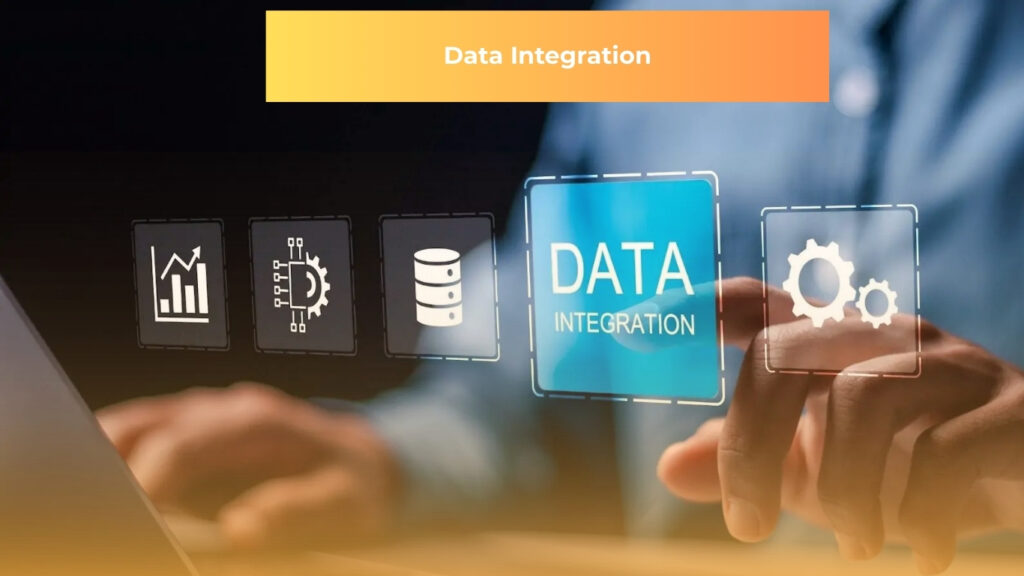
Are you struggling to unify customer data across fragmented systems? Data integration has become non-negotiable for organizations seeking to break down data silos and accelerate insights.
According to Gartner, 70-80% of corporate business intelligence projects fail because organizations don’t effectively integrate their data—yet when done right, companies report up to 35% faster time-to-insights.
Quick Summary
Data integration is the process of consolidating information from multiple disparate sources—databases, cloud applications, APIs, and platforms—into unified, accessible systems that support analytics, reporting, and business operations. The challenge isn’t just moving data; it’s ensuring quality, governance, and real-time accessibility. Today’s leading organizations combine modern techniques like data virtualization with cloud-native architectures to create flexible, scalable solutions that empower both technical teams and business users to act on their data immediately.
What Is Data Integration?
Data integration refers to the practice of combining data from various sources—whether operational databases, SaaS platforms, cloud warehouses, or legacy systems—into a cohesive, unified environment. More than a simple data transfer, effective data integration ensures that information is clean, consistent, standardized, and available when needed.

The core purpose is to create what Gartner calls a “flexible data supply chain”—one that moves data from sources through transformation to consumption while maintaining governance, quality, and security at every stage. In the past, this meant physical centralization; today’s approach is smarter. Instead of forcing all data into one location, modern data integration solutions use virtualization, federation, and distributed architectures to provide unified access without the overhead of traditional monolithic warehouses.
Why does this matter? Consider a retailer trying to build a customer data integration strategy. Without integration, customer records are scattered: email in a CRM, purchase history in e-commerce, loyalty points in a separate database, and social media behavior in a marketing tool. Integration stitches these together, creating a single customer view that drives personalization, reduces costs, and enables real-time decisions.
How Data Integration Works: From Source to Insight
Modern data integration follows a multi-step process that balances speed with governance:
Step 1: Extract and Ingestion
Data is collected from source systems using various methods—batch extracts (scheduled daily or weekly), real-time APIs (continuous streaming), or change data capture (CDC, which tracks only what’s changed since the last run). The method chosen depends on business requirements and data freshness needs.
Step 2: Transformation
Raw data is cleaned, standardized, and enriched. Duplicate records are merged, formats are normalized, and business rules are applied. This happens either before loading (ETL—Extract, Transform, Load) or after (ELT—Extract, Load, Transform), depending on architecture.
Step 3: Loading and Storage
Processed data lands in a repository—a data warehouse, data lake, cloud database, or logical layer that virtualizes multiple sources. Modern approaches often skip physical loading entirely, using data virtualization to provide unified access without duplication.
Step 4: Governance and Governance
Access controls, audit trails, and data lineage tracking ensure compliance with regulations like GDPR, HIPAA, and CCPA. Metadata management helps users discover trusted data assets.
Step 5: Consumption
Business users and analytics tools query unified data through self-service portals, BI tools (Tableau, Power BI), or directly via SQL, creating reports, dashboards, and machine-learning models.
| Integration Approach | Best For | Key Tradeoff |
| ETL | Batch, large-scale data movement | Slower, data freshness limited to batch schedule |
| ELT | Cloud analytics, fast ingestion | Requires transformation expertise post-load |
| Data Virtualization | Real-time access, minimal data duplication | Complex query optimization needed |
| Data Fabric | Automating integration across hybrid environments | Requires mature metadata and AI/ML capabilities |
| Data Mesh | Decentralized, domain-owned data products | Significant organizational change required |
Key Advantages of Data Integration
Organizations that master data integration experience measurable business wins:
Faster Decision-Making
Real-time or near-real-time data access eliminates delays. Instead of waiting for weekly reports, executives can monitor KPIs as they happen, respond to market changes within hours, and optimize campaigns instantly.
Unified Customer View
A customer data integration initiative consolidates interactions across touchpoints—web, mobile, email, support, social media—into a single profile. Result: personalized marketing that increases conversion by 20-30% and reduces customer acquisition costs.
Improved Data Quality and Governance
Centralized integration enforces standards, deduplication, and validation rules. Organizations leveraging robust integration solutions report 40% fewer data quality issues and faster regulatory compliance audits.
Cost Efficiency
By eliminating redundant tools, reducing manual data work, and automating transformations, organizations save 30-50% on operational costs. Cloud-based integration also removes expensive on-premises infrastructure.
Scalability and Agility
Modern integration platforms handle growth seamlessly. As data sources multiply—new acquisitions, third-party APIs, IoT devices—flexible architectures adapt without redesign.
Better Analytics and AI/ML
High-quality, integrated data fuels accurate predictive models. Data scientists spend less time wrangling data and more time building models that drive revenue.
Reach out to HBLAB to accelerate your journey!
Common Data Integration Challenges and How to Overcome Them
Even the best initiatives hit obstacles. Here’s how to navigate them:
Challenge 1: Data Silos and Fragmentation
Problem: Data lives across multiple systems—CRM, ERP, marketing automation, finance—with no bridge between them. Business teams work from different versions of truth.
Solution: Implement a centralized data governance framework with an integrated data repository or virtual layer (data fabric/mesh). Define clear ownership, standards, and access rules. Use a data catalog so users can easily find trusted sources.
Challenge 2: Data Quality and Consistency
Problem: Duplicates, missing values, inconsistent formats, and outdated records undermine analytics accuracy and decision-making.
Solution: Establish data quality rules upfront. Profile data to understand it, implement automated validation during integration, and use machine learning for anomaly detection. Assign a data quality owner to monitor metrics continuously.
Challenge 3: Real-Time vs. Batch Complexity
Problem: Batch processing (daily ETL jobs) can’t meet demands for real-time insights. Yet streaming architectures add complexity and cost.
Solution: Adopt a hybrid approach—use batch for historical data and less-time-sensitive processes, and stream for critical metrics (customer transactions, fraud signals, operational alerts). Modern tools like Kafka and CDC bridges simplify this.
Challenge 4: Security and Compliance
Problem: Moving sensitive data (PII, financial records, health info) across systems increases breach risk and regulatory exposure.
Solution: Encrypt data in transit and at rest, implement field-level masking for PII, centralize access controls, and maintain detailed audit logs. Use data classification to identify sensitive assets and apply policies accordingly.
Challenge 5: Scalability Under Growth
Problem: As data volume explodes—IoT sensors, user events, third-party APIs—infrastructure strains, latency increases, and costs balloon.
Solution: Choose cloud-native platforms with autoscaling capabilities. Consider data virtualization to avoid copying massive datasets. Implement caching strategically for performance without duplication.
Challenge 6: Integration Complexity Across Systems
Problem: Each new data source brings different formats, APIs, and update frequencies. Building connectors for each is time-consuming and fragile.
Solution: Standardize on a data integration platform with pre-built connectors (many offer 200+ connectors out-of-the-box). Use API-first methodologies and schema registries (Apache Avro, Protocol Buffers) to formalize data contracts.
Emerging Trends in Data Integration (2026)
The field is evolving rapidly, driven by AI, cloud adoption, and changing organizational needs:
AI-Powered Automation
49% of organizations now prioritize automating data integration and preparation—a dramatic shift. AI is being used to automatically detect schemas, recommend transformations, suggest data quality issues, and optimize query performance. This reduces manual work and enables smaller teams to manage larger data landscapes.
Data Fabric Maturity
Data fabric—a unified, AI-augmented architecture connecting all enterprise data—is moving from pilot to production. Gartner reports increasing maturity in components like data catalogs, metadata management, and governance automation. By 2026, over 60% of enterprises will have some form of data fabric deployed.
Data Mesh Adoption in Large Enterprises
Decentralized, domain-owned data products (data mesh) are gaining traction in Fortune 500 companies. The approach recognizes that centralized teams can’t scale to meet all business needs. Instead, individual domains (marketing, finance, operations) own their data products, reducing bottlenecks and improving ownership.
Real-Time Data Integration at Scale
Change Data Capture (CDC) and event-streaming architectures are commoditizing real-time integration. Organizations are increasingly expecting data freshness of minutes or seconds, not hours, driving adoption of streaming platforms like Kafka and managed event brokers.
Cloud-Native and Serverless Integration
Migration from on-premises to cloud-native integration platforms accelerated in 2024-2026. Serverless architectures (paying only for compute used) and managed services reduce operational overhead. Multi-cloud and hybrid deployments are now standard.
Customer Data Platforms and 360-Degree Views
Customer data integration has evolved from nice-to-have to essential. CDPs and unified customer analytics platforms are integrating with nearly every marketing stack, driven by personalization demands and privacy regulations.
When to Use Data Integration (and When to Consider Alternatives)
Use Data Integration If:
- You have data across 3+ systems or sources
- You need consistent, governed access to data for analytics or operations
- Business users require self-service access to trusted data
- You must meet regulatory compliance requirements (GDPR, HIPAA, CCPA)
- You’re building a customer 360 view or unified analytics layer
- Real-time or near-real-time data access is critical to your business
Consider Alternatives or Hybrid Approaches If:
- You have only one or two simple data sources with minimal joining
- Data is already well-organized in a single system (e.g., modern cloud ERP with built-in analytics)
- You can rely on direct API calls for occasional access (very small scale, non-critical use cases)
- Your organization lacks governance maturity and would struggle with centralized solutions
Reality: Most modern organizations need data integration. The question isn’t whether, but which architecture and tools best fit your complexity, budget, and organizational readiness.
Modern Data Integration Architectures: Choosing Your Path
Organizations no longer choose a single approach. Instead, they combine technologies based on use cases:
Logical Data Warehouse
A logical data warehouse creates a unified semantic layer over distributed data without centralizing it physically. Data stays where it is (cloud warehouse, data lake, operational database), but users access it as if from a single source using SQL or a unified interface. This minimizes duplication and data movement delays while maintaining governance.
Best for: Organizations with mature data engineering teams and distributed infrastructure.
Data Fabric
Data fabric automates and intelligently orchestrates data across the enterprise, using AI-driven discovery, metadata management, and governance. Unlike data warehouses, it supports operational and analytical use cases, serving APIs and microservices alongside traditional BI.
Best for: Large, complex enterprises with hybrid/multi-cloud environments seeking centralized governance with distributed flexibility.
Data Mesh

A socio-technical paradigm where individual domains own their data as products. A shared platform provides self-service infrastructure (integration, governance, discovery tools), while federated governance ensures interoperability. This scales data delivery and aligns responsibility with domain expertise.
Best for: Large, decentralized organizations with mature engineering cultures and independent business units.
Integrated Data Solutions for Specific Needs
Some organizations deploy integrated data solutions tailored to specific use cases—customer data platforms (CDPs) for marketing, financial data warehouses for compliance, or operational data stores for real-time systems. These are often faster to deploy than enterprise-wide initiatives and prove value before scaling.
Best for: Organizations starting their data journey or piloting new use cases.
Data Integrity and Quality Assurance in Integration
Data integrity ensures data remains accurate, complete, and trustworthy throughout its lifecycle. This is different from data quality (correctness and suitability for purpose) but equally critical.
The Five Pillars of Data Integrity
- Accuracy: Data reflects real-world conditions
- Completeness: No required fields are missing
- Consistency: Data is uniform across systems
- Timeliness: Data is current and fresh
- Validity: Data conforms to defined formats and rules
Best Practices for Data Integrity During Integration
Prevent Issues Upfront
- Define clear data standards, formats, and validation rules before integration
- Implement automated checks at the point of entry to catch errors early
- Document transformation logic and business rules to avoid misinterpretation
Detect Problems Early
- Use data profiling tools to understand data before integration
- Implement real-time monitoring for data quality metrics
- Set up alerts for anomalies or quality degradation
Resolve Issues Quickly
- Establish procedures to correct identified errors and prevent recurrence
- Maintain audit trails and data lineage so you can trace issues to root cause
- Create feedback loops so data issues trigger corrections in source systems
Monitor Continuously
- Track key data quality metrics (error rates, completeness, freshness)
- Schedule regular audits of integrated data
- Review and adjust data quality rules as business needs evolve
Practical Implementation: Getting Started with Data Integration
Phase 1: Assess and Plan (Weeks 1-4)
- Map your data landscape: Identify all sources, understand data volume/complexity
- Define business objectives: What problems will integration solve? Which use cases matter most?
- Evaluate options: Compare ETL, ELT, data virtualization, and modern architectures against your needs
- Estimate ROI: What’s the cost (time, resources, tools) vs. expected benefits?
Phase 2: Build Foundation (Weeks 5-12)
- Choose tools and platforms: Select integration tools, data repository, and governance platforms
- Design architecture: Map data flows, define transformations, plan governance structure
- Establish governance: Define data ownership, quality standards, access policies, and compliance requirements
- Implement security: Set up encryption, access controls, audit logging
Phase 3: Implement Pilot (Weeks 13-20)
- Start with one use case: Customer 360, financial reporting, or operational analytics
- Build initial pipelines: Integrate first set of sources with full data quality and governance
Establish metrics: Track data freshness, quality scores, user adoption, and business impact - Iterate and refine: Fix issues, optimize performance, gather feedback
Phase 4: Scale and Optimize (Ongoing)
- Add data sources and use cases gradually
- Automate manual processes using workflow and AI tools
- Evolve architecture based on lessons learned (e.g., move toward data fabric or mesh patterns)
- Expand user community with training and self-service tools
HBLAB’s Approach to Data Integration Excellence
At HBLAB, we’ve helped 100+ enterprises architect and deploy data integration solutions that drive measurable business value. With 630+ professionals, CMMI Level 3 certification, and 10+ years of experience, we bring both technical depth and business acumen to every project.

Our methodology combines proven best practices with cutting-edge platforms:
Expert Guidance
Our team of data architects and engineers designs scalable solutions tailored to your complexity, budget, and organizational readiness. We’ve implemented everything from traditional ETL to modern data fabrics and meshes.
Rapid Deployment
Leveraging our experience, we accelerate time-to-value. Typical pilots deliver results within 12-16 weeks, with full implementations following in 6-9 months.
Flexible Engagement
Whether you need dedicated teams, augmented staff, or advisory services, we offer offshore, nearshore, and onsite models. Our cost-efficient approach (typically 30% lower than market rates) frees budget for innovation.
Technology Partnerships
We partner with leading platforms—Informatica, Talend, Denodo, Apache ecosystem—ensuring you get the best-fit solution, not vendor lock-in.
Proven Track Record
Recent wins include:
- Financial services firm: 75% faster data warehouse implementation using data fabric principles
- E-commerce company: 40% reduction in customer acquisition costs through unified CDP
- Healthcare provider: Real-time operational dashboards reducing patient wait times by 25%
👉 Looking to streamline data integration for your organization? Let us help you design a modern, scalable data strategy that transforms information into competitive advantage.
Contact HBLAB for a free consultation.
Frequently Asked Questions
1. What is data integration, and why is it important?
Data integration is the process of consolidating data from multiple sources into unified, accessible systems. It’s critical because 70-80% of BI failures stem from poor integration—without it, organizations can’t break data silos or make timely decisions. Integration enables analytics, compliance, and operational efficiency.
2. What’s the difference between ETL and ELT?
ETL (Extract, Transform, Load) transforms data before loading (traditional, batch-oriented). ELT (Extract, Load, Transform) loads raw data first, then transforms it in the repository (faster, more flexible, requires transformation expertise). Modern cloud platforms often favor ELT because storage and compute are cheaper than in the past.
How does data virtualization differ from data warehousing?
Data warehousing physically copies all data into a central repository, which is storage-heavy and inflexible. Data virtualization provides unified access to distributed data sources without copying—faster to implement, lower cost, but requires strong network and source system performance.
What is a Customer Data Platform (CDP), and how does it relate to data integration?
A CDP is a specialized integration tool focused on customer data, pulling from CRM, web analytics, email, social, and other marketing sources to create unified customer profiles. CDPs are part of a broader data integration strategy but don’t replace data warehouses or data lakes.
What does data integrity mean, and how does it differ from data quality?
Data integrity ensures data remains accurate, complete, and trustworthy (security and reliability). Data quality ensures data is correct, complete, and suitable for its intended purpose (accuracy and usefulness). Both are essential in integration.
How long does a data integration project typically take?
Pilot projects (one use case): 3-4 months. Full enterprise implementation: 6-12 months. Timeline depends on data complexity, organizational readiness, and scope. Experienced teams can accelerate by 20-30% using templates and proven methodologies.
What is a data fabric, and should my organization adopt it?
Data fabric is a unified, AI-augmented architecture that intelligently connects all enterprise data, automating integration, governance, and discovery. It’s ideal for large enterprises with complex, multi-cloud environments. Smaller organizations may start with simpler approaches and evolve toward data fabric as they mature.
How do I ensure data security and compliance during integration?
Encrypt data in transit and at rest, implement field-level masking for PII, use role-based access controls, maintain audit logs, and classify sensitive data. Partner with vendors certified for regulations relevant to your industry (GDPR, HIPAA, CCPA, etc.).
What tools and platforms are best for data integration?
Leading platforms include Informatica (enterprise-grade), Talend (developer-friendly), Stitch/Fivetran (cloud-native, lightweight), Apache NiFi (open-source, real-time), and modern data warehouses with built-in ELT (Snowflake, BigQuery, Redshift). Choice depends on your architecture, budget, and skill set.
How do I measure the success of a data integration initiative?
Track metrics like data freshness (time from source to use), quality scores (accuracy, completeness), user adoption (queries per user, self-service growth), cost savings (operational efficiency, reduced manual work), and business impact (faster decisions, increased revenue, risk reduction).
Ready to transform your data strategy?
Start by assessing your current state—map your data sources, define business objectives, and evaluate integration approaches. Whether you’re building your first data warehouse or evolving toward a modern data fabric, the principles remain constant: governance, quality, and user enablement.
Read More:
– Trusted Data Solutions: Building the Foundation for Enterprise Success in 2026
– Digital Transformation Company: How to Turn 70% Failure into Momentum
– Database Development Made Simple: A Friendly Guide for 2026