AI is no longer merely augmenting business processes — it is reshaping them. As generative AI, intelligent agents, and adaptive automation begin to penetrate enterprise systems, companies around the world are accelerating a shift toward AI business process automation as a strategic pillar for competitiveness.
In an era where margins tighten, customer expectations intensify, and operational complexity grows, organizations are under pressure to deliver more value with fewer resources. AI-driven automation has emerged as one of the few technologies capable of meeting all three demands simultaneously: speed, accuracy, and cost efficiency.
This expanded guide serves as a comprehensive blueprint for leaders seeking to understand, evaluate, and operationalize AI automation in 2025. It draws on global practices, emerging research, and practical implementation patterns used by leading enterprises.
The Rise of AI Business Process Automation: Why It Matters Now
Business automation itself is not new. For decades, organizations have automated repetitive and rule-based workflows. But the combination of LLMs, machine learning, agentic automation, and workflow orchestration has created a new paradigm:
AI no longer automates only “tasks”; it automates reasoning, decisions, and cross-functional processes.
Three major forces are driving adoption:
1 Economic Pressures: Do More With Less
- AU & SG markets face rising labor costs and talent shortages.
- US companies face operational inefficiencies from legacy tech debt.
AI automation addresses both by reducing the cost of operations while unlocking new forms of productivity.
2 Complexity in Modern Enterprises
Businesses now operate through:
- multi-system architectures
- fragmented data
- distributed teams
- compliance-heavy workflows
AI automation serves as the “integration brain” that unifies and optimizes these flows.
3 The Maturity of AI Models in 2025
Generation 2025 AI models (GPT-5 series, Claude 4.5, Gemini 2.x, Llama 4) can:
- understand organizational context
- reason across multiple steps
- interact with enterprise tools as AI agents
- extract knowledge from both structured and unstructured data
This makes them suitable for mission-critical business automation that previously required human judgment.
What Exactly Is AI Business Process Automation?
AI business process automation refers to the use of artificial intelligence — including generative AI, machine learning, natural language processing, and agent-based automation — to perform and optimize business workflows autonomously.
It is both operational and strategic:
Operational Impact
- Reduces manual workload
- Minimizes human error
- Accelerates cycle time
- Enhances compliance consistency
Strategic Impact
- Improves decision-making
- Enables real-time analytics
- Increases organizational agility
- Unlocks new business models
Unlike traditional BPM or rule-based RPA, AI-BPA is context aware, data-driven, and self-adjusting.
AI vs Traditional Automation: The 2026 Breakthrough
Traditional automation was built around rules.
AI automation is built around understanding.

| Classic Automation (RPA/BPM) | AI-BPA (2025 Model) |
| Requires clean, structured data | Handles messy, unstructured data |
| Fails with exceptions | Adapts and resolves exceptions |
| Automates tasks | Automates task + decision + reasoning |
| Function-specific | Cross-process, cross-department |
| High maintenance | Model-driven, self-learning |
In short, AI turns automation from a mechanical tool into an intelligent digital worker.
The Core Components of AI Business Process Automation
Modern AI automation is an ecosystem of capabilities, each performing part of the automation chain:
1. Natural Language Understanding (NLU)
Allows AI to interpret:
- emails
- contracts
- tickets
- support inquiries
- internal instructions
2 Machine Learning Models
Predictive and classification models help with:
- risk scoring
- demand forecasting
- anomaly detection
- customer segmentation
3. Generative AI and RAG
Enables:
- document summarization
- context-driven responses
- knowledge retrieval from internal sources

4. Computer Vision
Critical for invoice processing, identity verification, logistics scanning.
5. AI Agents (2026 Trend)
Autonomous digital workers capable of:
- performing multi-step tasks
- navigating software (ERP/CRM)
- orchestrating APIs
- collaborating with other AI agents
This is the underlying technology powering the next generation of business automation.
High-ROI Use Cases Across Industries
Here are the use cases with the strongest ROI for AU/SG/US enterprises:
1 Finance & Accounting
- AI invoice-to-pay automation
- Reconciliation
- Audit trail generation
- Fraud detection
ROI: 35–65% reduction in manual hours.
2 Human Resources
- Intelligent resume screening
- Automated onboarding
- AI employee support agents
ROI: Faster hiring, reduced HR workload, improved employee experience.
3. Customer Operations
- AI triage + routing
- AI email and ticket auto-response
- L1–L2 support automation
ROI: Call center cost reduction up to 45%.
4. Supply Chain & Logistics
- Demand planning
- Routing optimization
- Warehouse automation
ROI: Lower operational error, improved turnaround time.
5. Legal & Compliance
- Contract intelligence
- Policy consistency checking
- KYC/AML automation
ROI: Reduced compliance risk and manual review burden.
How to Automate Business Processes With AI
This is the standard enterprise methodology used globally.
Step 1 — Process Discovery
Use tools (Celonis, UiPath Process Mining, custom ML) to identify:
- bottlenecks
- repetitive tasks
- high-cost operations
Step 2 — Evaluate Automation Fit
Processes ideal for AI:
- data-heavy
- decision-based
- rule + exception workflows
- require judgment
Step 3 — Redesign Before Automating
Automating a broken process simply accelerates inefficiency.
Step 4 — Build the AI Model(s)
Depending on the use case:
- prediction model
- classification model
- RAG model
- agent-based automation
Step 5 — Integrate AI Into Systems
(ERP/CRM/email/HRIS/custom platforms)
Step 6 — Monitoring, Feedback Loop, Improvement
AI programs mature continuously through reinforcement and model updating.
How to Integrate AI Automation Into Existing Business Processes
Modern AI tools allow seamless integration without rewriting your tech stack.
1. Through APIs
Connect LLMs or ML models directly.
2. Through AI Agents
Agents operate inside software interfaces as digital workers.
3. RPA + AI Hybrid Approach
Perfect for legacy systems with no API support.
4. Middleware Integration Layer
Ensures logging, monitoring, compliance, access control.
How Can I Use AI to Automate Business Processes With Legacy Systems?
Most enterprises still operate on:
- SAP ECC
- Oracle EBS
- Microsoft Dynamics older versions
- AS/400
- Custom monolithic systems
AI can automate through:
✔ Computer vision layer
Extract data from screens, forms, PDFs.
✔ RPA-driven UI control
Robotic clicks + AI reasoning.
✔ Agent navigation
GPT-style agents act as operators.
✔ Knowledge extraction
AI models understand system logic without rewriting code.
This means AI automation is not limited to modern cloud-native systems.
How to Evaluate ROI for AI-Powered Business Process Automation Projects
Enterprises typically assess ROI through three dimensions:
Financial ROI
- labor savings
- accuracy improvement
- error cost reduction
Operational ROI
- shorter cycle time
- higher throughput
- less process variability
Strategic ROI
- improved customer experience
- data visibility
- competitive advantage
Realistic ROI Benchmark
AI automation projects typically deliver payback in:
6–18 months (depending on complexity)
This far outperforms traditional IT transformation projects.
Global Landscape: Best AI Consulting Firms for Business Process Automation
Tier 1 Enterprise Consulting Firms
- Accenture
- Deloitte
- PwC
- EY
- BCG Digital
Strength: large-scale transformation projects.
Tier 2 Technology-Led Firms
- Infosys
- Cognizant
- Capgemini
- TCS
Strength: global delivery, large engineering teams.
Tier 3 High-Value Engineering Partners
- HBLAB
- Veeva
- Wizeline
- Globant
Strength: fast execution, affordable cost, deep technical capability.
Why HBLAB Is a Strong AI Automation Partner for Global Enterprises
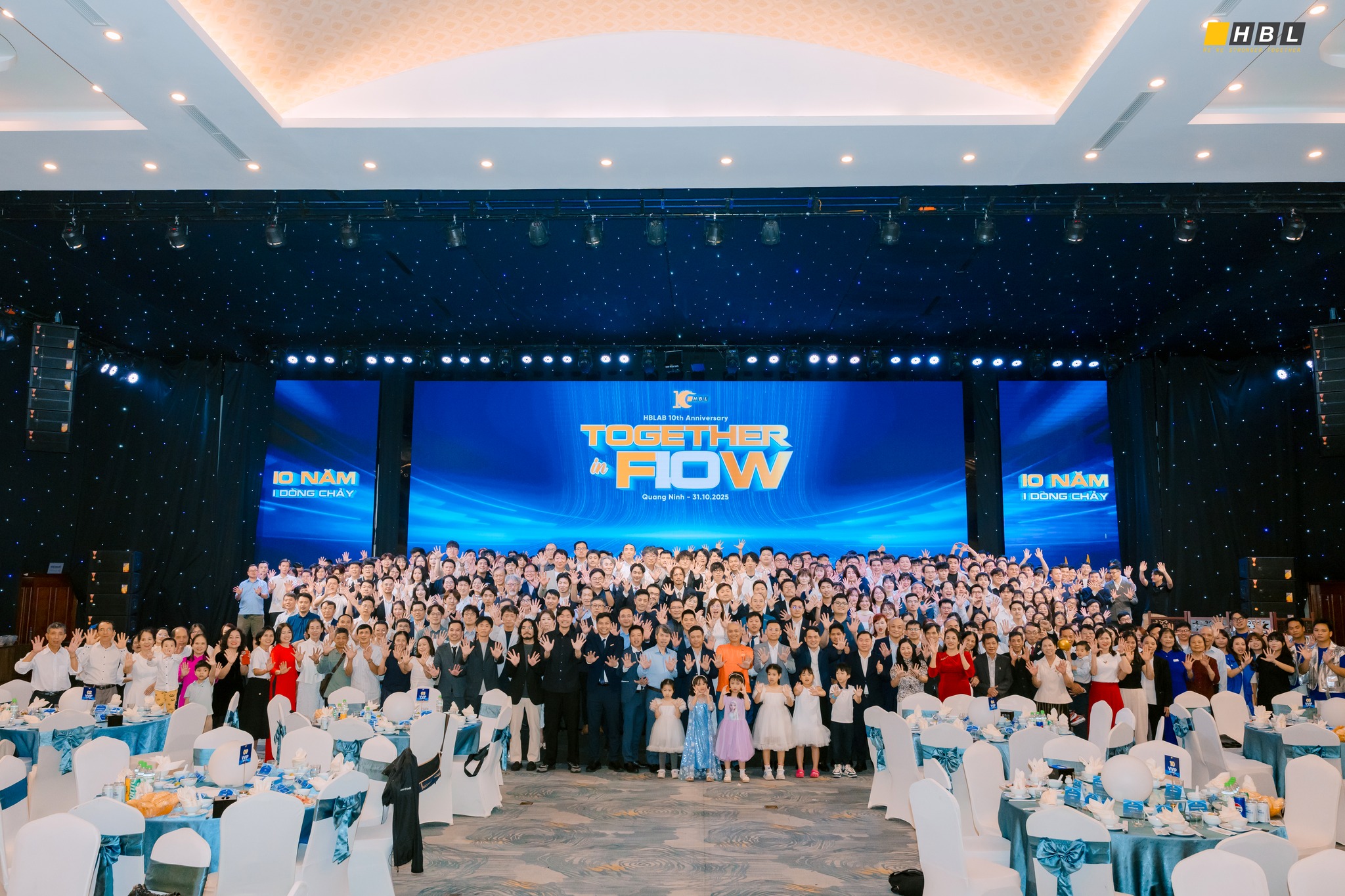
HBLAB supports companies across Japan, Australia, Singapore, Korea, and the US to build AI business process automation solutions that scale with reliability, security, and cost-efficiency.
What Makes HBLAB Stand Out
✔ 630+ Engineers
With 30% senior-level staff experienced in AI, automation, and system integration.
✔ Multi-country Presence
Vietnam HQ + branches in Japan, Korea, Singapore, Australia.
✔ Flexible Engagement Models
BOT, Offshore, Onsite, Dedicated team.
✔ Cost Advantage
Up to 30% lower than local market equivalents.
✔ Strong Security Compliance
CMMI Level 3, ISO-aligned practices, full DevSecOps.
✔ Expertise Across AI Stack
- Document AI
- Workflow automation
- AI agents
- RPA + AI hybrid solutions
- System modernization
HBLAB offers end-to-end delivery from strategy → development → deployment → maintenance.
If your company is exploring automation but uncertain where to start, HBLAB can provide a structured assessment and a tailored roadmap.
FAQ Section
1. What is AI business process automation?
AI-driven optimization and execution of business workflows.
2. Is AI automation expensive?
Costs vary, but offshore partners like HBLAB offer 30–50% savings.
3. Do I need clean data to start?
Not necessarily — modern AI models process unstructured and semi-structured data.
4. What’s the biggest risk?
Automating a broken process. Redesign first, automate second.
5. Where does AI automation deliver fastest ROI?
Finance, operations, HR, and customer service.
Read more:
– Automatic Data Processing: The Complete Guide to Transforming Business Operations
– Augmented Reality vs Virtual Reality: What’s the Difference & Which One Should Your Business Choose?