Finding the right software product ideas has become both an opportunity and a challenge for entrepreneurs looking to make their mark in the digital economy.
Understanding how to come up with a software product idea and develop it successfully can determine your market success.
Where Good Software Product Ideas Come From
The best software product ideas emerge from solving real problems that businesses and consumers face daily. When you’re trying to find software product ideas, start by:
- Examining your own workflow frustrations
- Listening to industry pain points
- Analyzing competitor gaps
- Staying attuned to emerging technology trends
The key? Identify problems that affect enough people who would willingly pay for a solution. Learning how to come up with a software product idea starts with observation and validation.
How to Transform Your Ideas into Software Products
Once you’ve spotted promising software product ideas, the next step is learning how to transform your ideas into software products. This transformation requires validating your assumptions through market research.
Start small—focus on solving one problem exceptionally well before expanding.
The most successful approach to transform your ideas into software products involves testing with real users early, gathering feedback continuously, and refining based on actual needs, not assumptions.
Product idea management software helps teams organize, evaluate, and prioritize their software product ideas systematically. These platforms let you capture ideas from multiple sources, collaborate on development, score and rank based on criteria, and track progress from conception to launch.
Using product idea management software becomes especially valuable when you’re juggling multiple concepts and need to determine which software product ideas deserve your investment.
What makes 2025 particularly exciting for software product ideas?
The convergence of artificial intelligence, automation, and specialized business needs.
Companies increasingly seek tools that don’t just digitize existing processes but fundamentally reimagine how work gets done.
Nine Software Product Ideas to try
1. Vertical SaaS Solutions for Niche Industries
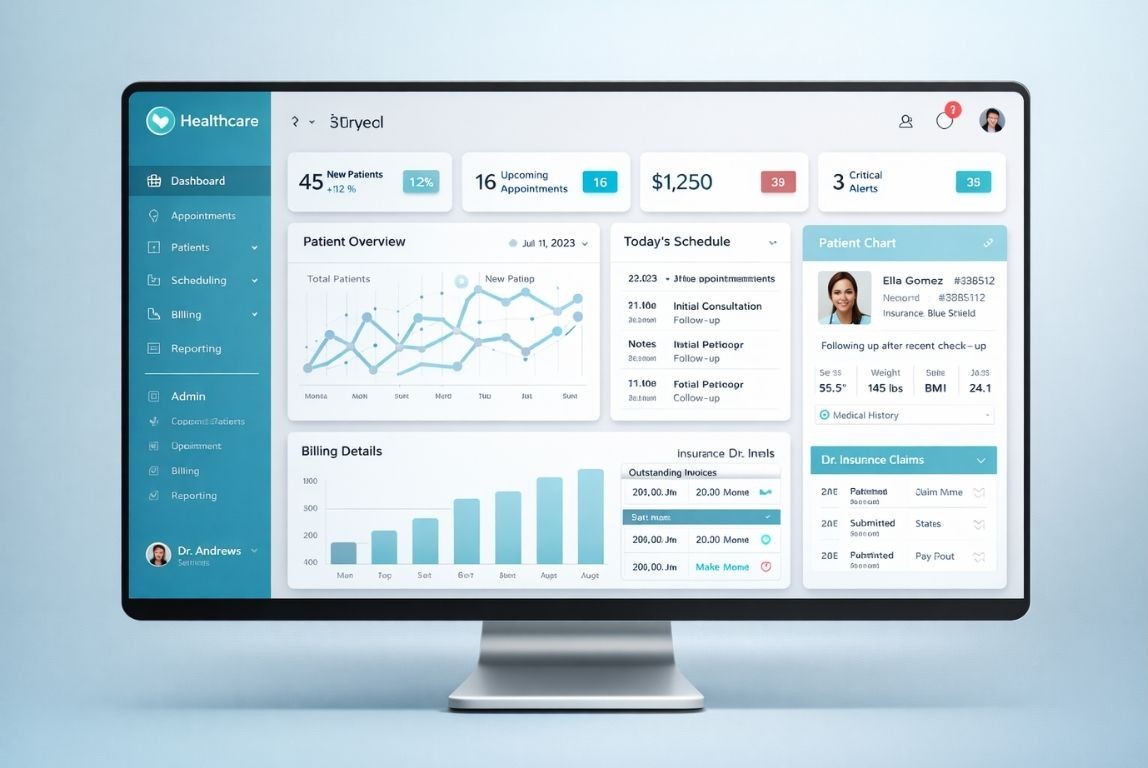
Among the most promising software product ideas today, Software as a Service has evolved beyond generic solutions into highly specialized tools for specific industries. Vertical SaaS represents valuable software product ideas because these platforms address unique workflows and regulations that general-purpose platforms can’t adequately serve.
The innovation here? Deep industry integration rather than broad feature sets.
A vertical SaaS for dental practices, for example, goes beyond basic scheduling to integrate with:
- Dental imaging systems
- Insurance verification processes
- Treatment plan tracking
- Healthcare compliance documentation
This level of specialization creates substantial switching costs and customer loyalty that generic software can’t match. Businesses willingly pay premium prices for software that truly understands their industry compared to cheaper alternatives requiring extensive customization.
Modern vertical SaaS succeeds by connecting seamlessly with accounting systems, communication platforms, payment processors, and other tools businesses already use, creating a unified workflow rather than another isolated system.
2. AI-Powered Writing Assistants for Specialized Content

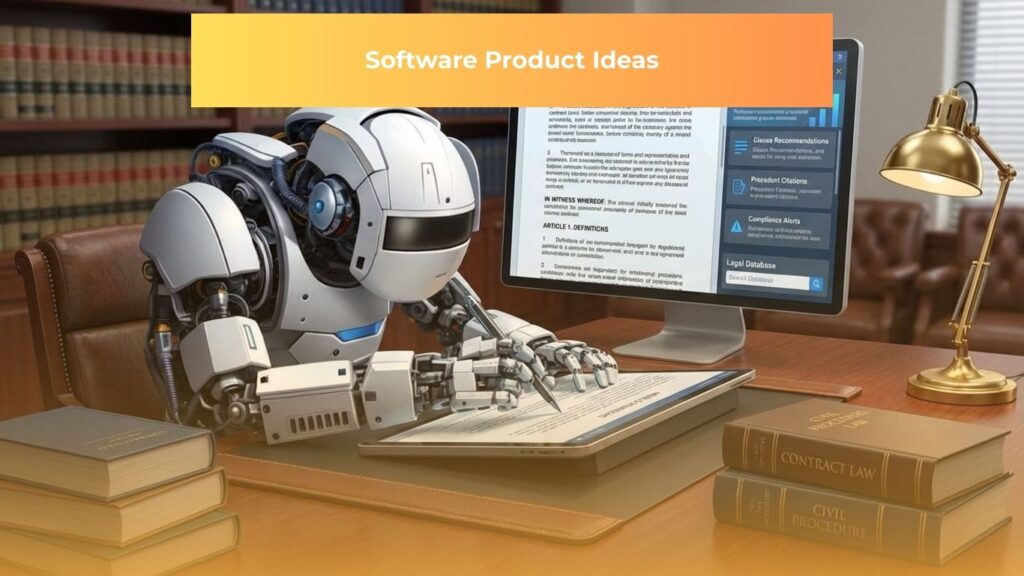
When looking to find software product ideas in the AI space, specialized writing assistants tailored for specific professions represent untapped potential. These software product ideas go beyond basic grammar checking to understand the unique requirements, terminology, and standards of particular fields.
Think legal writing, medical documentation, technical specifications, or regulatory compliance reporting.
What sets them apart? Training on domain-specific content and understanding industry standards. A legal writing assistant knows how to structure contracts, cite precedents correctly, and maintain formal tone. A medical documentation assistant understands clinical terminology, follows proper patient record formats, and ensures HIPAA-compliant language.
The real value? Professionals can focus on their core expertise instead of documentation. Doctors prioritize patient care over note-taking. Lawyers concentrate on case strategy rather than drafting boilerplate sections.
The winning feature: organizational learning. These assistants adapt to your company’s voice, understand your product terminology, and maintain consistency across all team members’ writing.
3. AI Agent Platforms for Business Process Automation
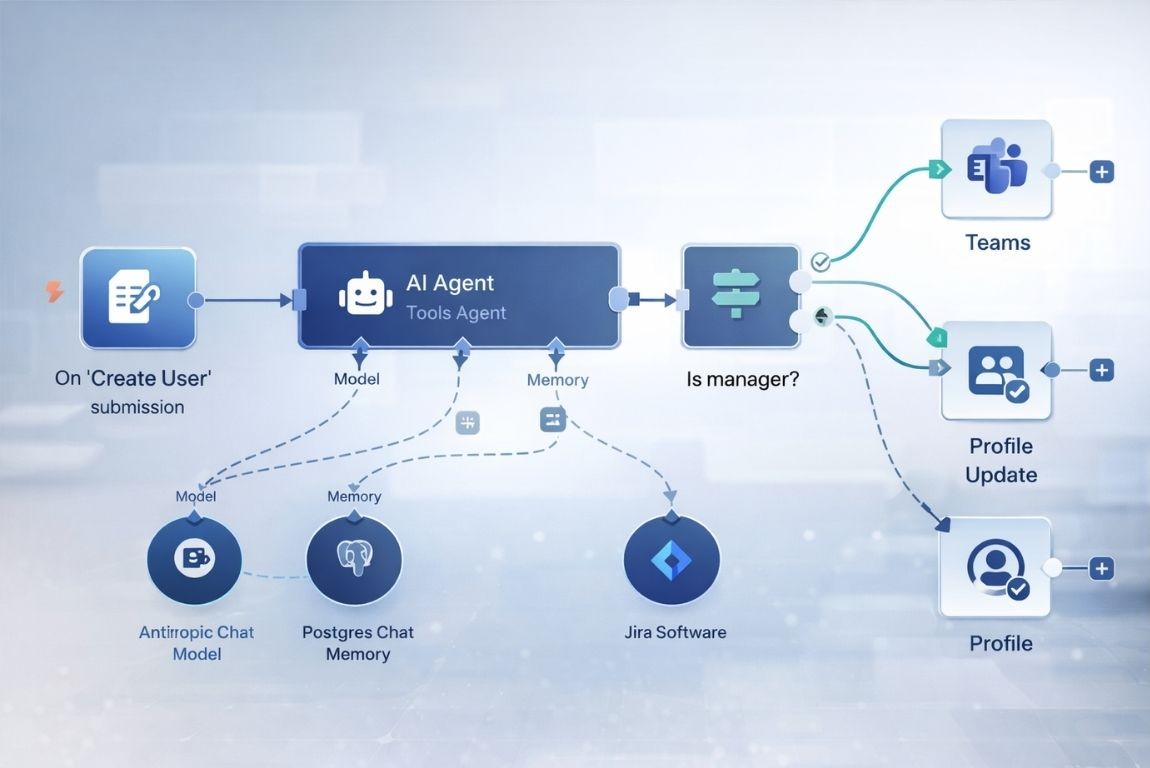
AI agent platforms represent compelling software product ideas and the next evolution in business automation, moving beyond simple rule-based workflows to intelligent systems that make decisions, learn from outcomes, and adapt to changing conditions.
These platforms enable businesses to create custom AI agents handling everything from customer service inquiries and data entry to inventory management and employee onboarding.
What makes modern AI agents different from traditional automation? They handle ambiguity and learn from context. Instead of following rigid if-then rules, these agents understand natural language instructions, interpret unstructured data, and make judgments similar to human employees. They escalate complex situations while autonomously managing routine tasks.
This matters especially for small and medium businesses lacking resources for extensive manual processes or expensive custom automation. According to McKinsey’s research on AI automation, businesses can automate up to 70% of their routine tasks with current technology.
The breakthrough lies in accessibility. Modern platforms provide no-code or low-code interfaces where business users train agents by demonstrating tasks rather than writing code. The agents then generalize from examples, applying learned behaviors to new situations.
4. AI Shopping Systems with Personalized Discovery

AI-powered shopping systems rank among the most innovative software product ideas for retailers, transforming how consumers discover and purchase products by replacing keyword searches and endless scrolling with conversational interfaces and intelligent recommendations.
Advanced systems move beyond showing you more of what you’ve already bought. They engage in dialogue to understand context:
- Shopping for yourself or a gift?
- What’s the occasion?
- What’s your budget?
- Do you prefer sustainable options?
They synthesize this information with product data, reviews, inventory availability, and pricing to present curated selections that feel personally tailored.
These software product ideas address the paradox of choice plaguing modern online shopping. While millions of products sound appealing, they actually make decision-making exhausting and often lead to purchase abandonment.
The winning feature? Understanding and adapting to changing contexts. The system knows your shopping behavior differs when you’re browsing casually versus searching for a specific need, when you’re price-conscious versus willing to splurge, or when you need something immediately versus planning ahead.
5. AI-Powered Customer Intelligence Platforms
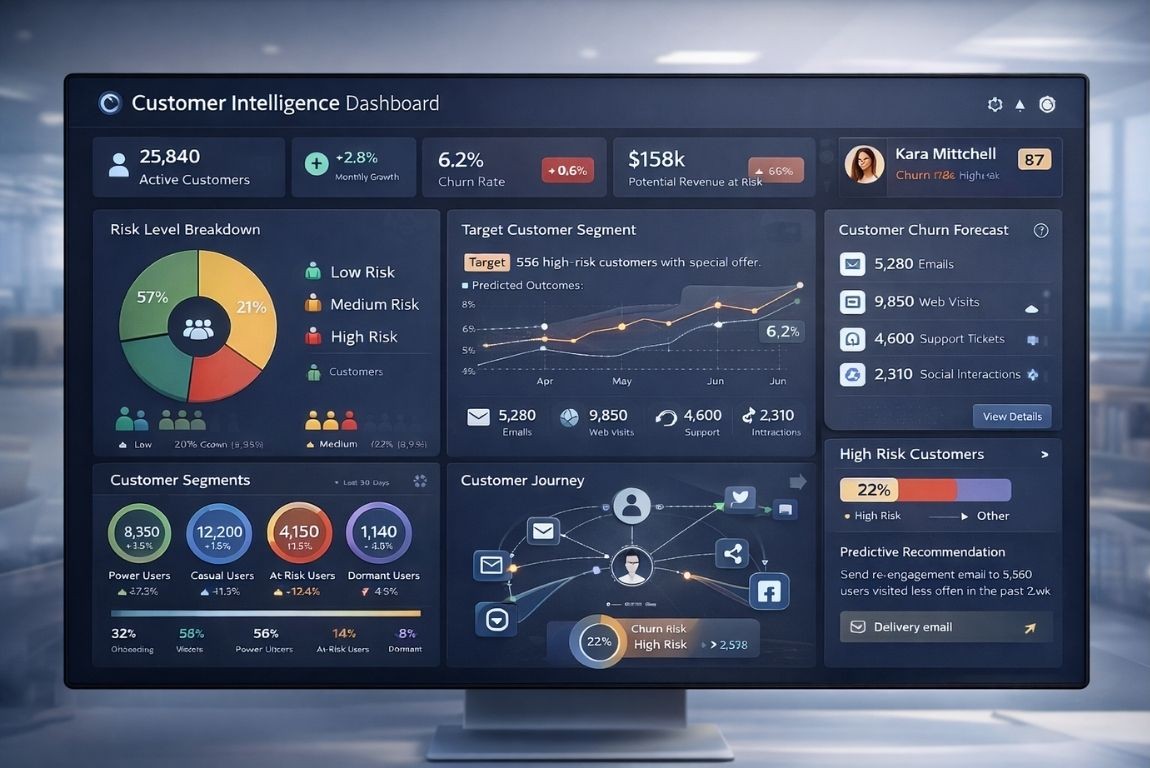
Customer intelligence platforms represent strategic software product ideas that aggregate data from multiple touchpoints to create comprehensive, actionable profiles of customer behavior, preferences, and predicted needs.
The innovation? Synthesizing disparate data sources into coherent insights. These platforms connect website behavior, support tickets, purchase history, email engagement, social media interactions, and surveys to identify patterns invisible when looking at any single channel.
The AI translates patterns into practical recommendations:
- Which customers are at risk of churning
- Which prospects are ready to buy
- What product features matter most to different segments
Companies collect vast amounts of customer data but struggle to transform it into decisions. Which customers should sales prioritize? What messaging resonates with different segments? When’s the right time to reach out with an upsell?
Modern platforms don’t just report what happened, they forecast what will happen and trigger appropriate actions. When the system detects a high-value customer showing disengagement signals, it automatically alerts the account team and suggests retention tactics based on what’s worked with similar customers.
6. Smart Food Inventory Management Software
Food inventory management software specifically designed for restaurants represents practical software product ideas addressing one of the most challenging aspects of food service: minimizing waste while ensuring availability.
Modern systems go beyond simple inventory counting. They integrate with point-of-sale data to:
- Automatically adjust inventory levels as items sell
- Factor in preparation waste and portion sizes
- Suggest menu modifications based on ingredient availability and costs
- Recommend dynamic pricing to move items approaching expiration
The critical challenge? Perishable inventory. Unlike retail products that can sit indefinitely, food has strict time limits. Over-ordering leads to costly waste, while under-ordering results in menu unavailability and disappointed customers.
The winning feature: recipe-based tracking. Instead of just monitoring individual ingredients, these systems understand how ingredients combine into menu items. When you sell a burger, the system automatically deducts ground beef, buns, lettuce, tomatoes, and condiments in correct quantities. This enables accurate food cost calculations and helps optimize your menu mix.
7. Adaptive E-Learning Platforms for Corporate Training
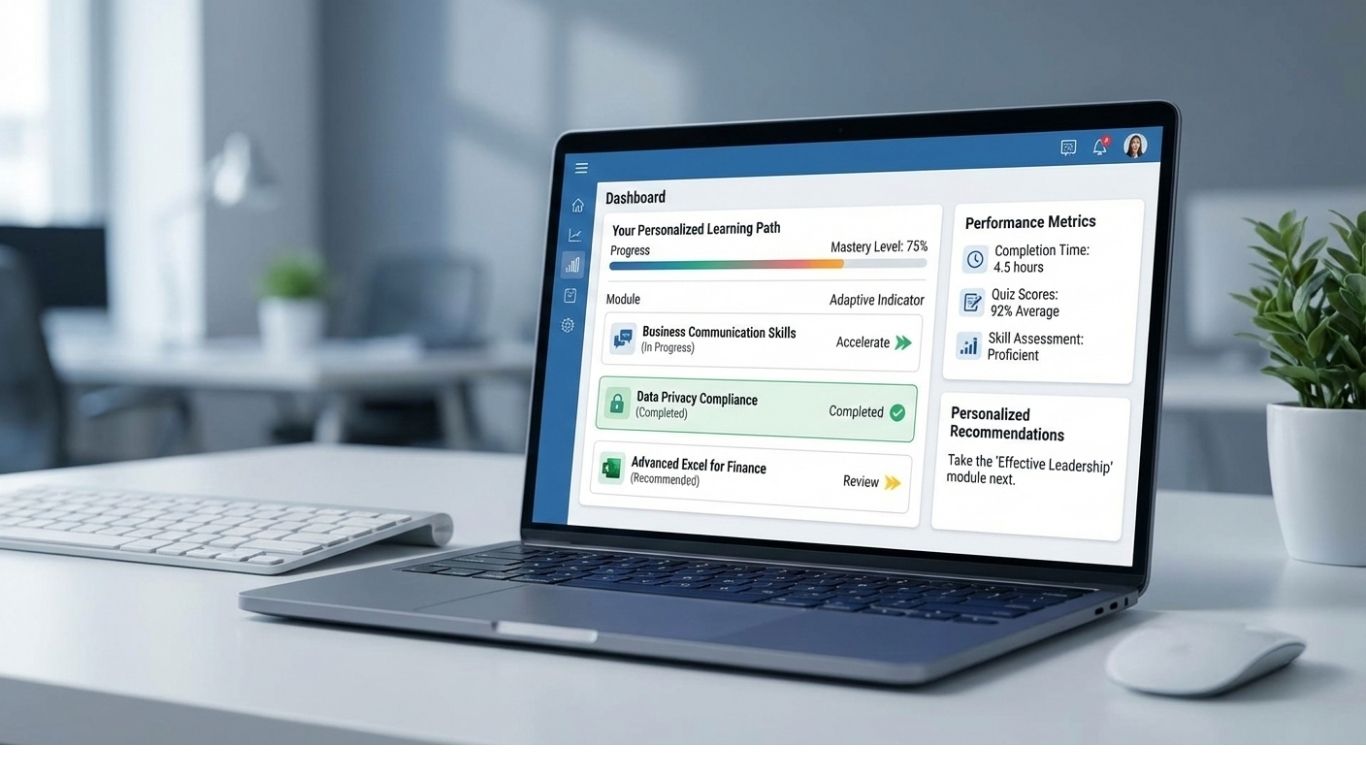
Modern e-learning platforms have evolved into valuable software product ideas, moving from simple video hosting into sophisticated systems that adapt to individual learning styles, pace, and knowledge gaps.
The innovation? Adaptive learning technology that personalizes content delivery based on learner performance and engagement. If someone quickly masters basic concepts, the system accelerates them to advanced material. If they struggle with particular topics, it provides additional resources, alternative explanations, and targeted practice.
Traditional training problems solved:
- Employees no longer sit through hours of material they already know
- Learners don’t move forward before mastering prerequisites
- Trainers gain detailed analytics showing exactly where learners struggle
- Companies demonstrate training effectiveness through measurable skill improvements
The distinct feature: integration of microlearning principles with comprehensive curricula. Rather than lengthy courses, content breaks into focused modules employees can complete in short sessions. The platform spaces these sessions optimally based on learning science about retention and recall, fitting naturally into busy schedules while improving outcomes.
8. Advanced Image-Text Conversion Software
Software that seamlessly converts between images and text represents practical software product ideas serving countless applications, from digitizing printed documents to creating visual content from written descriptions.
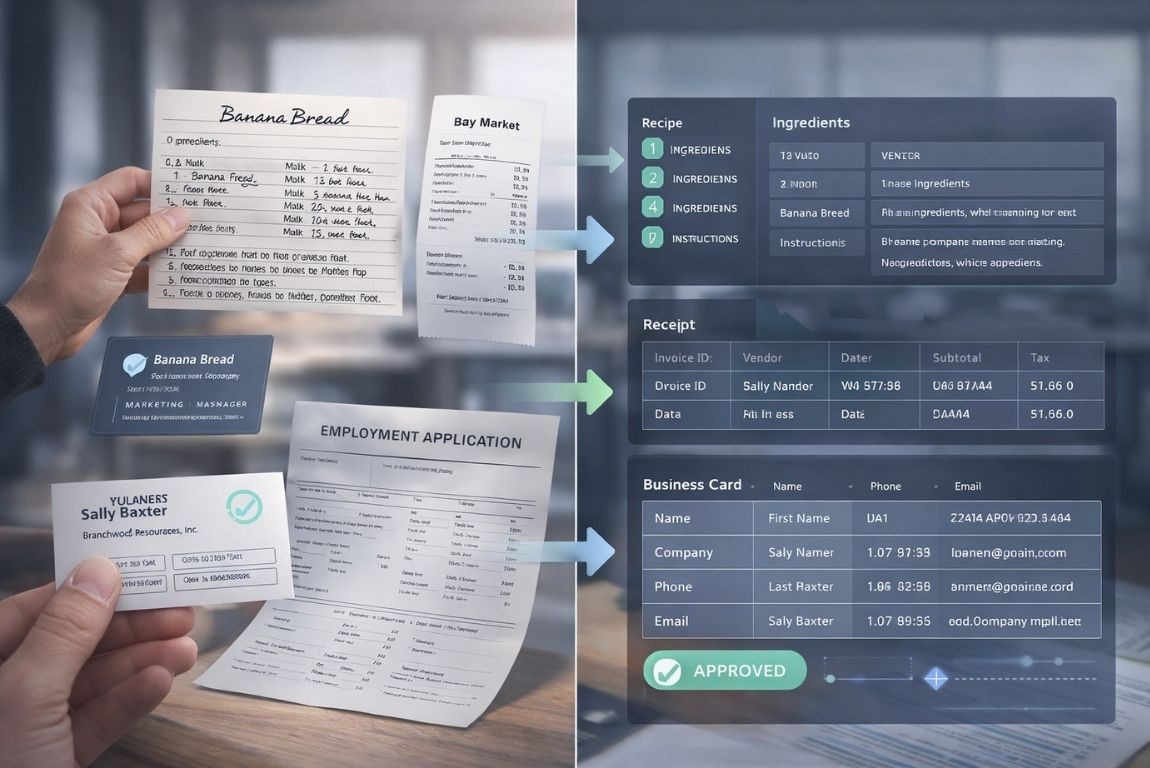
Modern image-to-text software goes beyond character recognition. These tools preserve formatting, understand document structure, and extract meaning. They convert:
- Photographed business cards into properly formatted contact information
- Pictures of handwritten recipes into editable digital text
- Complex forms and invoices into structured databases
The reverse direction creates professional graphics, diagrams, and illustrations from written descriptions.
The problem solved? Friction between physical and digital information. Businesses still receive paper documents, handwritten notes, printed forms, and visual materials that need digitizing. Manually retyping is tedious and error-prone.
What makes advanced tools better? Intelligent post-processing. The software doesn’t just recognize text, it understands document type and applies appropriate formatting and validation. Converting an invoice automatically identifies vendor information, line items, and totals, flagging inconsistencies. Converting a legal contract preserves clause numbering and hierarchical structure.
9. Next-Generation CRM Software for Relationship Intelligence

Modern CRM platforms represent essential software product ideas for sales teams, moving far beyond simple contact databases. Today’s leading platforms combine relationship tracking with predictive analytics, automated workflows, and communication tools to help sales teams build stronger relationships and close more deals.
The innovation? Relationship intelligence. These platforms don’t just store information about customers, they analyze communication patterns, engagement levels, and buying signals to provide actionable insights.
The CRM might:
- Alert a sales rep that a key contact hasn’t been reached in two months
- Suggest optimal times to follow up based on past response patterns
- Identify which decision-makers need more attention in a complex sale
As your customer base grows, maintaining personal connections with each contact becomes impossible without systematic support. CRM ensures no relationship falls through the cracks and important follow-ups happen on time.
The winning feature: proactive guidance rather than passive record-keeping. When a prospect opens a proposal email multiple times, the CRM suggests scheduling a follow-up call. When a customer’s contract nears renewal, it triggers the appropriate retention workflow.
Transform Your Software Product Ideas into Reality
Turning software product ideas into market-ready solutions can be facilitated by a development partner who understands the entire journey from concept validation to scalable deployment.
HBLAB brings 10+ years of expertise in custom digital solutions, helping businesses successfully transform their ideas into software products that drive real value.

Our team of 700+ IT professionals combines deep technical capabilities with strategic thinking to build everything from vertical SaaS platforms to AI-powered automation tools.
Why leading companies choose HBLAB for their software product ideas:
- AI expertise since 2017 with proven experience in intelligent automation, machine learning integration, and predictive analytics platforms
- 30% senior-level talent (5+ years of experience) who understand how to architect scalable, future-proof solutions
- CMMI Level 3 certification ensuring enterprise-grade quality standards and rigorous development processes
- Diverse tech stack proficiency enabling us to select the optimal technologies for your specific product requirements
- Flexible engagement models including dedicated teams, offshore development, and BOT (Build-Operate-Transfer) options
Whether you’re developing your first MVP or scaling an existing platform, we provide 30% cost efficiency without compromising on quality or speed.
You maintain full control over workflows, tools, and product direction while benefiting from accelerated development timelines and enterprise-grade security safeguards.
Our strategic partnerships and proven methodologies help you avoid common pitfalls when bringing software product ideas to market. From product idea management software to complex AI agent platforms, we’ve built solutions across industries that solve real problems and generate measurable business results.
Frequently Asked Questions
1. What Are Some Examples of Software Products?
When exploring software product ideas, it helps to understand the range of successful products already in the market. Common examples include:
- Productivity tools like Microsoft Office and Google Workspace for documents and spreadsheets
- Communication platforms such as Slack and Zoom for team collaboration
- Financial software like QuickBooks for accounting and bookkeeping
- Design tools including Adobe Creative Suite for graphics and media creation
- Project management systems like Asana and Monday for organizing work
- CRM platforms such as Salesforce for tracking sales and customer interactions
Mobile apps, web applications, enterprise systems, development tools, security software, and industry-specific solutions all qualify as software product ideas. The common thread? They solve specific problems for defined user groups.
2. Which Software Products Are in Demand?
When you’re trying to find software product ideas with strong market potential, current demand favors:
- AI-powered tools for automation and personalization
- Cybersecurity software to protect against growing threats
- Cloud-based collaboration platforms supporting remote and hybrid work
- Vertical SaaS solutions tailored to specific industries
- Workflow automation tools that eliminate repetitive tasks
- Data analytics platforms that transform information into insights
- Integration software that connects disparate business systems
Particularly strong demand exists for tools addressing small and medium business needs, organizations increasingly adopting digital solutions but requiring more affordable, accessible options than enterprise software.
Healthcare technology, financial technology, educational software, and e-commerce tools also experience sustained demand driven by fundamental industry shifts.
3. What Is the 40-20-40 Rule in Software Engineering?
Understanding how to transform your ideas into software products requires knowing the development process. The 40-20-40 rule suggests that successful software development allocates:
- 40% to planning and design before writing code
- 20% to actual implementation and coding
- 40% to testing, refinement, and deployment
This framework challenges the misconception that coding represents the bulk of software creation work. Thorough upfront planning, including requirements gathering, architecture design, and user experience mapping, prevents costly mistakes during implementation.
The relatively small coding portion reflects that well-planned features can be implemented efficiently when requirements are clear. The substantial final phase covers comprehensive testing, bug fixing, performance optimization, documentation, and successful deployment.
While exact percentages vary by project, the principle remains valuable when you transform your ideas into software products: building successful software requires substantial investment before and after coding, not just during it.
4. How Do I Come Up with a Software Product?
Learning how to come up with a software product idea starts by systematically observing problems worth solving. To effectively find software product ideas:
- Examine your own work processes and frustrations
- Talk extensively with potential users to understand their challenges
- Analyze existing software to identify gaps and underserved segments
- Study emerging technology trends
- Research growing industries and regulatory changes creating new needs
- Follow online communities where people complain about current solutions
The best software product ideas emerge at the intersection of genuine user problems, technical feasibility, and market willingness to pay.
Validate early. Build minimal prototypes and gather feedback from real potential users rather than investing heavily based on assumptions. Success in how to transform your ideas into software products comes from persistent iteration based on user response, not just initial inspiration.
According to Harvard Business Review’s research on product development, testing ideas with real users early reduces failure rates significantly. Using product idea management software during this validation phase helps organize feedback and track which software product ideas show the most promise.
Read more:
– Test Manager Tool in Software Testing: A Complete Guide (2026)
– Manufacturing ERP Software: A Complete 2026 Guide for Modern Manufacturers