Did you know AWS Singapore now holds over 30% of Southeast Asia’s public cloud market, yet many companies still overpay by almost 20% because they misconfigure architecture and ignore data transfer fees?
As the digital hub of Southeast Asia, Singapore is a critical battleground for cloud infrastructure. For modern businesses, choosing a provider is not just about storage or servers. It is about latency, compliance, resilience and long term cost. This guide explains how AWS Singapore works, how to migrate correctly, how to calculate your real bill and why it matters so much for regulated industries.
Quick Answer: What Is AWS Singapore?
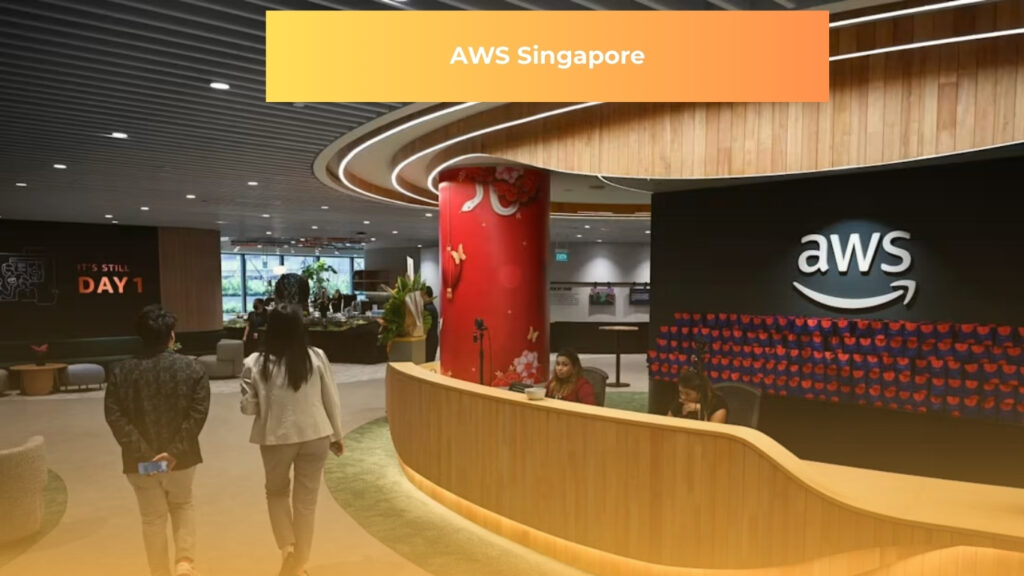
AWS Singapore is Amazon’s Asia Pacific (Singapore) Region, known as ap-southeast-1. It is a cluster of data centers inside Singapore that lets you run applications and store data with three separate Availability Zones for high reliability and redundancy.
Best fit for AWS Singapore
It ideal for enterprises that serve customers across Southeast Asia and need:
- Latency under 50 milliseconds for users in Singapore and nearby markets
- Strong alignment with Singapore’s PDPA and MAS technology risk guidelines
- A rich, mature set of cloud services in one regional hub
Important note on the term
In Singapore, “AWS” can also mean Annual Wage Supplement, the well known “13th month bonus.”
This article focuses on its cloud platform.
If you are searching for salary bonus information, see the FAQ section at the end, where the Annual Wage Supplement is explained clearly.
What Is AWS Singapore and Why Does It Matter?
AWS Singapore is Amazon’s primary cloud infrastructure hub for Southeast Asia. Officially, it is called the Asia Pacific (Singapore) Region and identified as ap-southeast-1. When you select this region in the AWS console, your workloads and data stay physically in Singapore.

This matters because many industries cannot store sensitive data overseas. Banks, insurers, health providers and government related entities must respect data sovereignty rules. They cannot put Singaporean customer data in data centers in Virginia or Tokyo. By using this platform, these organizations keep their data on Singapore soil and still get access to the broad AWS ecosystem, including EC2, RDS, S3, Lambda and advanced services such as SageMaker and Bedrock.
For regional headquarters, the infrastructure also becomes a central hub for serving users across Indonesia, Malaysia, Thailand, Vietnam and the wider ASEAN market with stable, low latency connectivity.
How to Implement AWS Singapore: A Practical Migration Flow
Migrating to AWS Singapore is more than launching a few instances. A structured approach reduces risk, avoids surprise costs and keeps your team aligned.
Choose the correct region
First, confirm that your workloads are actually using AWS Singapore (ap-southeast-1) in the console. Many teams accidentally deploy resources to us-east-1 or another region. This leads to poor performance for ASEAN users and extra cross region data transfer fees.
Design the network for high availability
Create a Virtual Private Cloud (VPC) in AWS Singapore and stretch it across at least two Availability Zones. If one data center in an area such as Jurong experiences a problem, your application can automatically fail over to another zone such as Changi. This is a simple but powerful way to use its full strength.
Plan data migration into AWS Singapore
For large datasets, consider:
- AWS Snowball to move terabytes or petabytes of data into AWS Singapore using secure physical devices.
- AWS Direct Connect from your Singapore office or data center to AWS Singapore for a dedicated private connection, lower latency and stronger security than regular internet links.
Secure your environment from day one
As you migrate, switch on:
- AWS CloudTrail to log all actions in your AWS Singapore accounts
- Amazon GuardDuty to detect suspicious activity in the Singapore region
- AWS Config to track configuration drift and support compliance audits
This ensures a stable, auditable foundation rather than a risky experiment.
Advantages of AWS Singapore for Modern Businesses
Why do so many of Singapore’s leading startups and enterprises rely on this platform?
Strong connectivity across ASEAN
One thing to confirm, it is one of the best connected hubs in Asia. Applications can deliver single digit millisecond latency to users in Malaysia and very low latency to much of Southeast Asia. This is vital for trading platforms, transport apps and real time collaboration tools.
A mature and feature rich region
It was launched in 2010 and has grown into one of the most complete regions in the world. It usually receives new AWS services earlier than many other Asia Pacific locations. For teams building AI, analytics and event driven systems, this means quicker access to new capabilities such as Bedrock, SageMaker improvements and managed streaming services.
High reliability and resilience
With three fully separated Availability Zones, it can support architectures that achieve 99.99% or better uptime when designed correctly. This is crucial for services that operate around the clock, such as digital banks, super apps and ecommerce platforms.
Challenges of Using AWS in Singapore and How to Solve Them
There are some specific regional challenges. The good news is that each one has a practical solution.
Higher regional pricing
Compute in AWS Singapore usually costs about 10 to 15% more than in some United States regions such as Northern Virginia. This is linked to local factors such as electricity and real estate costs.
You can offset this by using Savings Plans or Reserved Instances with one to three year commitments. Combined with smart scheduling and right sizing, this can cut compute spending by more than half. You can also use S3 lifecycle rules to move old backups and logs in into cheaper storage tiers like Glacier.
Shortage of experienced AWS talent
Senior AWS Solution Architects in Singapore are expensive and can earn well above SGD 120,000 per year. For many businesses, building a large in house AWS Singapore team is not realistic.
👉 Pro tip: Instead of slowing projects, consider IT staff augmentation with a partner such as HBLAB. Our engineers have deep experience in AWS Singapore migrations and operations and can join your team quickly at a much lower total cost than local full time hiring.
Singapore Region Architecture: Multi AZ and ASEAN Connectivity
To design a truly resilient application on AWS Singapore, you need a clear mental picture of how the region is built.
The ap-southeast-1 region is composed of three separate data centers called Availability Zones. Each one sits in a different physical location, several kilometers apart. This separation protects against localized incidents such as power failures or building issues. At the same time, the zones are close enough for fast synchronous replication.
For companies that use Singapore as a regional headquarters, a common reference architecture looks like this:
- Core applications run in two Availability Zones in AWS Singapore to provide automatic failover.
- Static content, such as images, scripts and media, is cached closer to users via Amazon CloudFront edge locations in cities such as Jakarta, Bangkok and Kuala Lumpur.
- A Direct Connect link from a carrier facility in Singapore, such as Equinix, connects the corporate network to the platform with low jitter and predictable bandwidth.
This blueprint turns it into an efficient regional hub rather than just a simple hosting location.
Calculating AWS Singapore Costs: TCO and Hidden Fees
Many teams underestimate the true cost of AWS Singapore because they only look at hourly instance prices. A more realistic view includes three main pieces.
Compute premium in AWS Singapore
Plan for compute in AWS Singapore to be roughly 15% more expensive than the same instance type in a low cost United States region. Adjust budgets accordingly and use the AWS Pricing Calculator with the Singapore region explicitly selected.
Data transfer and egress fees
Incoming data is free, but outgoing data from AWS Singapore to the public internet is charged per gigabyte. If you stream video from AWS Singapore to users in Vietnam or run chat services for the region, these charges can add up very quickly.
To control this, place CloudFront in front of your workloads. Data from EC2 in AWS Singapore to CloudFront is free, and CloudFront prices for global delivery are often lower than direct outbound data prices.
Goods and Services Tax (GST)
Remember that AWS Singapore services are subject to Singapore’s GST, which is 9% in 2025. If your business is GST registered, you may be able to claim input tax credits, but you still need to include this when forecasting monthly cloud spend.
Thinking in these three categories makes your AWS Singapore total cost of ownership much more predictable and easier to explain to finance teams.
Navigating PDPA and MAS Guidelines on AWS Singapore
For many enterprises, the biggest question is not performance but compliance. Is AWS Singapore suitable for highly regulated sectors such as banking and insurance?
The answer is yes, provided you understand your responsibilities.
MAS TRM guidelines
The Monetary Authority of Singapore expects financial institutions to apply strict technology risk management. AWS Singapore supports this through the shared responsibility model. AWS is responsible for security of the cloud, such as physical security, hardware and core networking. You remain responsible for security in the cloud, including identity management, encryption and secure application design.
AWS provides detailed mapping between its controls in AWS Singapore and MAS TRM expectations. These mappings and audit reports are accessible via AWS Artifact.
PDPA compliance and data protection
To comply with the Personal Data Protection Act, you must protect personal data throughout its lifecycle. In AWS Singapore, you can do this by:
- Encrypting storage and databases using AWS Key Management Service (KMS)
- Limiting access with IAM roles and least privilege policies
- Using logging tools such as CloudTrail to prove how data in AWS Singapore has been accessed
When combined, these features make AWS Singapore a strong foundation for PDPA compliant workloads.
Emerging Trends in AWS Singapore in 2025
The way organizations use AWS Singapore is evolving quickly. Several trends stand out in 2025.
Localized generative AI
More businesses now build internal generative AI assistants on AWS Singapore using services such as Amazon Bedrock. They train models on local data and design them to understand regional language styles, including Singlish and regional phrases, while keeping that data safely within AWS Singapore.
Sustainability and green cloud strategy
With national targets under the Singapore Green Plan, customers care more about the carbon footprint of their infrastructure. AWS reports energy efficiency improvements and provides a Customer Carbon Footprint Tool that includes data for AWS Singapore. This helps enterprises track emissions and support ESG reports.
Hybrid cloud and low latency workloads
Some sectors, such as trading and manufacturing, are combining AWS Singapore with on premises environments through AWS Outposts and Direct Connect. This hybrid approach delivers sub millisecond latency for time sensitive workloads while still integrating with the full AWS Singapore ecosystem.
When Should You Use AWS Singapore?
You should strongly consider AWS Singapore when:
- Most of your users are in Singapore or other ASEAN countries
- You operate in a regulated industry such as finance, healthcare or government related services and must keep data within Singapore
- You want access to a wide and mature set of services, including analytics, AI and managed databases, delivered from a single regional hub
You might look at other regions or simpler hosting options if:
- Your user base is almost entirely in North America or Europe and you are not constrained by Singapore regulations
- You run a basic static website without dynamic content, where a cheaper hosting platform could be enough
Framing the decision this way ensures that AWS Singapore is used where its strengths truly matter.
Conclusion: Why AWS Singapore Still Leads in 2026
In 2025, AWS Singapore continues to be the reference cloud region for serious, growth focused organizations in Southeast Asia. Its three Availability Zones, excellent ASEAN connectivity and deep compliance support make it a natural home for mission critical systems.
Yes, AWS Singapore can cost more than some other regions in pure compute pricing. However, when you factor in reduced latency, stronger regulatory alignment and a mature set of advanced services, the overall business value is often far higher than cheaper alternatives.
If you are ready to move to AWS Singapore or to modernize your existing workloads there, but you feel uncertain about architecture choices, cost control or MAS compliance, you do not need to face it alone.
👉 Pro tip: Partnering with cloud experts who understand AWS Singapore can reduce migration time by up to 40 percent and significantly cut risk. A trusted partner turns AWS Singapore from a complex tool into a clear competitive advantage.
HBLAB: Your Trusted Software Development Partner
With more than ten years of experience and a team of over 630 professionals, HBLAB supports clients worldwide with custom software development, cloud migration and IT staff augmentation. The company is certified at CMMI Level 3, which reflects mature, well documented delivery processes.

HBLAB has been building AI powered solutions since 2017 and has deep hands on experience designing and operating workloads on AWS Singapore for demanding clients. Its flexible engagement models, including offshore teams and dedicated development centers, often deliver up to 30 percent lower cost than local hiring while maintaining strong quality.
Whether you need to migrate legacy systems into AWS Singapore, optimize an existing environment or design a new cloud native platform, HBLAB provides engineers and architects who understand both technology and business requirements.
CONTACT US FOR A FREE CONSULTATION
FAQ: AWS in Singapore
Q1: What is the AWS salary in Singapore?
For people working at Amazon Web Services in Singapore, compensation is competitive. A Solutions Architect focusing on AWS Singapore workloads can often earn between SGD 120,000 and SGD 200,000 or more per year, depending on seniority and stock components. Software engineers working on AWS services in Singapore may earn from SGD 100,000 to SGD 180,000 annually.
Q2: Is AWS part of my salary in Singapore as the 13th month bonus?
In HR terms, “AWS” in Singapore usually means Annual Wage Supplement rather than AWS Singapore as a cloud platform. The Annual Wage Supplement is a single payment that many employers make around December and is sometimes called the thirteenth month bonus. It is common but not strictly required by law and depends on the employment contract and company policy.
Q3: Who is AWS Singapore’s biggest competitor?
In the Singapore cloud market, the main competitors to AWS Singapore are Microsoft Azure and Google Cloud Platform. Azure is strong in organizations that rely heavily on Microsoft tools and on premises Windows workloads, while AWS Singapore tends to lead among fast growing startups and technology driven enterprises that want a broad range of managed services.
Q4: Where are the AWS data centers in Singapore located?
For security reasons, Amazon does not publish precise street addresses of AWS Singapore data centers. Public information confirms that the ap-southeast-1 region consists of three Availability Zones, each in a different physical facility in industrial and data center clusters across the island. This separation improves resilience and supports high availability designs.
Q5: How do I calculate AWS Singapore costs for my project?
The simplest starting point is the AWS Pricing Calculator. Select Asia Pacific (Singapore) as the region for each service. Estimate compute, storage and data transfer usage, then add an extra 10 to 20 percent to cover network egress and unexpected growth. Do not forget that services billed are subject to Singapore’s 9 percent GST.
Q6: Does NASA use AWS or Azure for its workloads?
NASA uses multiple cloud providers, including both AWS and Azure, but it is widely known for using AWS to process and store huge scientific datasets. Examples include handling data from space missions and Earth observation satellites. These workloads demonstrate the scale and reliability of the broader AWS platform.
READ MORE:
– Why ERP Systems Australia Are Driving B2B Success
– Salesforce Agency Australia: Transforming Customer Success Through Intelligent CRM Automation
– Power BI vs Tableau: Discover the Winning Formula for Data Brilliance in 2025